
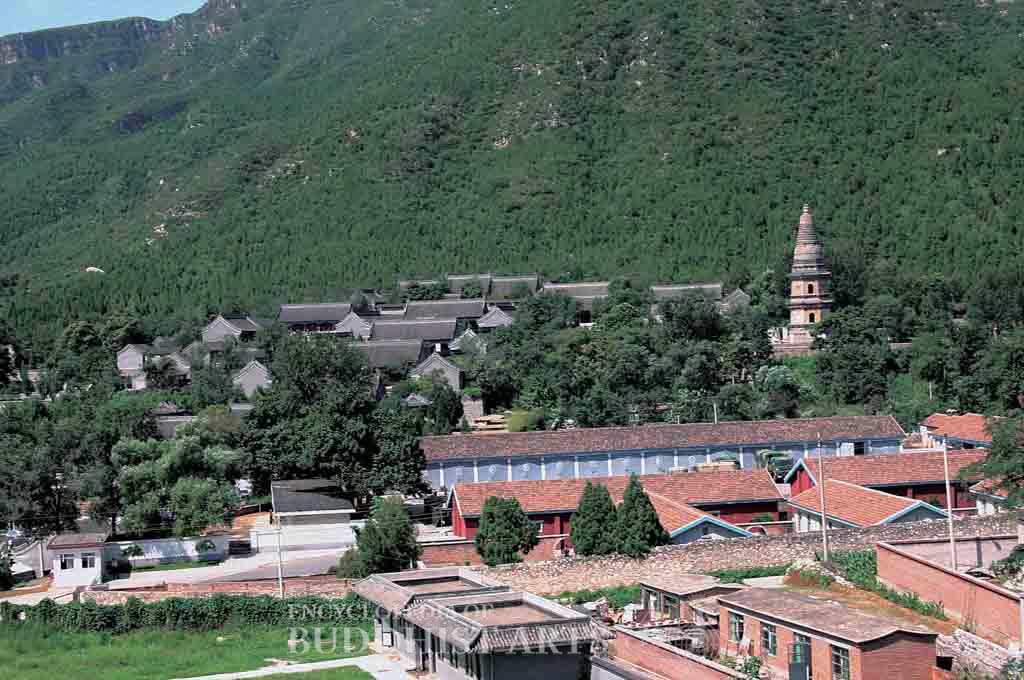
Yunju Temple
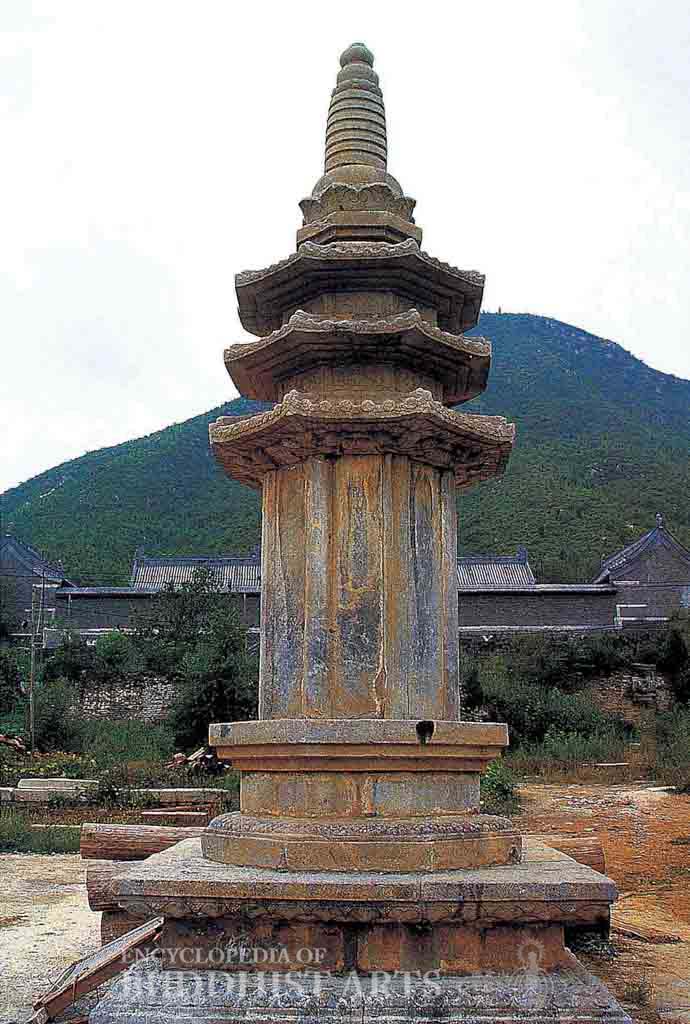
Yunju Temple: Wangong Pagoda
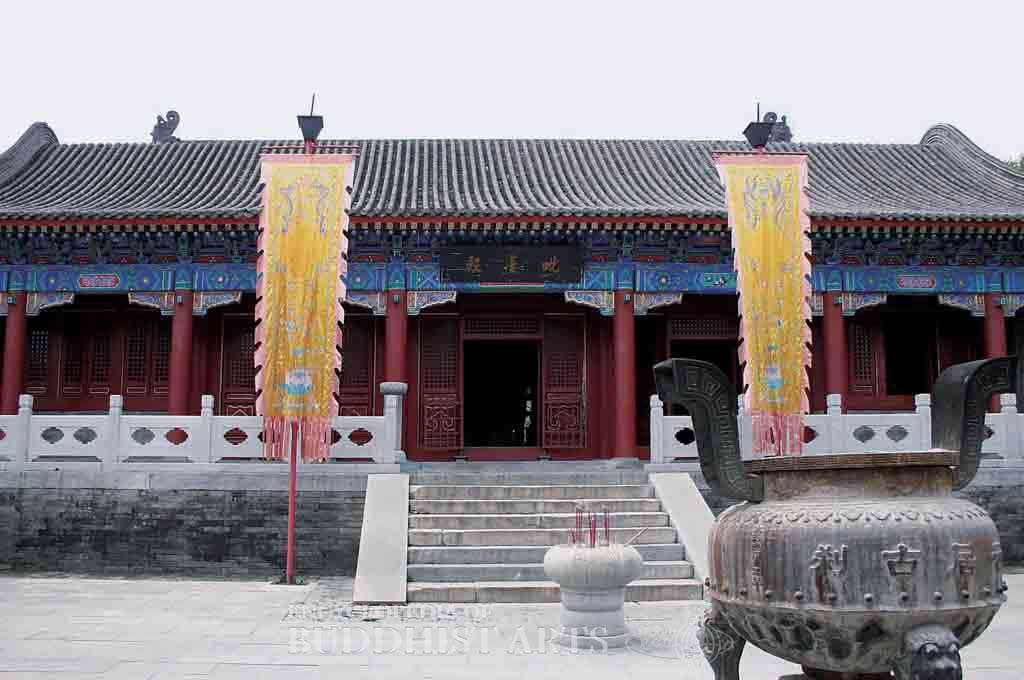
Yunju Temple: Vairocana Hall
Yunju Temple
CHINA, Beijing
Yunju means Cloud Dwelling. It is also called Xiyu (West Valley) Temple or Shijing (Stone Sutra) Temple is located at the foot of Baidaishan (White Ribbon Mountain) in Fangshan district. During the rule of Emperor Yang (reigned 604–617) of the Sui dynasty, Master Jingwan made a vow to engrave stone sutras, and built this temple on the east peak. After numerous repairs and expansions, the temple consisted of five compounds with an imperial summer palace and pagodas on the sides. Unfortunately, much of the temple was destroyed during wartime in 1942 with only the main temple gate, north pagoda, and the surrounding four small pagodas left standing. After 1985 a series of repairs to the temple have been undertaken. The pagoda and stone sutras were listed as National Cultural Heritage Sites in 1961.
Built to integrate with the terrain, the temple faces east and covers an area of around 7 ha. Along the central axis there are the Heavenly King Hall, Vairocana Hall, Sakyamuni Hall, Medicine Buddha Hall, Amitabha Hall and the Great Compassion Hall. The side buildings include the north pagoda, remains of the south pagoda, and the Wangong Pagoda. The Vairocana Hall is the main hall and houses a statue of Vairocana Buddha. It has a curved roof and is five bays wide.
The 11-tier, octagonal south pagoda, built of stone in 1117, was also known as Yajing (Press Sutra) Pagoda. The pagoda has since been destroyed, but in 1957, a total of 10,082 stone sutra blocks carved during the Liao (907–1125) and Jin (1115–1234) dynasties, known as Fangshan Stone Sutras, were excavated from its base. The multi-tier, octagonal, stone pagoda is 6 m high. According to inscriptions, it was built in 1093 by Master Tongli to enshrine the remains of Master Jingwan.
Between 1998 and 1999, in order to prevent damage caused by oxidation, the Fangshan Stone Sutras were once again sealed using modern technology in a temperature and moisture controlled underground sutra repository. This method allowed a large number of scriptures to be preserved and viewed through nine observation windows. The temple also houses more than 22,000 fascicles of paper sutras, which were either printed or handwritten during the Ming dynasty (1368–1644), as well as more than 77,000 woodblock sutras created between 1733 and 1738 during the Qing dynasty.
For more details, go to the Encyclopedia of Buddhist Arts: Architecture T-Z, page 1379.
Cite this article:
author = Hsingyun and Youheng and Johnson, Peter and Mankuang and Lancaster, Lewis,
booktitle = {Encyclopedia of Buddhist Arts: Architecture T-Z},
pages = 1379,
title = {{Yunju Temple}},
volume = 4,
year = {2016}}