
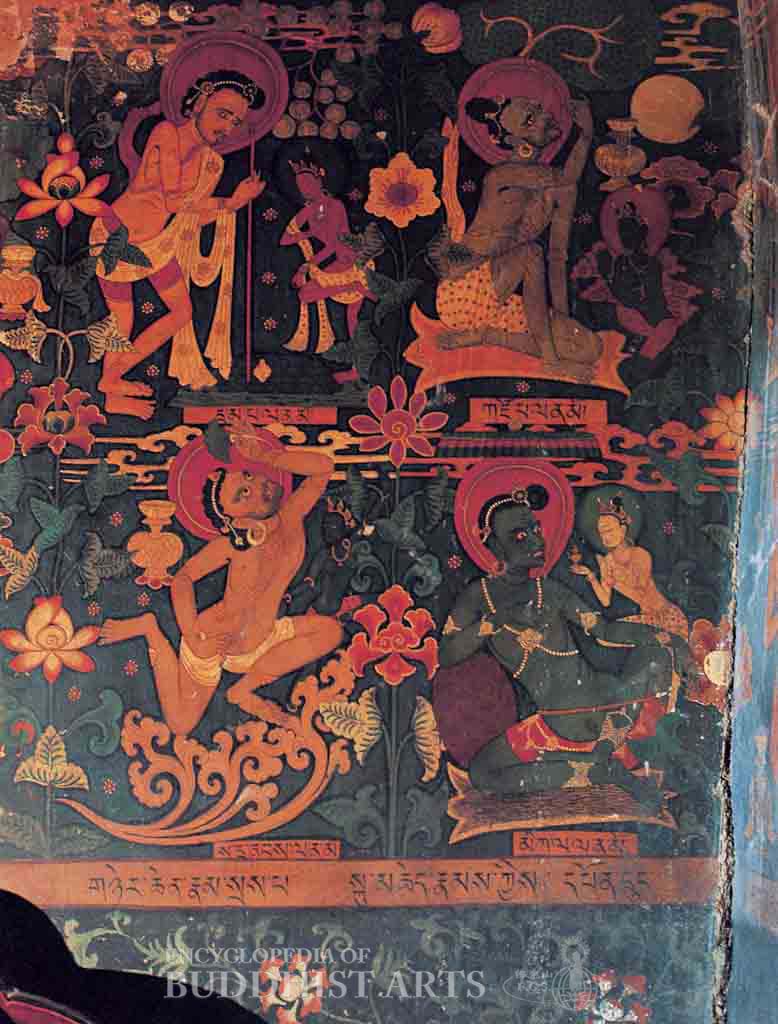
Palcho Monastery Central Hall: Mahasiddhas (detail)
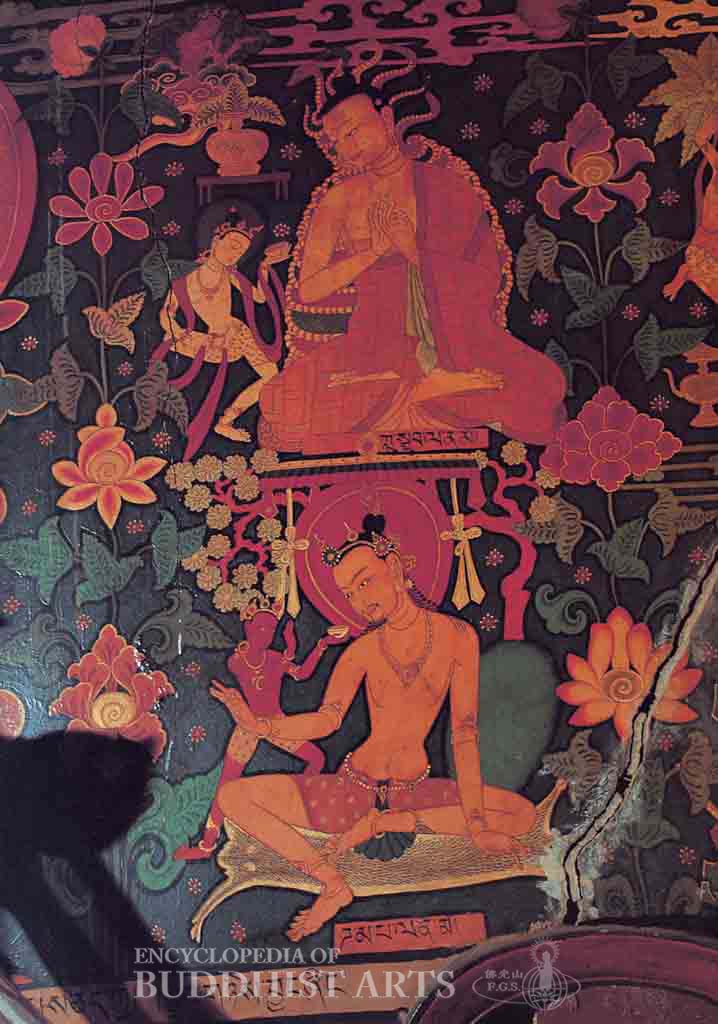
Palcho Monastery Central Hall: Mahasiddhas - Nagarjuna
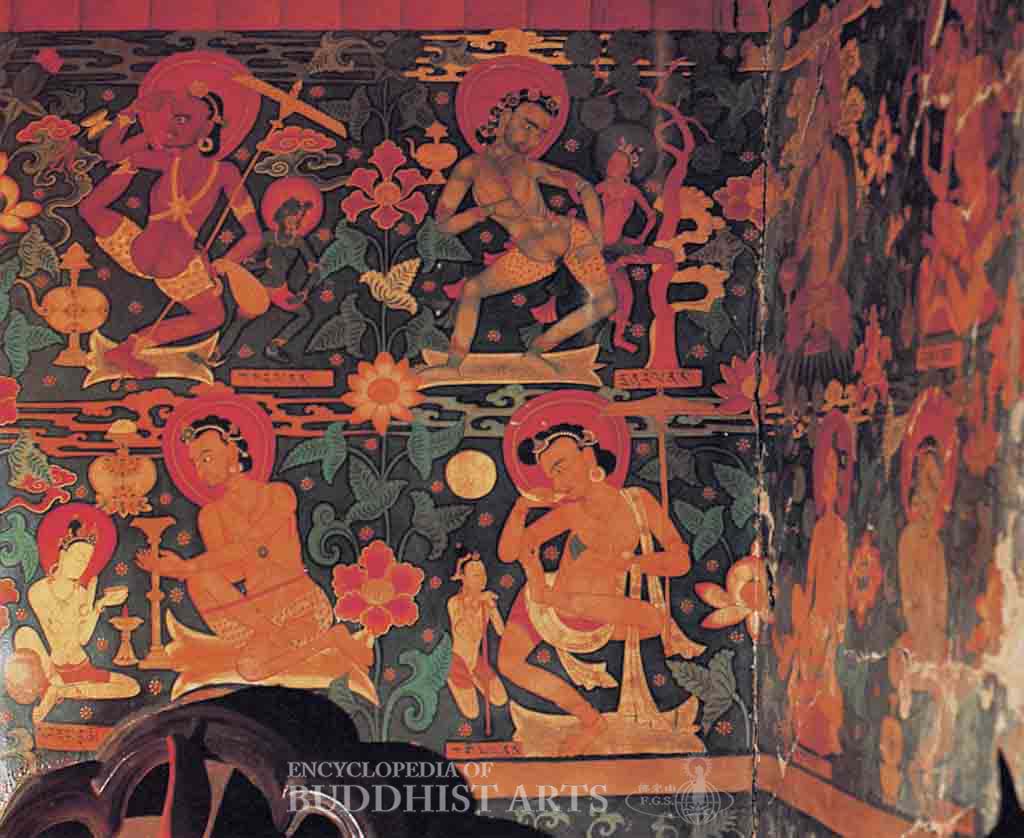
Palcho Monastery Central Hall: Mahasiddhas (detail)
Palcho Monastery Central Hall: Mahasiddhas
CHINA, Tibet, Gyantse
This mural depicts several mahasiddhas, accomplished Vajrayana practitioners in ancient India. Images of the mahasiddhas began to appear in Tibetan murals, sculptures, and carvings in the 12th century. These detailed, brightly colored illustrations are some of the best preserved examples of such art. The figures, divided into two levels and separated by images of plants and flowers, differ in posture and expression. Most of them are clad only in a lower garment or a monastic robe. An inscription beneath each mahasiddha states their name and birth date, an invaluable historical reference. Among them is Nagarjuna, the founder of the Madhyamika school of Mahayana Buddhism in the 3rd century. His head is surrounded by seven nagas, and he forms the Dharmacakra (Dharma wheel) mudra with both hands.
For more details, go to the Encyclopedia of Buddhist Arts: Painting P-Z, page 733.
Cite this article:
author = Hsingyun and Youheng and Youlu and Wilson, Graham and Manho and Mankuang and Huntington, Susan,
booktitle = {Encyclopedia of Buddhist Arts: Painting P-Z},
pages = 733,
title = {{Palcho Monastery Central Hall: Mahasiddhas}},
volume = 16,
year = {2016}}