
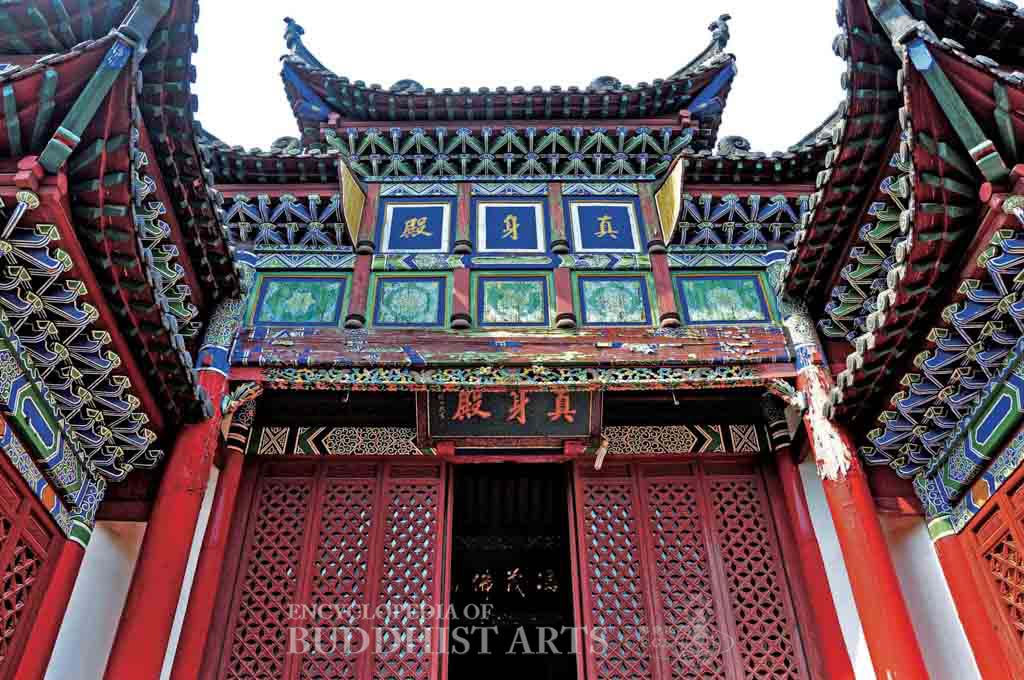
Wuzu Temple: True Body Relic Hall
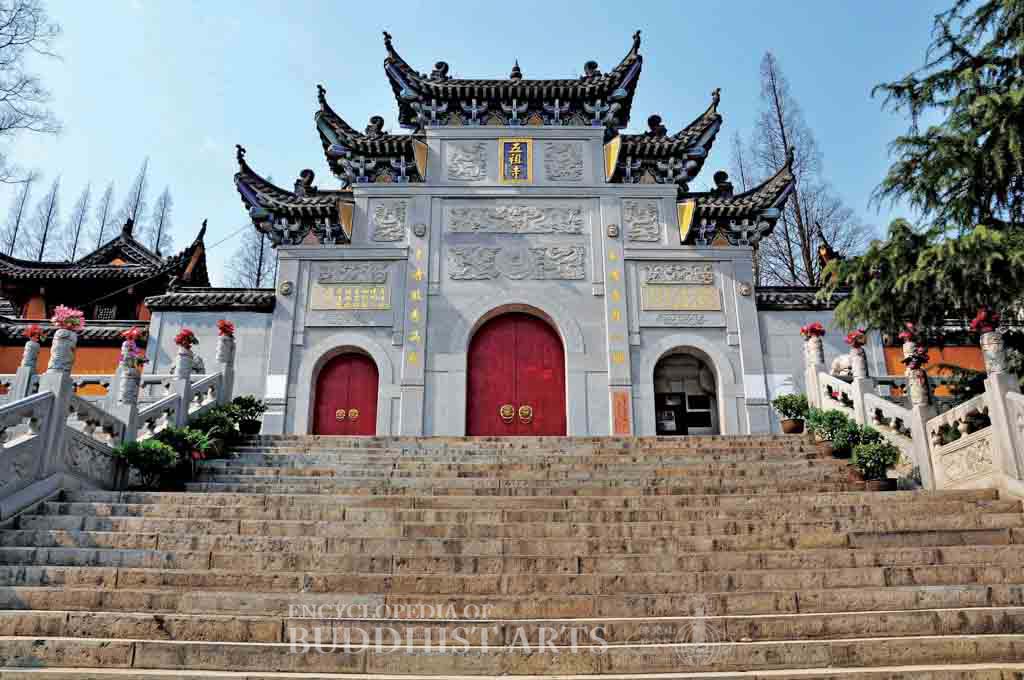
Wuzu Temple: Main Temple Gate
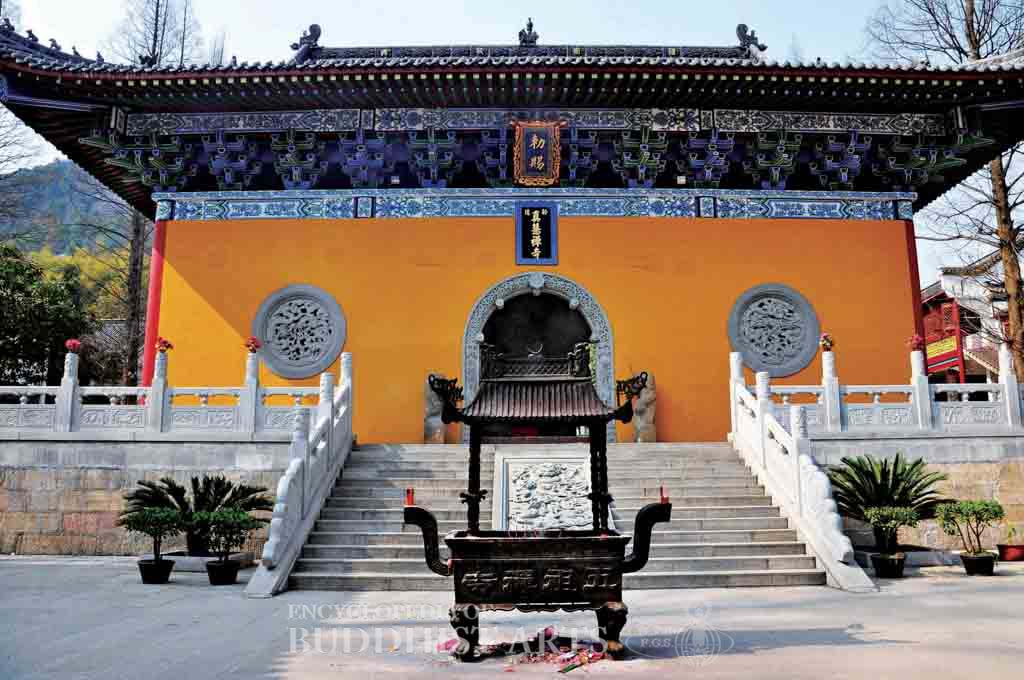
Wuzu Temple: Heavenly King Hall
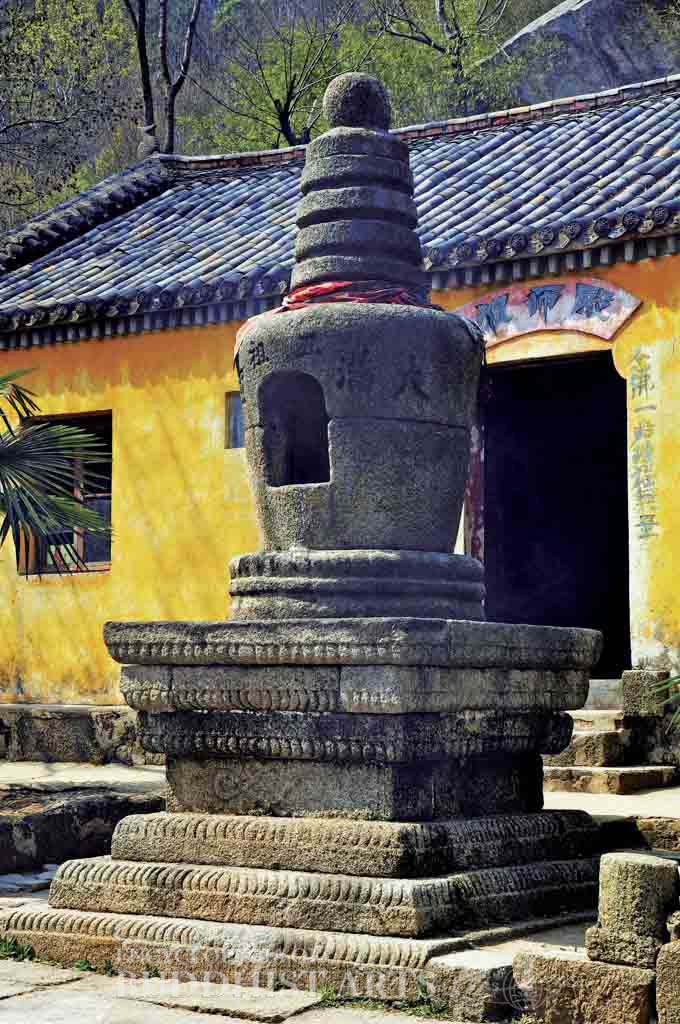
Wuzu Temple: Stupa of Chan Master Daman
Wuzu Temple
CHINA, Hubei, Huanggang
Wuzu means the Fifth Patriarch. The temple is situated on Dongshan (East Mountain). According to the records, after Master Hongren, the Fifth Chan Patriarch, received Chan teaching from Master Daoxin, the Fourth Patriarch, he moved to Dongshan in 654 and constructed the temple. It is also where the Sixth Patriarch, Master Huineng, received his monastic robe. Emperor Xuanzong (reigned 846–859) of the Tang dynasty ordered the reconstruction of the temple. The temple has been destroyed and rebuilt a number of times. It has also undergone a number of name changes. It was listed as a National Cultural Heritage Site in 2006.
Built to integrate with the slope of the mountain, the buildings along the central axis include the main temple gate, Heavenly King Hall, Great Hero Hall, Vairocana Hall, and the True Body Relic Hall. Flanking the Vairocana Hall there are the Sacred Mother Hall and Avalokitesvara Hall. Just outside the main temple gate, there are the Yitian Gate, Sakyamuni and Prabhutaratna Pagodas, Flying Rainbow Bridge, and the Buddhas of the Ten Directions Pagoda. Behind the temple complex there is the stupa of Chan Master Daman and the lecture platform.
The main temple gate is three bays wide and has five sets of eaves. The inscriptions above the arched doors of the side bays are the famous verses by Master Shenxiu and Master Huineng. Master Shenxiu’s verse reads, “The body is a Bodhi tree; the mind is a bright mirror stand. Clean them diligently everyday, and do not let dust land.” And the responding verse of Master Huineng states, “The Bodhi is fundamentally not a tree, and the bright mirror is not a stand. There is originally nothing, where would the dust land?”
The Heavenly King Hall has a single-eave hip-and-gable roof and a central arched doorway. On either side of the door there are round openwork windows and a pair of stone lions from the Tang dynasty (618–907). The seven-bay wide Great Hero Hall was restored to its original Tang dynasty appearance in 1993. It has yellow walls and a double-eave hip-and-gable roof with extended eaves. The roof is covered in blue tiles.
The True Body Relic Hall, also named the Patriarch Hall, houses the true body relic of Master Huineng. A statue of Master Hongren is enshrined within the hall. The relics of Master Hongren are enshrined in the stupa of Chan Master Daman, which was his posthumous title bestowed by Emperor Daizong (reigned 762–779) of the Tang dynasty. The stupa has a Sumeru base, a body in the form of an inverted bowl, and a spire consisting of stacked rings and a jewel.
For more details, go to the Encyclopedia of Buddhist Arts: Architecture T-Z, page 1303.
Cite this article:
author = Hsingyun and Youheng and Johnson, Peter and Mankuang and Lancaster, Lewis,
booktitle = {Encyclopedia of Buddhist Arts: Architecture T-Z},
pages = 1303,
title = {{Wuzu Temple}},
volume = 4,
year = {2016}}