
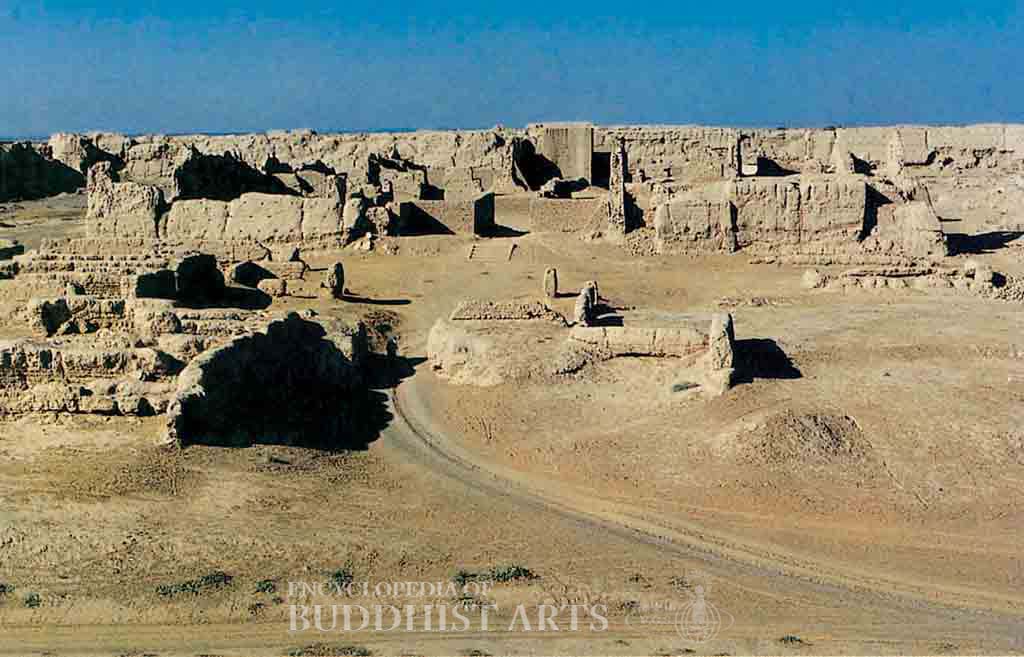
Gaochang: Large Temple in the Southwest
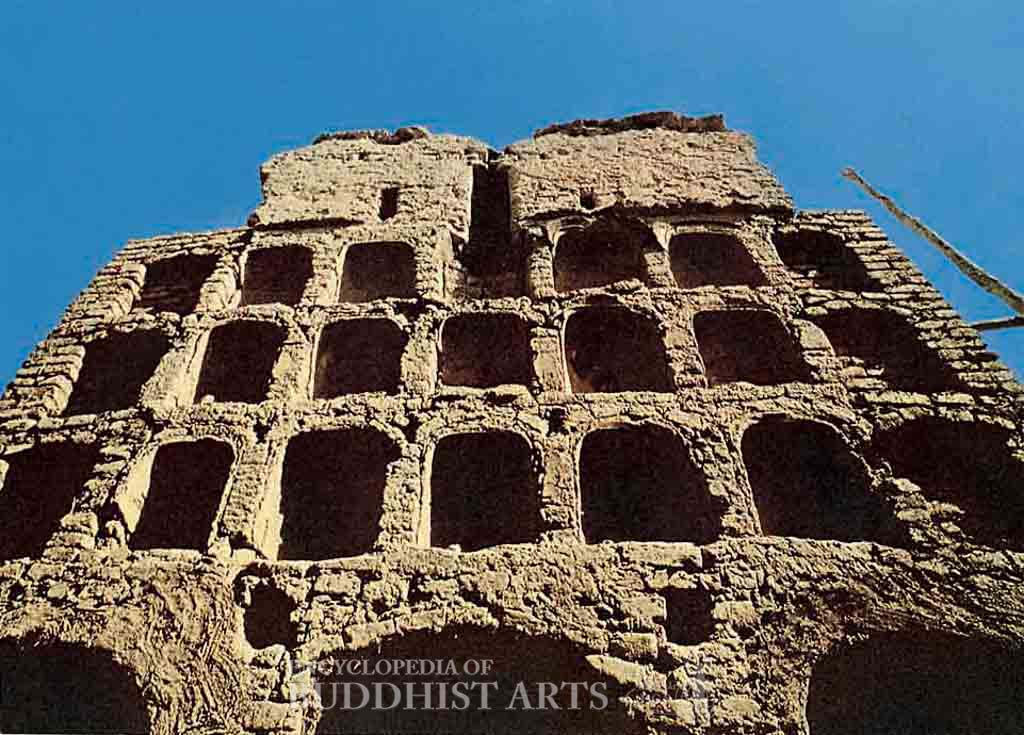
Gaochang: Large Temple in the Southwest - Niches
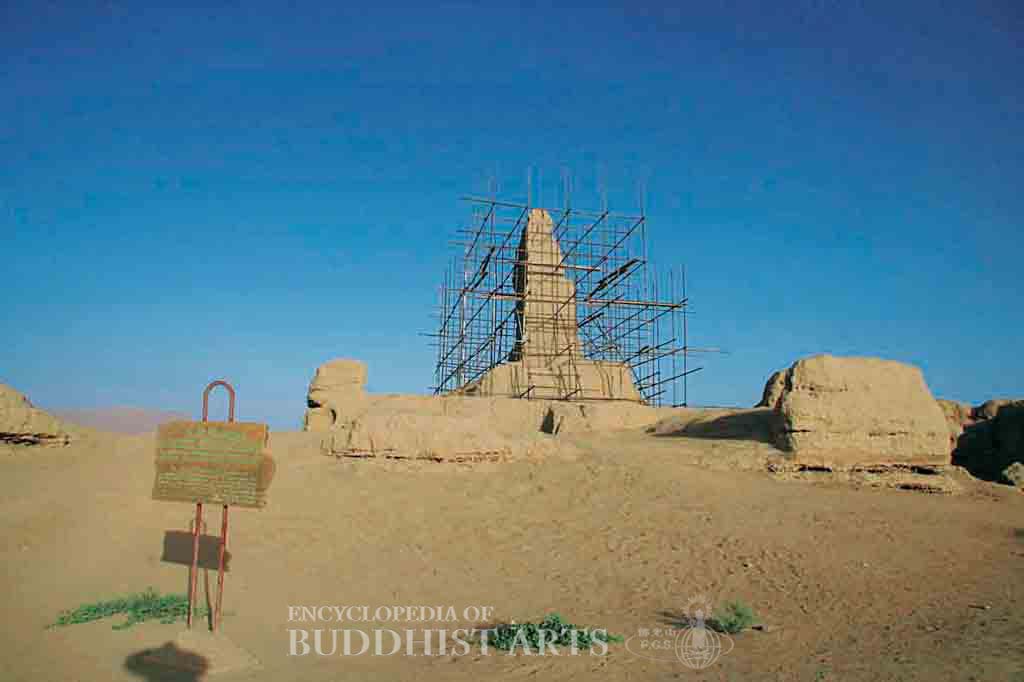
Gaochang: Large Temple in the Southwest
Gaochang
CHINA, Xinjiang, Turpan
Also known as Khocho, Kara Khoja, or Qocho, the site of this ancient city is located about 40 km southeast of Turpan. The city of Gaochang was founded in the 1st century BCE, and flourished during the Tang dynasty (618–907) as well as when it was ruled by the Uighurs from the 9th to 13th century. It was a vital transport hub and gateway to the northern route of the Silk Road, and thus an important link between the east and west. It was destroyed by war in the 14th century and later abandoned. From the late 19th century to the beginning of the 20th century, archaeologists from several countries including Russia, Germany, United Kingdom, and Japan removed cultural artifacts from the site. It was listed as a National Cultural Heritage Site in 1961.
There are no written records dating the arrival of Buddhism at Gaochang, but the artifacts excavated at the site suggest that it could have been present as early as 296. It was not until the Eastern Jin dynasty (317–420) when the Chinese records mentioned that the king of Turpan was a Buddhist. Gaochang became a popular center of Buddhism between the 5th and 7th century, as monastics and lay Buddhists from many kingdoms gathered, and sutras were widely available. It was a major Buddhist center with translation centers and numerous temples.
The ruins occupy approximately 200 ha. Most of the city walls have survived in three sections: the outer city, the inner city, and the palace. It is surrounded by moats. Apart from some secular structures, such as the Khan Castle, as it is locally called, most ruins are those of Buddhist temples.
The best preserved sites are the small temple in the southeast, and the large temple in the southwest. Both are located in the outer city. The small temple in the southeast consists of a stupa and a shrine. The large temple in the southwest occupies an area of approximately 1 ha, and consists of a hall with a large central pillar at its center. The pillar has multiple tiers filled with Buddha niches containing painted Buddha sculptures. It is thought that Master Xuanzang spent a month teaching at this southwestern temple on his way to India. During the early 20th century, a stele dated 445 was excavated in the southeast corner of the Khan Castle, inscribed with the characters “stele marking the erection of the temple by Juqu Anzhou.”
For more details, go to the Encyclopedia of Buddhist Arts: Architecture G-L, page 365.
Cite this article:
author = Hsingyun and Youheng and Johnson, Peter and Mankuang and Lancaster, Lewis,
booktitle = {Encyclopedia of Buddhist Arts: Architecture G-L},
pages = 365,
title = {{Gaochang}},
volume = 2,
year = {2016}}