
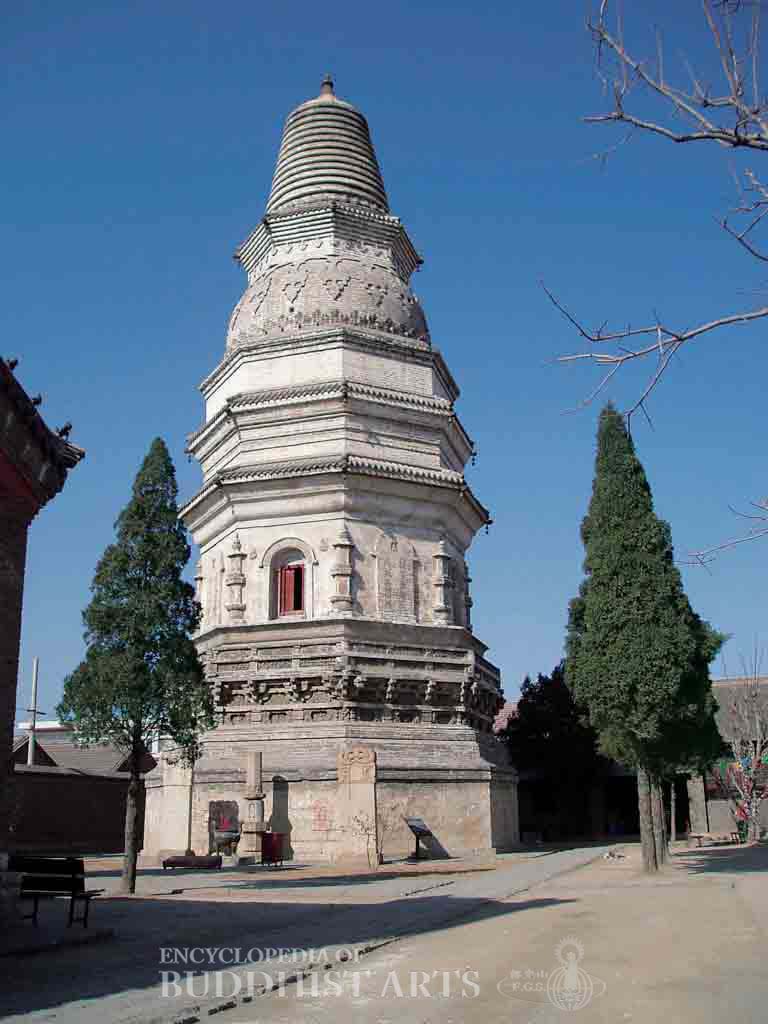
Guanyin Temple White Pagoda
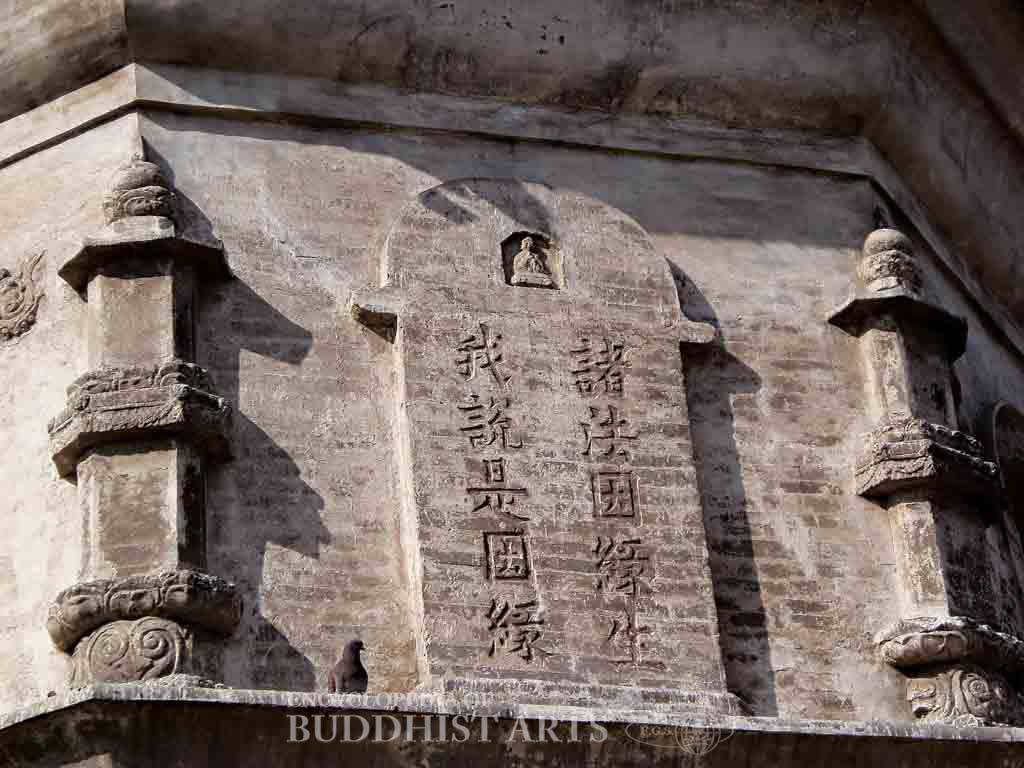
Guanyin Temple White Pagoda: Stele
Guanyin Temple White Pagoda
CHINA, Tianjin
The pagoda was built during the Liao dynasty (907–1125). Although it underwent some renovation work during the Ming (1368–1644) and Qing (1644–1911) dynasties, it has retained its original appearance from the Liao dynasty. The octagonal brick pagoda is more than 30 m high. The base platform is followed by a Sumeru base with bracket sets supporting false balustrades. The pagoda body has doors facing the four cardinal directions but only the south door is real. The remaining walls have reliefs of steles inscribed with Buddhist verses. The pilasters consist of reliefs of stupas. There are three octagonal sections above the body followed by an inverted bowl. The spire consists of an octagonal harmika with corbeling, stacked rings, and finial. This type of structure, a combination of a Chinese pagoda and a Tibetan stupa, is rarely seen in China.
For more details, go to the Encyclopedia of Buddhist Arts: Architecture G-L, page 407.
Cite this article:
author = Hsingyun and Youheng and Johnson, Peter and Mankuang and Lancaster, Lewis,
booktitle = {Encyclopedia of Buddhist Arts: Architecture G-L},
pages = 407,
title = {{Guanyin Temple White Pagoda}},
volume = 2,
year = {2016}}