
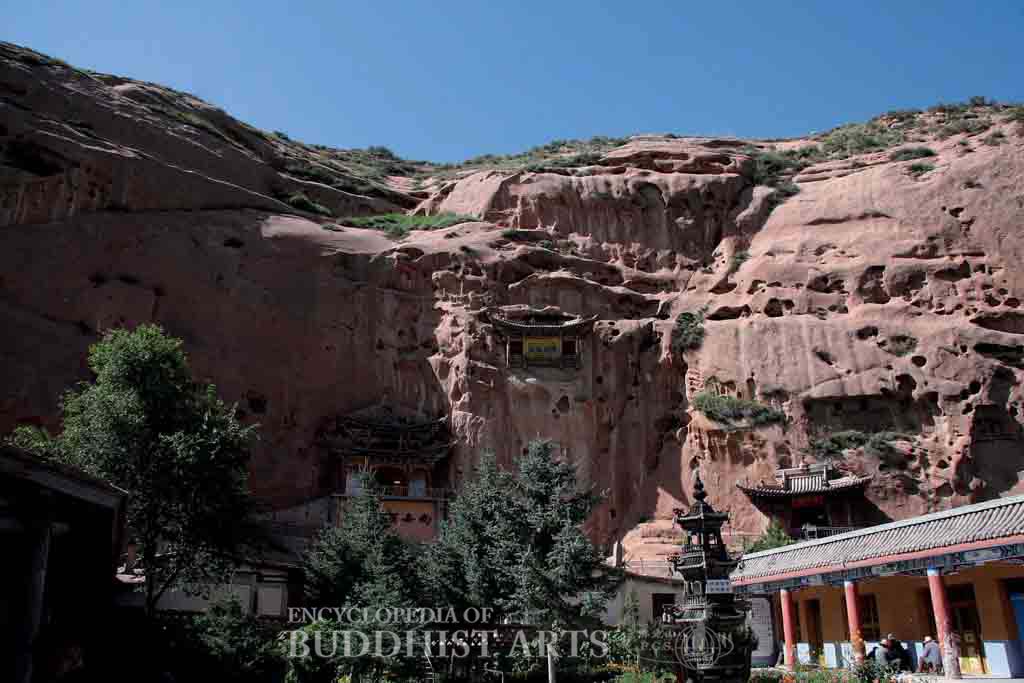
Mati Temple Grottoes
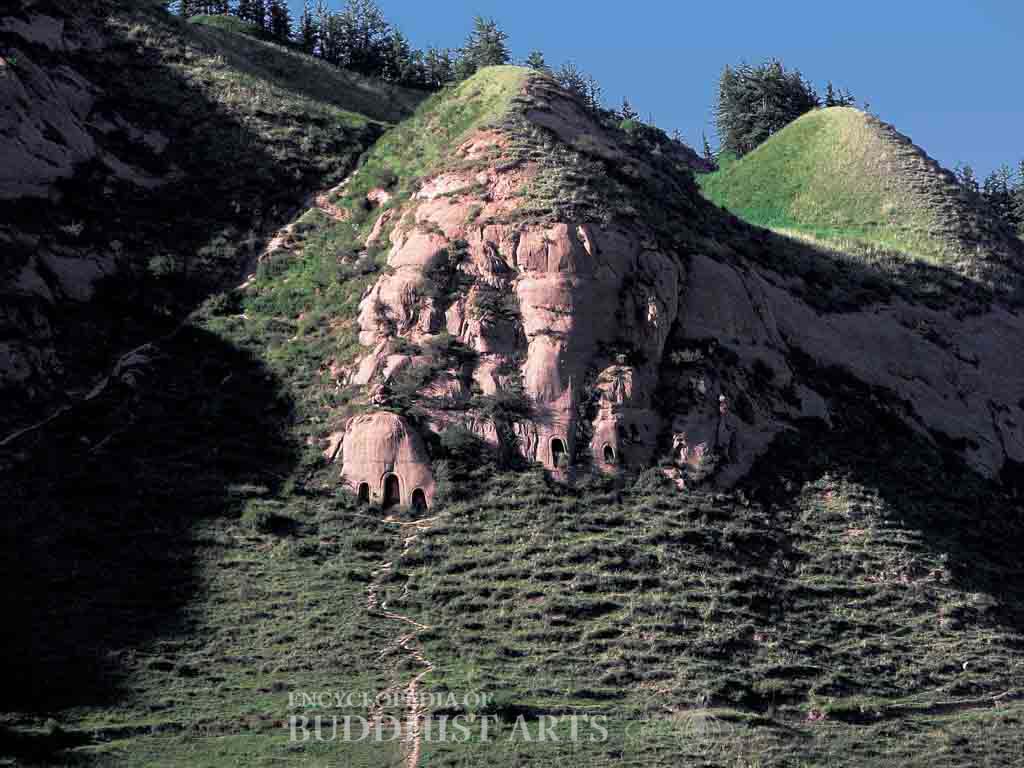
Mati Temple Grottoes
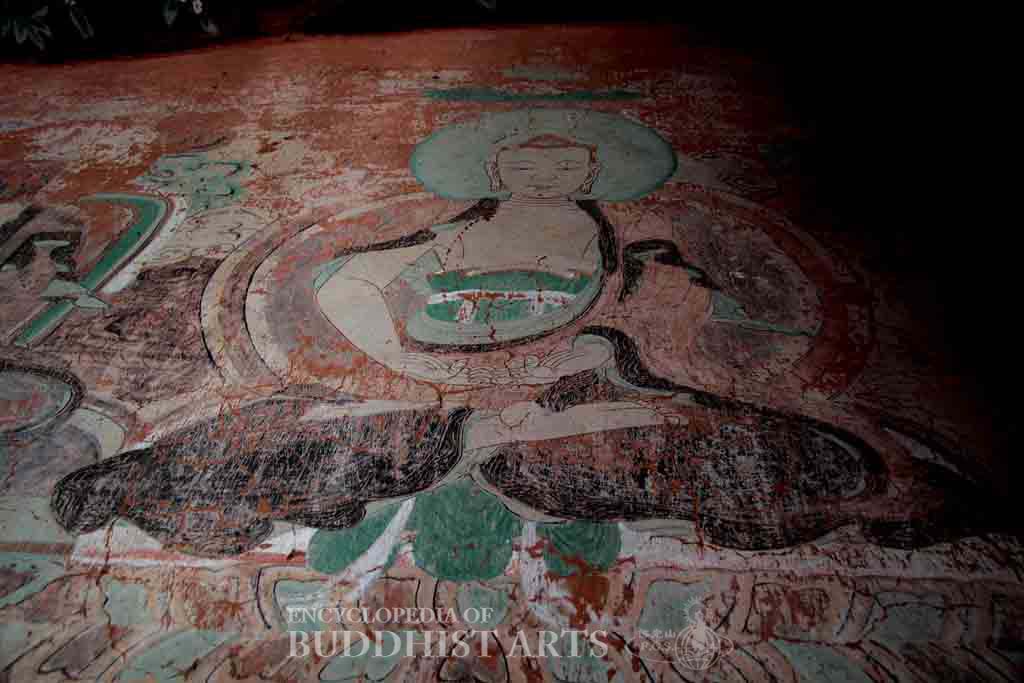
Mati Temple Grottoes: Seated Buddha
Mati Temple Grottoes
CHINA, Gansu, Sunan
The Mati Temple Grottoes are located 80 km southeast of Sunan in Gansu. The grottoes are divided into seven sections: Mati North Temple, Mati South Temple, Jinta Temple Grottoes, Thousand Buddha Grottoes, Upper Avalokitesvara Grotto, Middle Avalokitesvara Grotto, and the Lower Avalokitesvara Grotto. These seven sections include 70 grottoes, hewn into the red sandstone cliffs of Matishan (Horseshoe Mountain). The sections are 2 km to 7 km apart and each consists of 2 to 20 grottoes. The dates of construction have not been determined, however, based on historical texts, namely the Biography of Guo Yu, it is speculated that they were created during the Sixteen Kingdoms period (303–439). While the mountain itself is mostly composed of red sandstone, the reliefs and sculptures are reinforced with clay. The site was listed as a National Cultural Heritage Site in 1996.
The Jinta Temple Grottoes are better preserved, and contain a West Grotto and an East Grotto. They are located about 15 km northwest of Mati Temple. The Jinta Temple Grottoes face south and are about 60 m above ground level. The East Grotto is 12.4 m wide, 7 m high, and 10.5 m deep. The West Grotto is 10 m wide, 4.3 m high, and 4 m deep. Both are central pillar grottoes with vaulted ceilings. There are three arched niches on each side of the pillar. The niches house statues from the Northern Liang dynasty (397–439) that were repaired during the Yuan dynasty (1271–1368). Murals can be found at the top sections of all four walls. The original murals were painted in the Northern Liang dynasty, and were subsequently covered by murals painted during the Yuan dynasty. The figures in the Jinta Temple Grottoes appear solemn and peaceful. They are simple yet magnificently decorated.
The Mati South Temple and Mati North Temple are located in the center of the grotto system. The Mati South Temple is also known as the Shengguang Temple. There are fewer grottoes and niches here than in the north, and mostly contain reliefs and Tibetan-style stupas. The Mati North Temple is also called Puguang Temple and has more than 30 grottoes and niches. The finest examples are Grottoes 3, 7, and 8. Grotto 3 is also called Heaven of the Thirty-Three and has five levels. The first, second, and third levels each contain five individual grottoes, the fourth level has three, and the fifth level has only one. These individual grottoes are mostly rectangular and have gabled or truncated pyramidal ceilings. Each grotto has a large niche on the back wall with a Buddha statue inside. Outside the niches on the lower sections of the walls are murals, while the upper sections have Thousand Buddhas. Grotto 7 is also known as Standing Buddha Shrine, which has a rectangular interior with a flat ceiling, and is the second largest after Grotto 3.
The Thousand Buddha Grottoes, 3 km northeast of the Mati Temple, were excavated during the Northern Dynasties period (386–581). Grottoes 2 and 8 of this system are central pillar grottoes. The central pillars have four tiers of sculptures. Most of the sculptures and murals that survive today are from the Northern Wei (386–534) and Northern Zhou (557–581) dynasties. Grottoes 1 and 4 were built in a Kuchean style, similar to the Kizil Caves in Xinjiang. The statues found within these grottoes were made during the Northern Wei and Western Wei (535–556) dynasties but repaired in later dynasties. Within Grotto 6 are a set of 3 m high statues made during the Early Tang period (618–712) depicting a Buddha, two disciples, and two Bodhisattvas.
For more details, go to the Encyclopedia of Buddhist Arts: Caves M-Mo, page 812.
Cite this article:
author = Hsingyun and Youheng and Johnson, Peter and Mankuang and Huntington, Susan and Edson, Gary and Neather, Robert,
booktitle = {Encyclopedia of Buddhist Arts: Caves M-Mo},
pages = 812,
title = {{Mati Temple Grottoes}},
volume = 7,
year = {2016}}