
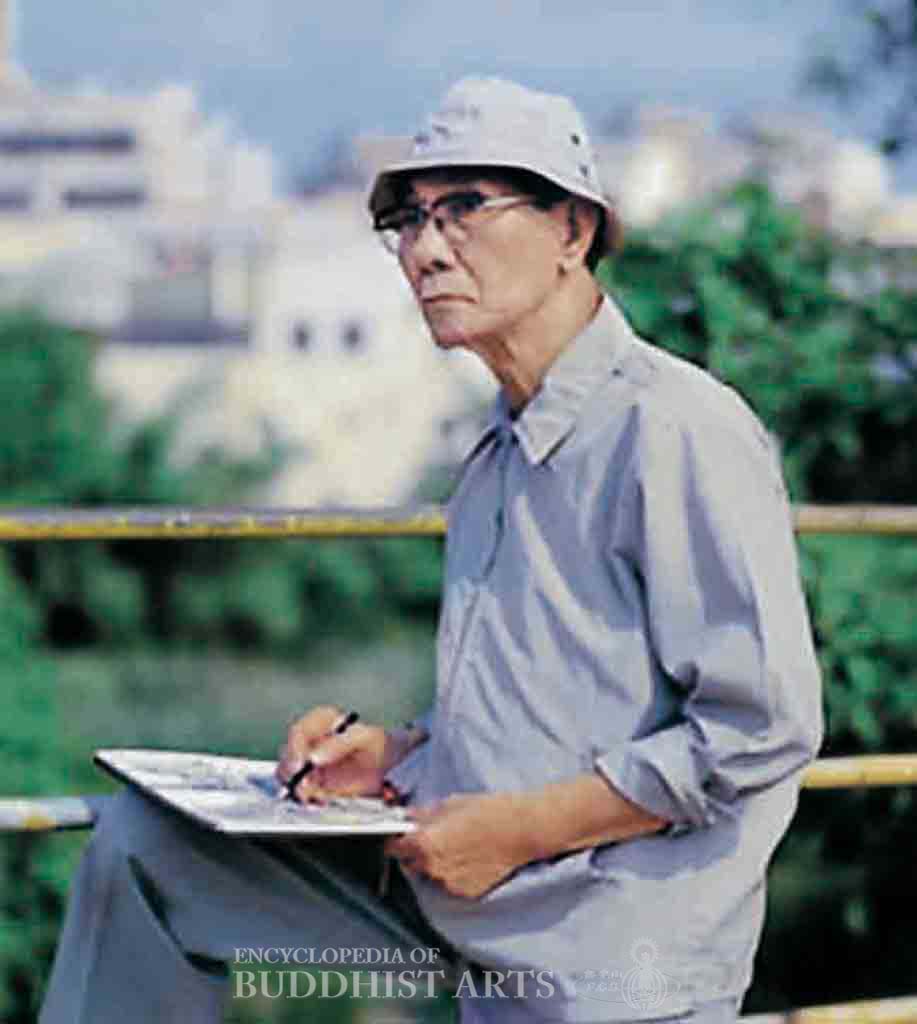
Tsai Tsao-Ju
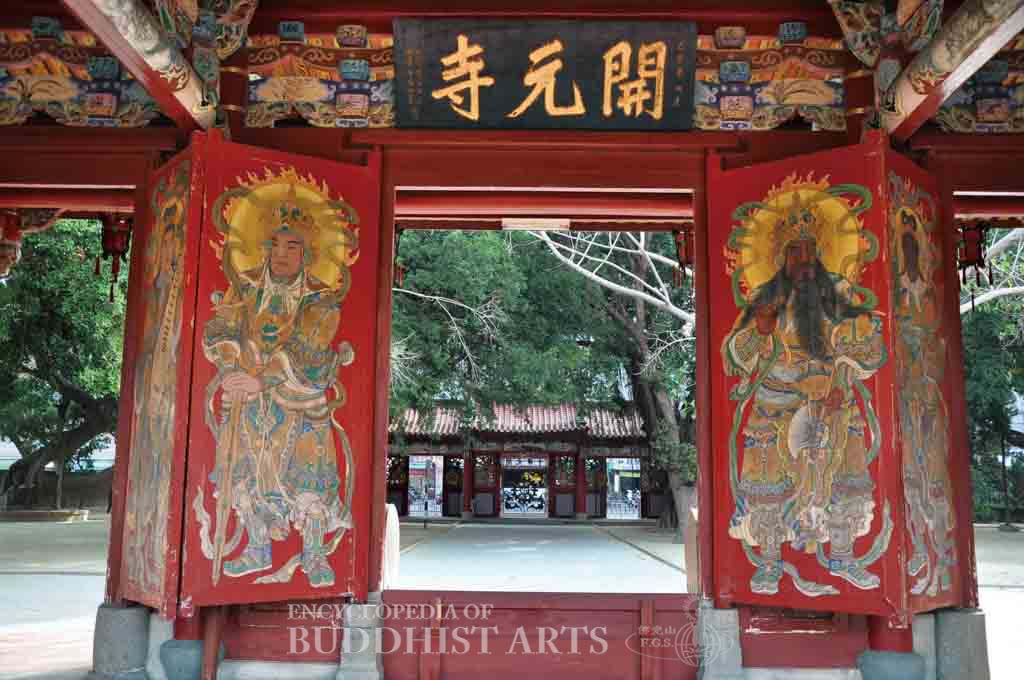
Skanda and Sangharama Bodhisattvas by Tsai Tsao-Ju; Dated 1972
Color on wood
Tsai Tsao-Ju
TAIWAN, Tainan
Originally named Tsai Chin-Tien and also known as Cai Caoru, Tsai Tsao-Ju was a painter who demonstrated his talent and interest in painting at a very young age. By the age of seven, he became renowned in his hometown for his exceptional paintings. He was later known for greatly enhancing the colorization method of traditional temple paintings, which resulted in more artistic, modern, and popular imagery. A devout Buddhist, he burned incense and paid respects to the Buddha before he started any work of art.
In 1943 he went to Japan to study at the Art Painting School in Tokyo. He returned to Taiwan three years later and participated in the first Taiwan Provincial Fine Arts Exhibition in which he exhibited his acclaimed painting, Bo Le Choosing a Horse. Becoming heavily involved in exhibitions, he established the Tainan City Ink Painting Research Association and organized the first Chinese Ink Painting Exhibition, in addition to others.
In 1989 the Tainan City Government granted him the Highest Honor Art Award and in the same year, Lin Ben Yuan Chinese Culture and Education Foundation presented him with the Chinese Culture and Education Award in recognition of his achievements. He made a donation of 100 paintings, including Sunset and Subduing Dragon, to the National Taiwan Museum of Fine Arts in Taichung in 2006. Notable paintings by Tsai include the images of Skanda and Sangharama Bodhisattvas, and Four Heavenly Kings on the doors of Kaiyuan Temple in Tainan, painted in 1972.
For more details, go to the Encyclopedia of Buddhist Arts: People, page 267.
Cite this article:
author = Hsingyun and Youheng and Youlu and Pokorski, Stefanie and Yichao and Mankuang and Miaohsi,
booktitle = {Encyclopedia of Buddhist Arts: People },
pages = 267,
title = {{Tsai Tsao-Ju}},
volume = 19,
year = {2016}}