
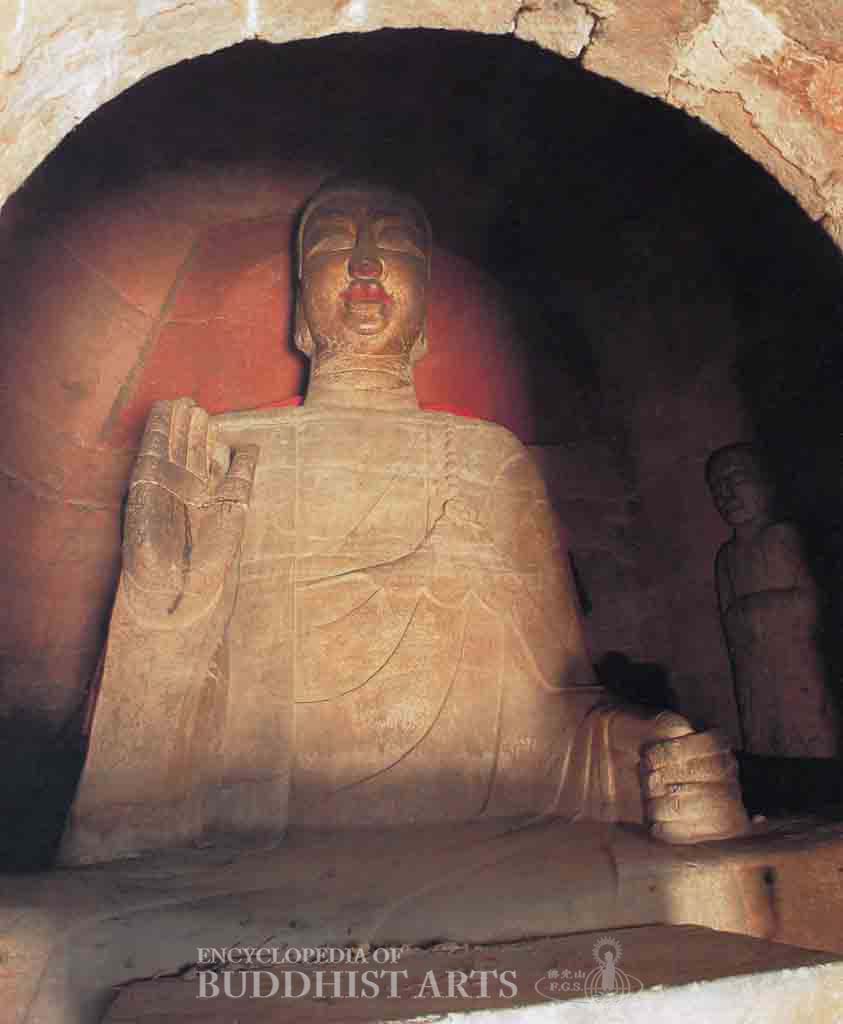
Lingyan Temple Sculptures: Jicui Zhengmeng Niche - Sakyamuni Buddha; Tang dynasty; Stone; H: 5 m
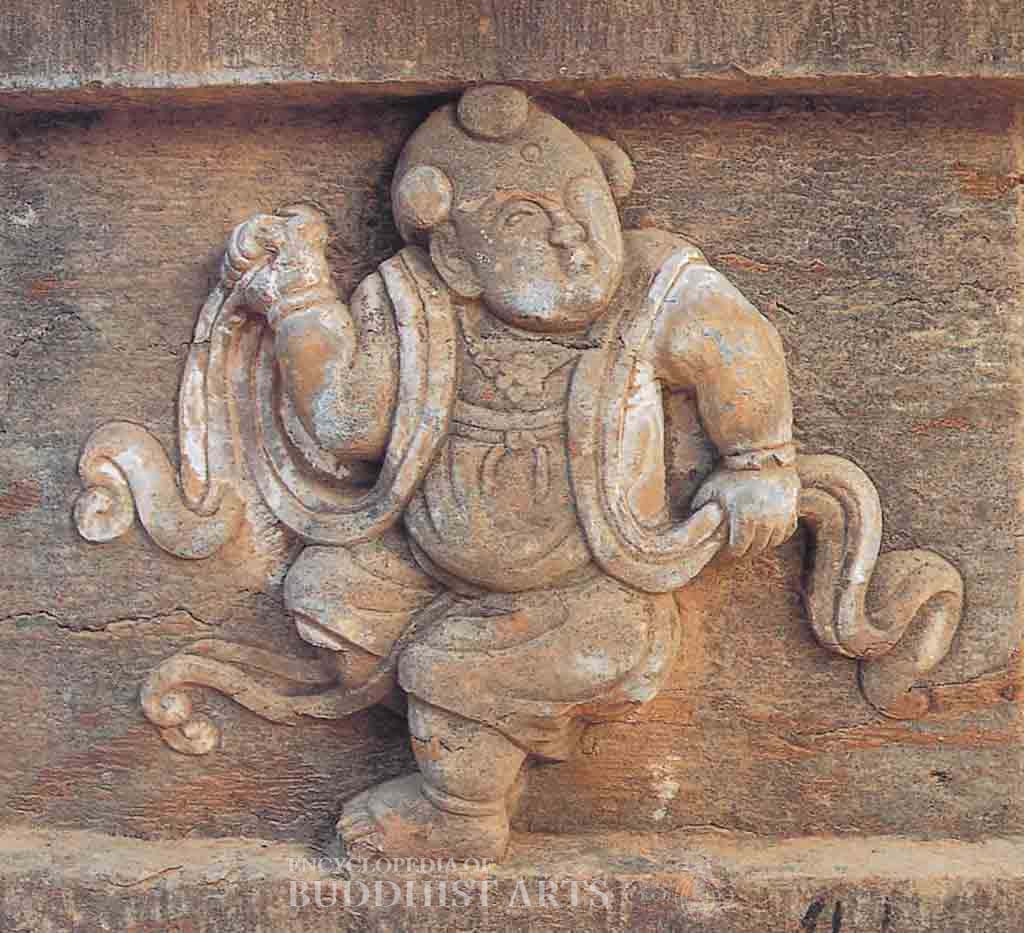
Lingyan Temple Sculptures: Forest of Stupas - Child at Play

Lingyan Temple Sculptures: Pratyutpanna Hall - Sutra Pillar - Eight Buddha Faces

Lingyan Temple Sculptures: Pratyutpanna Hall - Sutra Pillar - Human-Headed Eagle
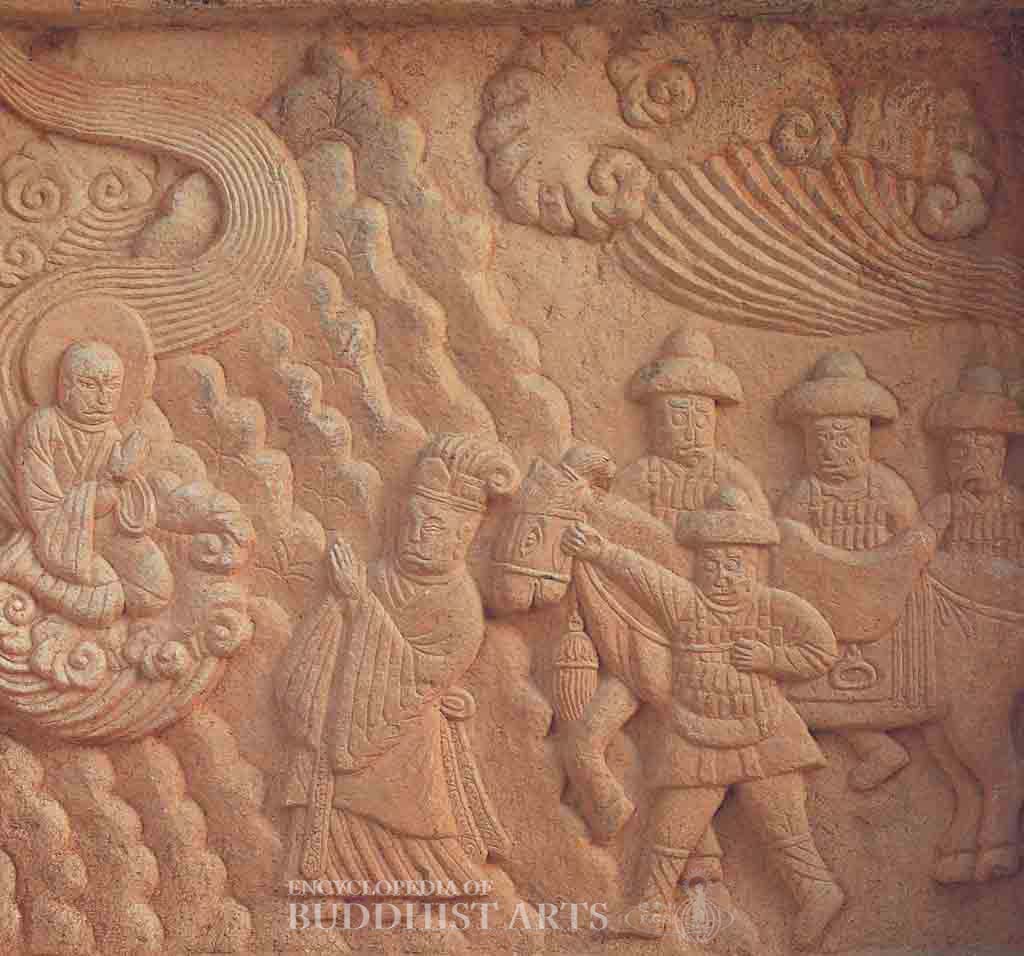
Lingyan Temple Sculptures: Pratyekabuddha Pagoda - Biography of King Asoka (detail)

Lingyan Temple Sculptures: Pratyekabuddha Pagoda - Biography of King Asoka (detail)
Lingyan Temple Sculptures
CHINA, Shandong, Jinan
The sculptures are dispersed in various locations around the temple, including the Thousand Buddha Hall, Pratyekabuddha Pagoda, Pratyutpanna Hall, and the forest of stupas. The Thousand Buddha Hall, which was renovated in 1587 during the Ming dynasty, enshrines the Trikaya Buddhas. The remaining walls of the hall are filled with rows of seated golden Buddhas. The hall also holds the 40 colorful statues of Arhats.
The Pratyekabuddha Pagoda was renovated in 1057 during the Northern Song dynasty. Only 37 reliefs of the original 40 that depict the biography of King Asoka (reigned circa 269–232 BCE) remain on its base. They are distinctive for sinicizing all the figures. A forest of stupas is located to the west of the temple complex. One of the stupas has reliefs of warriors, lions, polo players, and children at play.
Two sutra pillars and one stone pagoda were excavated from the Pratyutpanna Hall in 1995. One pillar carved with the Usnisavijaya Dharani Sutra was created in 753 during the Tang dynasty. An interesting feature is the eight Buddha faces located around the sections. The other pillar, dated to 860, has interesting decorations such as the ogee-shaped windows that contain heavenly beings, dragons, and winged creatures with human heads and eagle bodies. The stone pagoda was built in 735 and showcases delicate carvings.
The Jicui Zhengmeng Niche was probably carved into the cliff face on Lingyan Mountain sometime during 627 to 649. A large seated Sakyamuni Buddha is located within a deep niche and flanked by small figures of the disciples Mahakasyapa and Ananda, and the Bodhisattvas Avalokitesvara and Ksitigarbha.
For more details, go to the Encyclopedia of Buddhist Arts: Sculpture G-M, page 604.
Cite this article:
author = Hsingyun and Youheng and Lovelock, Yann and Chou, Yuan and Huntington, Susan and Edson, Gary and Neather, Robert,
booktitle = {Encyclopedia of Buddhist Arts: Sculpture G-M},
pages = 604,
title = {{Lingyan Temple Sculptures}},
volume = 11,
year = {2016}}