
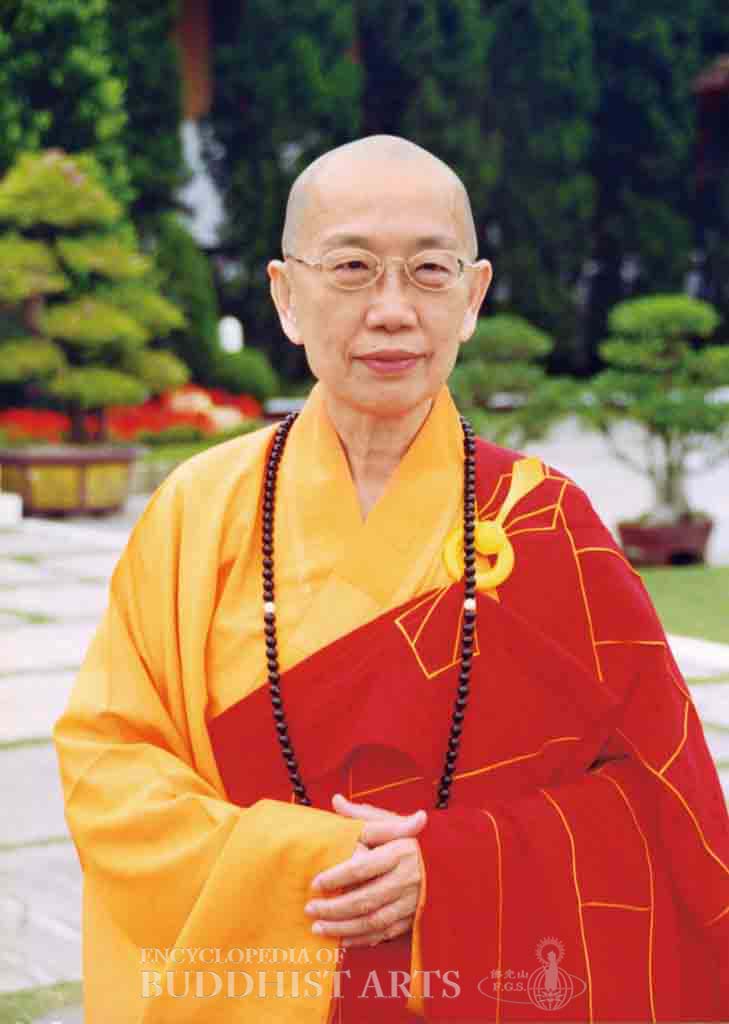
Tzu Hui
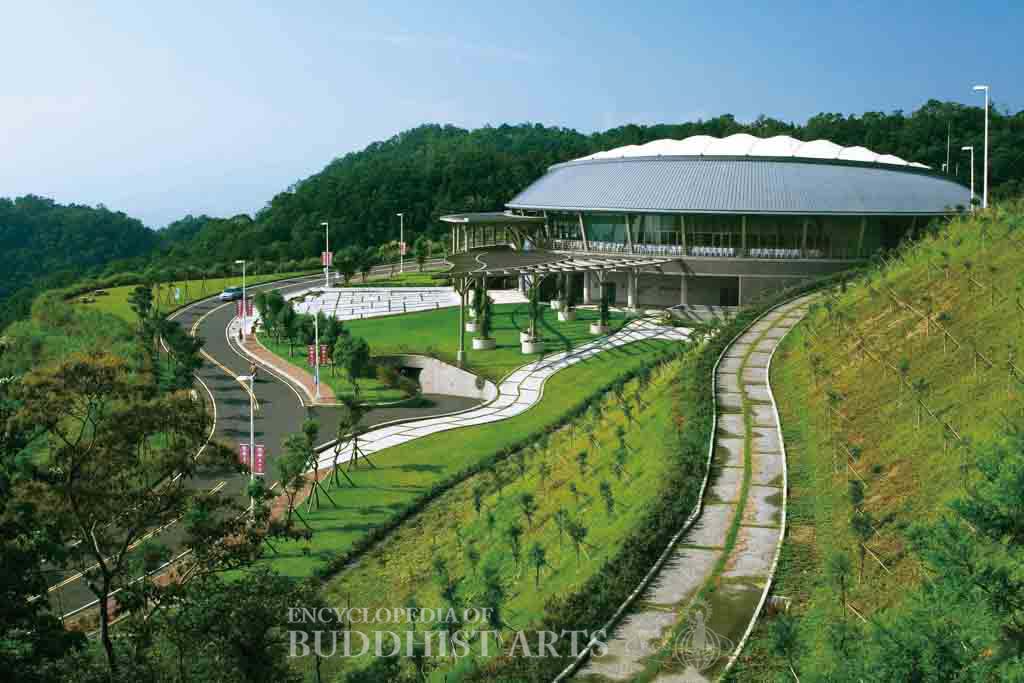
Huai En Stadium designed by Tzu Hui; Dated 2012
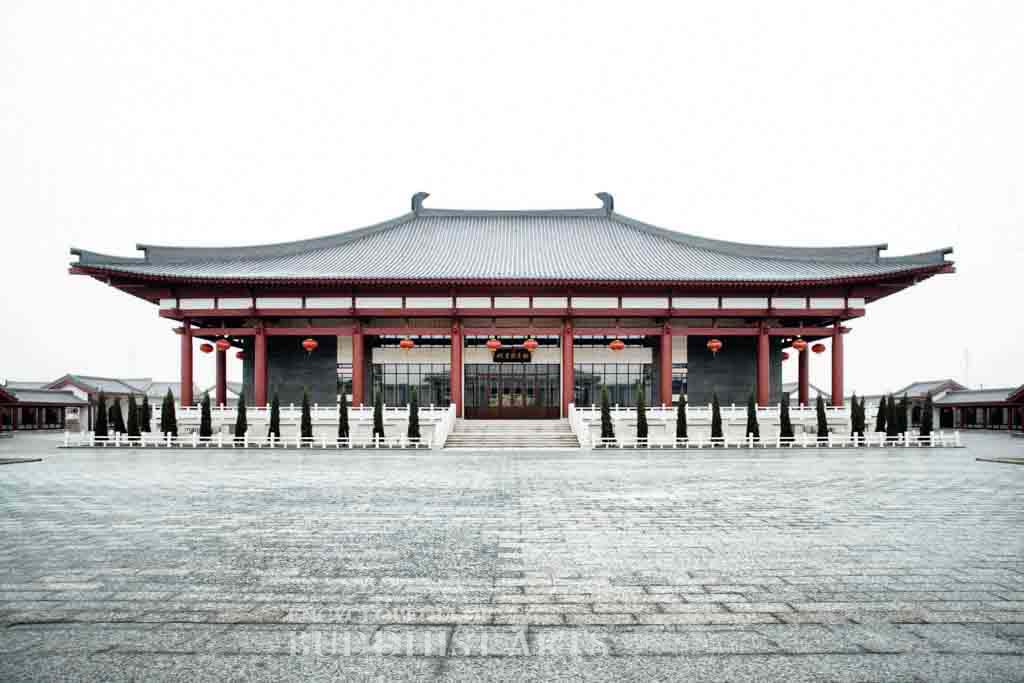
Jianzhen Library designed by Tzu Hui; Dated 2008
Tzu Hui
TAIWAN, Yilan
Tzu Hui has an original name of Chang Yu-Li and her Dharma name is Hsin Hsuan. She is a nun and educator who was born into a Buddhist family. When she was young, Tzu participated in the youth choir organized by Master Hsing Yun at the Lei Yin Temple (present day Fo Guang Shan Lan Yang Temple) in Yilan. She renounced in 1965 under Master Hsing Yun and was ordained at Fayun Temple in the same year. In 1969, she went to Japan to study at Bukkyo University and Otani University and obtained her M.A. degree.
After returning to Taiwan, Tzu Hui began working as a Mandarin, Japanese, and Taiwanese translator for Master Hsing Yun, and has done so for over 40 years. Among the other posts she has held were the director of the Ci Ai Kindergarten in Yilan, principal of Pu-Men High School in Kaohsiung, president of Fo Guang Shan Domestic and Overseas Executive Council, chief executive of Fo Guang Shan Foundation for Buddhist Culture and Education, and president of Fo Guang Shan Education Council. Presently, Tzu Hui serves as a special assistant to Master Hsing Yun, is the head of the Fo Guang Shan Buddhist Canon Committee, and the vice president of Fo Guang Shan Institute of Humanistic Buddhism. She was previously the abbess of Pu Hsien Temple in Kaohsiung, Fo Guang Shan Tokyo Temple in Japan, and Tung Lin Kok Yuen in Hong Kong.
Particularly skilled in creating educational programs, Tzu Hui helped establish many educational institutions including Fo Guang Shan Tsung Lin University and its branches, Pu-Men High School in Kaohsiung, Jiun Tou Elementary and Junior High School in Nantou, Jiun Yi Elementary and Junior High School in Taitung, Nanhua University in Chiayi, Fo Guang University in Yilan, Taiwan, and the University of the West in California, USA. She is often invited to lecture at various universities, temples, seminars, and more. In 1999, Tzu Hui was presented an honorary Ph.D. degree from the University of the West in California, USA, and in 2001, she was given an award by the Ministry of Education in Taiwan for her outstanding achievements in promoting social education. Among the works she authored are Seventy-Two Lotuses, Introduction to Buddhist Sutras, and Past and Present Talks.
Involved in a myriad of activities, Tzu Hui also participates in architectural design and landscaping projects. At the instruction of Master Hsing Yun, Tzu Hui has assisted in the planning, design, and supervision of several architectural projects, such as the Huai En Stadium and dormitories at Fo Guang University in Yilan and Jianzhen Library in Yangzhou, Jiangsu. The building materials, furniture, and other amenities were personally selected by her. The Jianzhen Library has a traditional courtyard featuring architecture inspired by Tang dynasty (618–907) style. It is well-equipped with a modern library, auditorium, art gallery, and meeting rooms.
The construction of Fo Guang University took 12 years to complete. Beginning in 1999, 12 buildings have been erected by 2012. The Huai En Stadium is structured like the Taipei Arena and is an eco-friendly building. The complex houses facilities for conferences, student organizations, a music classroom, studio, and parking lots. Built from donations from over 1,000 people, it is referred to as the “Huai En (Gratitude) Stadium.”
In 2011, Tzu Hui was put in charge of landscaping at the Fo Guang Shan Buddha Memorial Center in Kaohsiung, Taiwan. She also supervised the building of both the Camphor Grove Tea House and the Twin Pavilion Tea House at the same site; the design of the Camphor Grove Tea House is crescent shaped, while the layout of the Twin Pavilion Tea House mimics that of Kinkakuji Temple in Kyoto, Japan.
For more details, go to the Encyclopedia of Buddhist Arts: People, page 271.
Cite this article:
author = Hsingyun and Youheng and Youlu and Pokorski, Stefanie and Yichao and Mankuang and Miaohsi,
booktitle = {Encyclopedia of Buddhist Arts: People },
pages = 271,
title = {{Tzu Hui}},
volume = 19,
year = {2016}}