
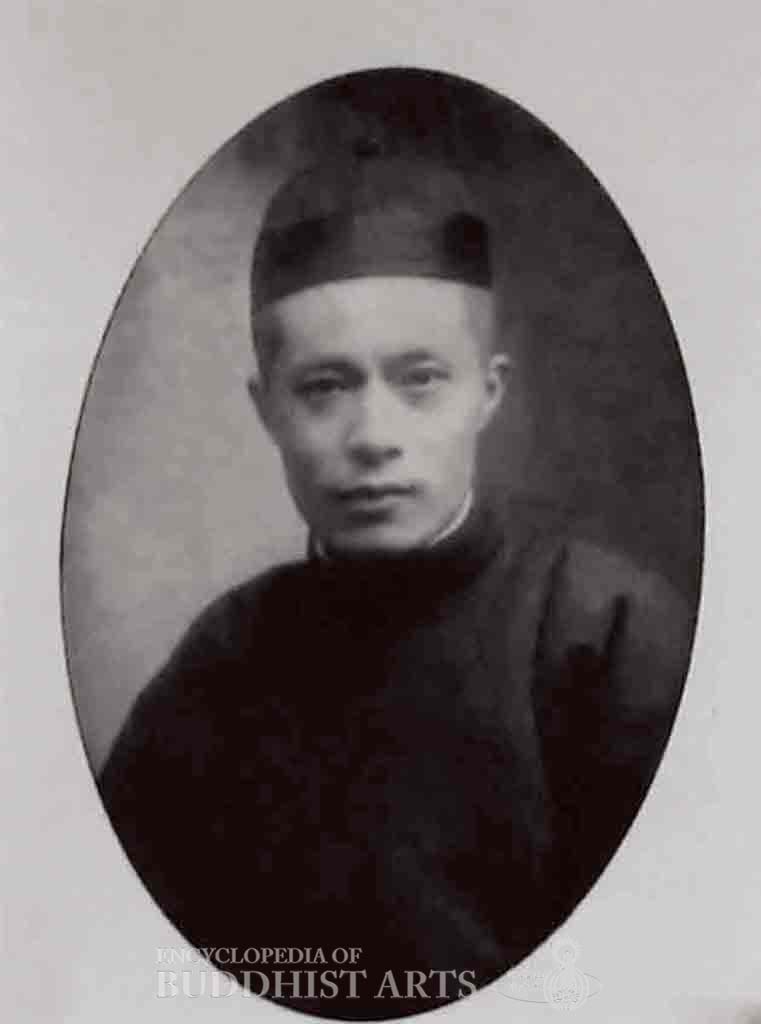
Wang Bu
Wang Bu
CHINA, Jiangxi, Yichun
A ceramic painter from Fengcheng, Yichun, Wang Bu was also known as Renyuan or Zhuxi. When he was 9 years old, he became an apprentice under Xu Yousheng, a famous ceramic painter from Jingdezhen, and by age 15, he began working in the trade. He was employed by the famous ceramicist Wu Aisheng and worked creating copies of the ceramics antiques that were kept by government officials during the Ming (1368–1644) and Qing (1644–1911) dynasties. After the passing of Wu Aisheng, Wang began applying calligraphic painting techniques on ceramic pieces. He was bold in using iron-wire drawing, pushing the boundaries of traditional methods. In doing so, he pioneered a new trend in ceramic painting.
In 1954, Wang joined the Jiangxi Ceramics Research Institute and assisted in further developing the traditional art of ceramic painting in Jingdezhen. Each of his individual pieces of work was unique with decoration that was simple yet stylish. Wang created the method of using an impressionistic painting style on ceramics, and also developed a new type of ink with a viscosity that could be easily manipulated. Using a thick brush, he would apply the ink on the ware and then create bold outlines for added effect. He was noted for his mastery of the blue-and-white porcelain technique and his unconventional ideas.
Wang’s Buddhist piece, Vessel with Longevity Buddha, is a square bottle that features a painted image of Amitayus Buddha. Another similar piece exhibiting Amitayus Buddha was documented in Catalog of Authentic Jingdezhen Ceramics. His other painted ceramic works feature images of Avalokitesvara, Amitabha Buddha Triad, Bodhidarma, and Arhats.
For more details, go to the Encyclopedia of Buddhist Arts: People, page 275.
Cite this article:
author = Hsingyun and Youheng and Youlu and Pokorski, Stefanie and Yichao and Mankuang and Miaohsi,
booktitle = {Encyclopedia of Buddhist Arts: People },
pages = 275,
title = {{Wang Bu}},
volume = 19,
year = {2016}}