
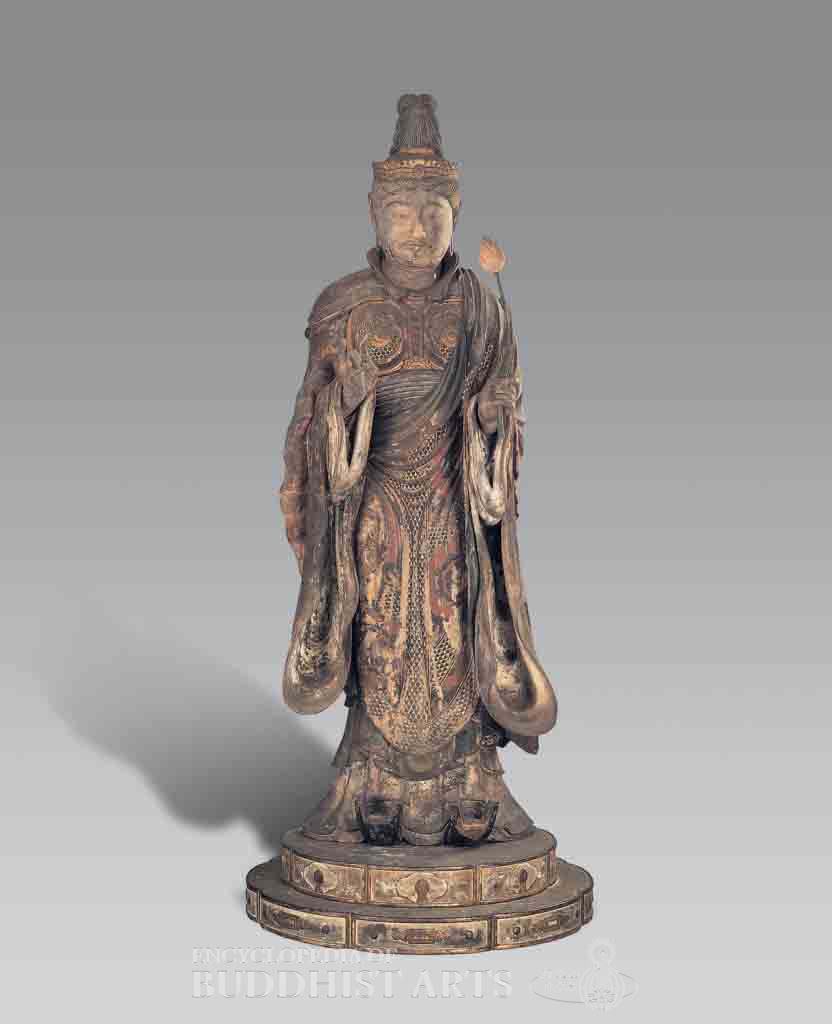
Sakra
Cypress wood
Sakra
JAPAN; Kamakura period
This is the work of the sculptor Jokei and his apprentices, according to an ink inscription found inside the statue. Twenty-two monks from Katsuyoshi and elsewhere donated it to the temple (presumed to be Kofukuji Temple in Nara) in the year 1201. The figure is assembled from several pieces of cypress wood. The face was later repaired and then painted and gilded.
Sakra’s hair is elaborately tied into a topknot and the face is bearded. The figure holds a lotus bud in one hand while the other hand is raised in the lotus mudra. The robe is ornate with deeply plunging sleeves as it cascades over high wooden clogs. Jokei is known to have been influenced by China and this realistic depiction of the Dharma protector, Sakra, clearly shows a Song dynasty (960–1279) influence.
For more details, go to the Encyclopedia of Buddhist Arts: Sculpture N-Sr, page 900.
Cite this article:
author = Hsingyun and Youheng and Lovelock, Yann and Chou, Yuan and Huntington, Susan and Edson, Gary and Neather, Robert,
booktitle = {Encyclopedia of Buddhist Arts: Sculpture N-Sr},
pages = 900,
title = {{Sakra}},
volume = 12,
year = {2016}}