
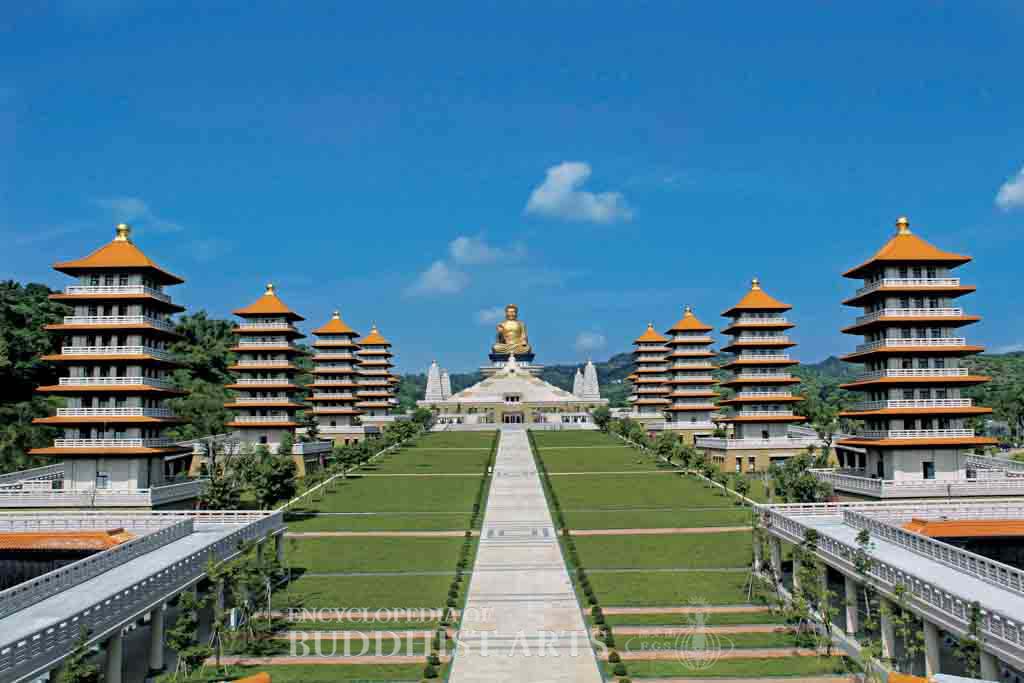
Fo Guang Shan Buddha Memorial Center
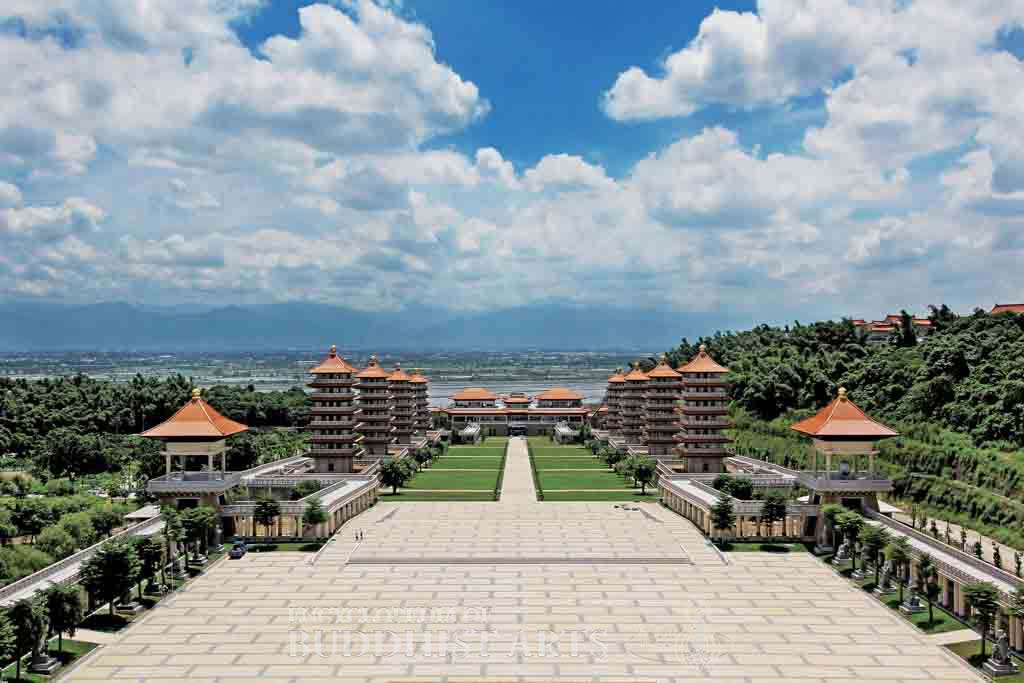
Fo Guang Shan Buddha Memorial Center
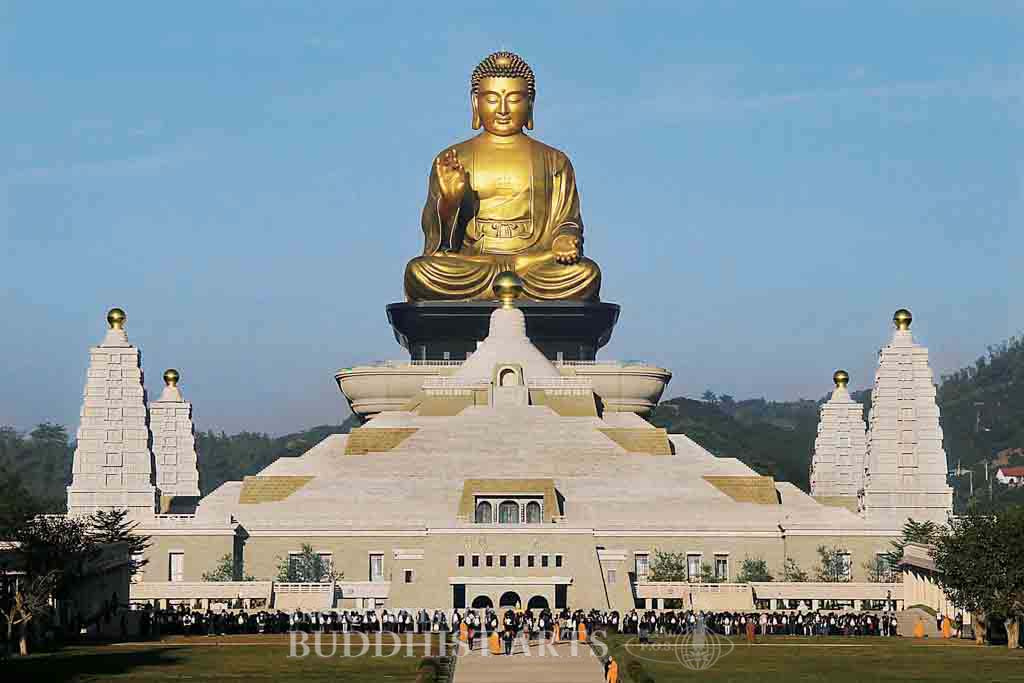
Fo Guang Shan Buddha Memorial Center: Main Hall
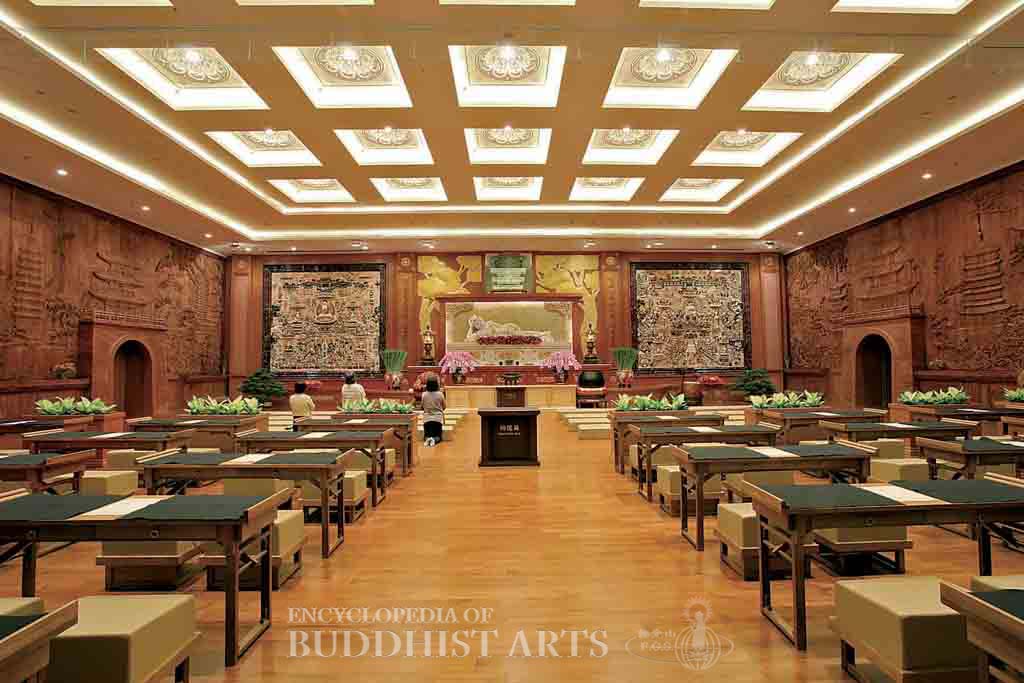
Fo Guang Shan Buddha Memorial Center: Jade Buddha Shrine (interior)
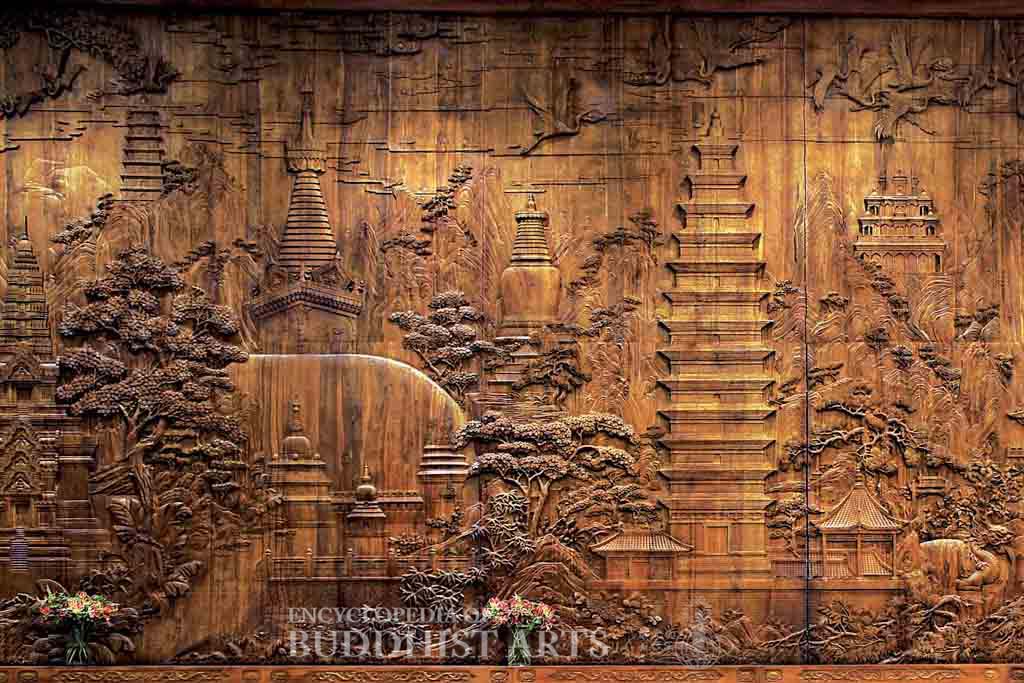
Fo Guang Shan Buddha Memorial Center: Jade Buddha Shrine (interior)
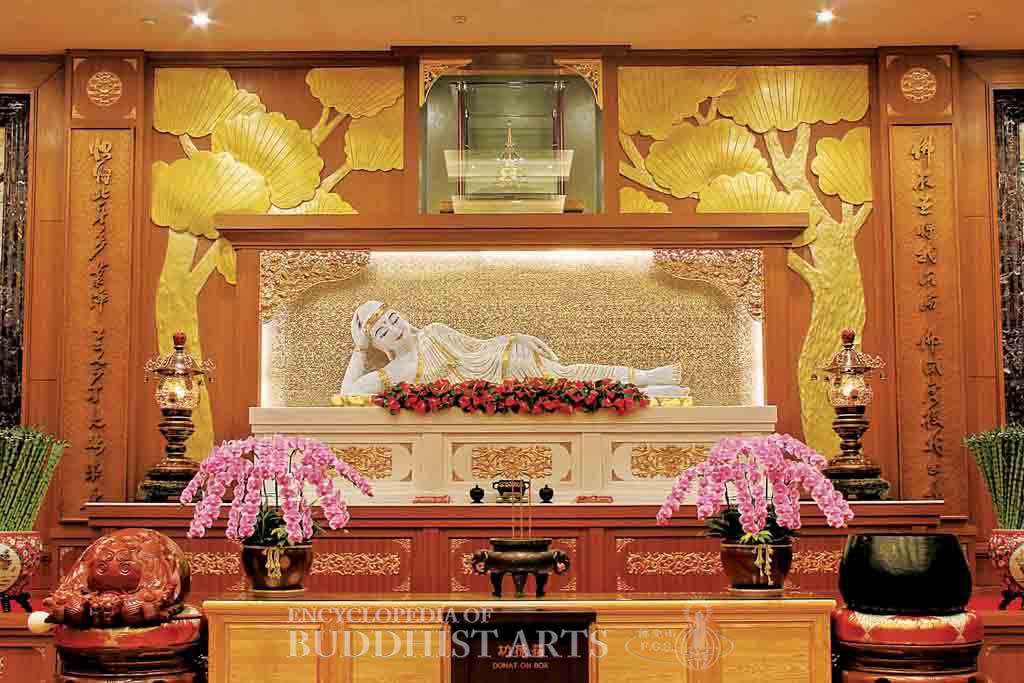
Fo Guang Shan Buddha Memorial Center: Jade Buddha Shrine (interior)
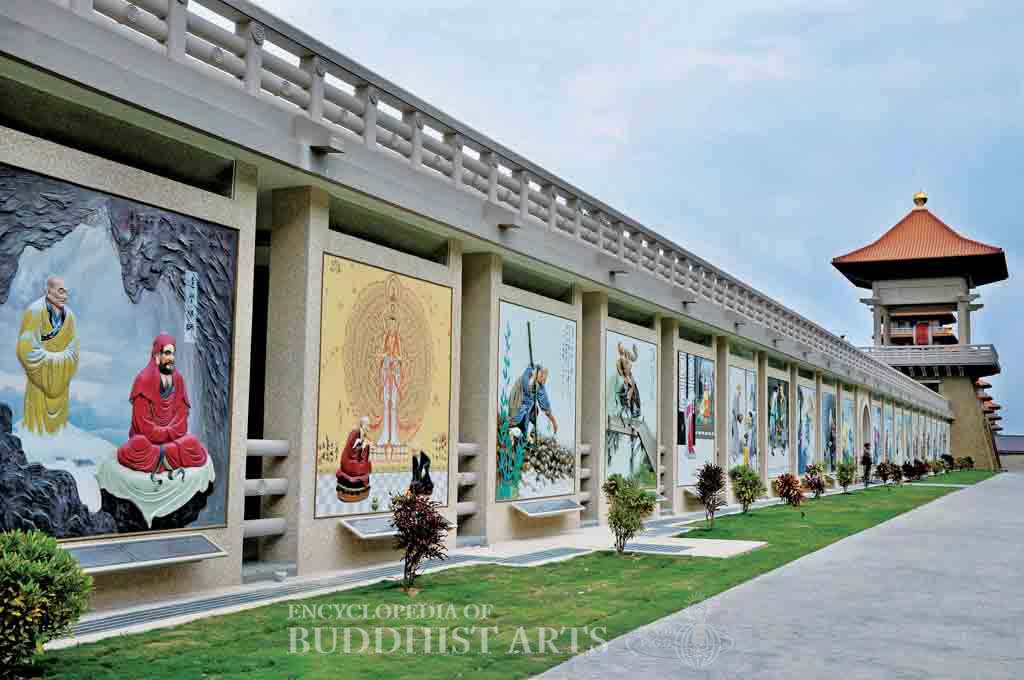
Fo Guang Shan Buddha Memorial Center: Reliefs of Chan Art and Stories
Fo Guang Shan Buddha Memorial Center
TAIWAN, Kaohsiung
The Buddha Memorial Center is located next to Fo Guang Shan Monastery. Its construction started in 2003 and was completed in 2011. When Master Hsing Yun held the Bodhgaya International Full Ordination in India in 1998, he encountered Kunga Dorje Rinpoche, a Tibetan lama who was impressed with the long-term efforts of Fo Guang Shan in promoting Humanistic Buddhism and the cultural interactions between Chinese and Tibetan Buddhists. Fo Guang Shan had also headed the Chinese Han-Tibet Culture Association and organized the World Sutric and Vajrayana Buddhist Conference. The formation of the Buddha’s Light International Association widely promoted the practice of Humanistic Buddhism. Kunga Dorje Rinpoche decided to entrust Fo Guang Shan a Buddha’s tooth relic, which he had kept in secret for nearly 30 years. He expressed his wish that a memorial be built to house the sacred relic, as a symbol of the continuation of the Dharma. This gesture of goodwill marked the origins of the Fo Guang Shan Buddha Memorial Center.
The layout is extremely grand with the majestic main hall at its center, the elegant Eight Pagodas at the front, the imposing Big Buddha at the rear, the sacred Vulture Peak in the south, and the beautiful Jetavana Grove in the north. Along the central axis from east to west there are the main temple gate, front hall, main hall, and Fo Guang Big Buddha. Between the front and main halls, there is the Great Path to Buddhahood and Grand Photo Terrace, and the covered walkways along the north and south sides. The Eight Pagodas are erected along the Great Path to Buddhahood. Sculptures of the Eighteen Arhats line the north and south edges of the Bodhi Wisdom Concourse, while statues of the Patriarchs of the Eight Schools are displayed in front of the main hall. There is the Information Tower to the south in front of the main temple gate, while the south and north sides of the symmetrical complex are occupied by Vulture Peak and Jetavana Grove.
The architecture of the Buddha Memorial Center blends the old with the new, and mixes Chinese and Indian traditional styles with modern styles. The main hall has the appearance of a grand stupa. It is in the form of a square pyramid and is influenced by Borobudur in Indonesia. With the four small stupas at the corners, the layout resembles the Mahabodhi Temple at Bodhgaya in India. These four stupas are called the Four Noble Truth Stupas and are dedicated to the Four Great Bodhisattvas: Avalokitesvara of Great Compassion, Manjusri of Great Wisdom, Ksitigarbha of Great Vows, and Samantabhadra of Great Practice. Therefore, they are also known as Avalokitesvara Stupa, Manjusri Stupa, Ksitigarbha Stupa, and Samantabhadra Stupa. Underneath the hall, there are 48 underground palaces, which contain mementos and objects from the present era. These underground palaces are time capsules, which will be opened in the future, once in every hundred years, so that future generations can see the culture of people in the past. In the spire of the main hall there is a sutra repository, which contains copies of the Heart Sutra written by a million people.
The main hall consists of three shrines, four museums, the Great Enlightenment Auditorium, and art galleries. The three shrines are the Avalokitesvara Shrine at Mount Potalaka, Golden Buddha Shrine, and Jade Buddha Shrine. The Avalokitesvara Shrine houses a statue of the Thousand-Armed Avalokitesvara surrounded by the Thirty-Three Manifestations of Avalokitesvara engraved on glass. The Golden Buddha Shrine contains a golden Buddha statue, which is a gift from the Sangharaja of Thailand. The Jade Buddha Shrine contains a white jade Reclining Buddha statue resting peacefully on the right side. The Buddha tooth relic is enshrined above the Reclining Buddha. There is a sala tree on each side of the Buddha. This scene is composed in accordance with the scene in the Epilogue to the Mahaparinirvana Sutra. The left and right sides of the Buddha are decorated with colorful jade reliefs, which represent the Western Pure Land and Eastern Pure Land, respectively. The side walls are finished with carved panels using fragrant wood. These panels depict images of various stupas and pagodas from all over the world. According to the sutras, the Buddha instructed his disciples that, after his passing away, relics may be retrieved and venerated in stupas built at crossroads. This would allow people to see and remember the teachings of the Buddha.
The eight identical, seven story, square pagodas are 38 m high. They are called One Teaching Pagoda, Two Assemblies Pagoda, Three Goodness Pagoda, Four Givings Pagoda, Five Harmonies Pagoda, Six Perfections Pagoda, Seven Admonishments Pagoda, and Eightfold Path Pagoda. Their pyramidal roofs are covered with yellow glazed tiles and surmounted by a golden jewel.
The covered walkways on the sides are lined with black granite walls inscribed with the names of temples, organizations, and individuals who donated to the building fund. There are also carvings of mudras, as well as calligraphic engravings of excerpts from Master Hsing Yun’s book Humble Table, Wise Fare, written by famous calligraphers. In addition, there are altering panels with reliefs depicting the Stories of the Buddha and engravings of Buddhist Verses written by Master Hsing Yun. On the outer sides of the covered walkways, there are painted reliefs of Chan Art and Stories and Life Protection Murals. These expressive artworks expound the compassion and wisdom of the Buddha, and serve to heighten the awareness of Buddhism through artistic means.
As Master Hsing Yun puts it, “The Buddha Memorial Center is an integration of past and present epochs and a mix of Chinese and Indian cultures. It employs technological means and provides a joyous experience for visitors through multimedia, which encourages further interest and understanding of the Buddha’s teachings.”
For more details, go to the Encyclopedia of Buddhist Arts: Architecture A-F, page 302.
Cite this article:
author = Hsingyun and Youheng and Johnson, Peter and Mankuang and Lancaster, Lewis,
booktitle = {Encyclopedia of Buddhist Arts: Architecture A-F},
pages = 302,
title = {{Fo Guang Shan Buddha Memorial Center}},
volume = 1,
year = {2016}}