
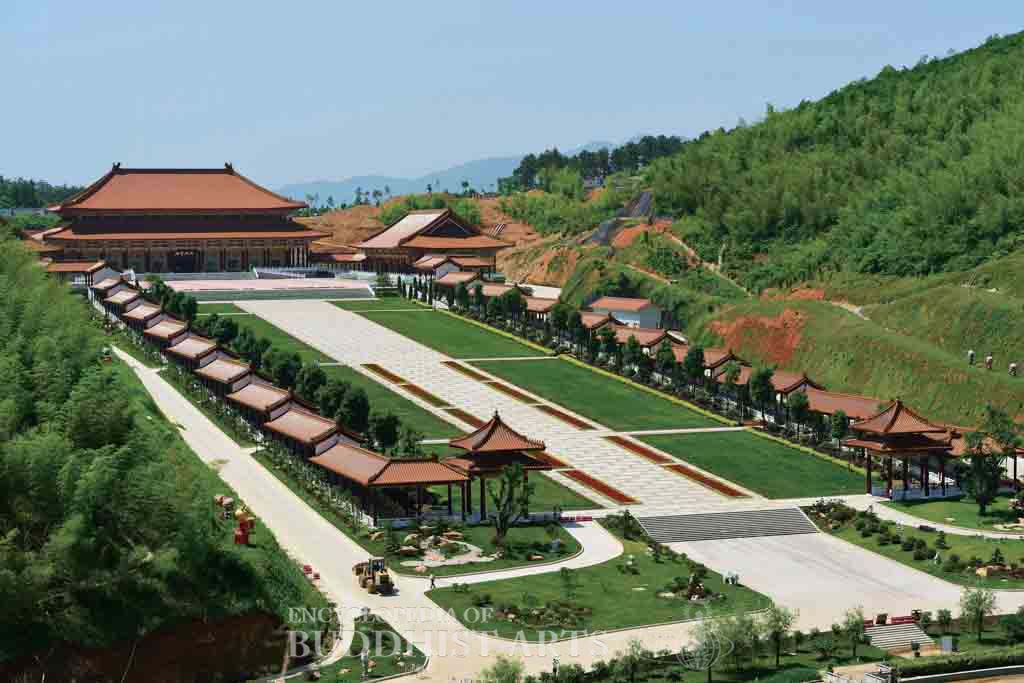
Dajue Temple
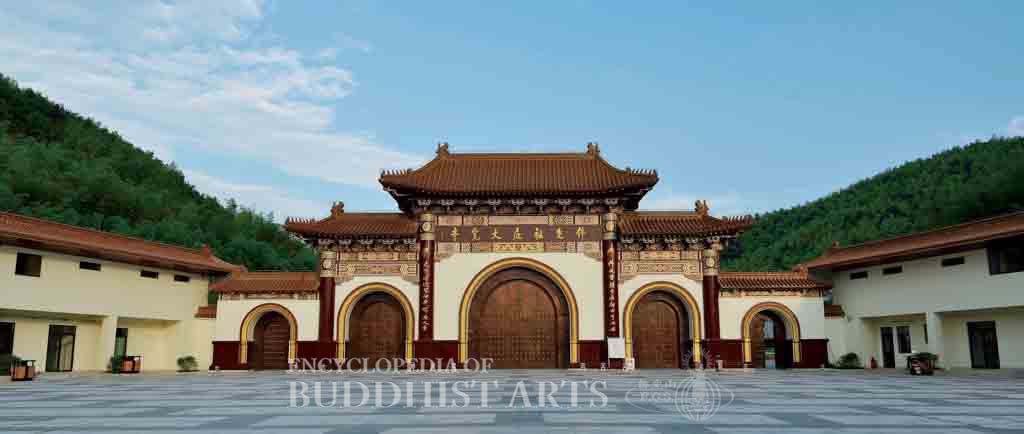
Dajue Temple: Main Temple Gate
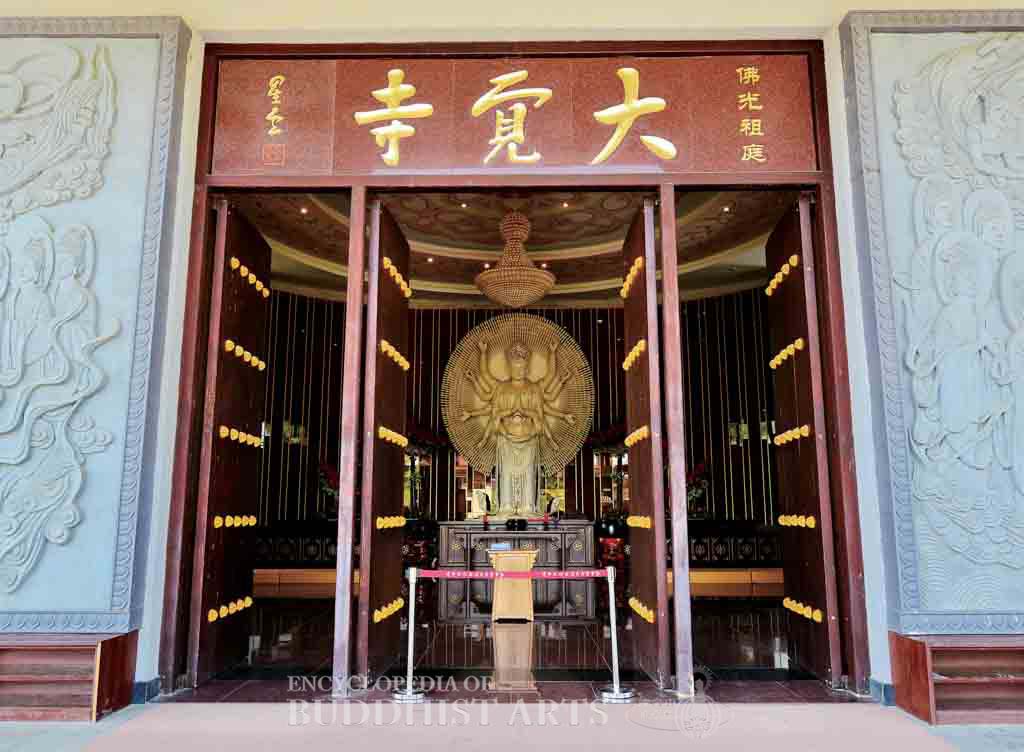
Dajue Temple: Avalokitesvara Hall
Dajue Temple
CHINA, Jiangsu, Yixing
Dajue means Great Enlightenment. It is a temple of the Linji school of Chan Buddhism. It was built between 1265 and 1274 by Chan Master Zhining. Throughout its history it has been repaired and reconstructed a number of times. In 1920 Master Zhikai was appointed head monk of the temple. This was before he came under the Dharma tutelage of senior monk Zhuocheng of Qixia Temple in 1936. Master Hsing Yun, founder of Fo Guang Shan Monastery in Taiwan recognized Dajue Temple as his ancestral temple, because he was ordained by Master Zhikai when he renounced at Qixia Temple in 1938.
Dajue Temple was severely damaged in wartime and was completely destroyed during the Cultural Revolution (1966–1976). When Master Hsing Yun visited China in 1989, he was saddened by the knowledge of the temple’s disappearance. Master Hsing Yun was determined to rebuild his ancestral temple. Local government approval was obtained in 2004 to erect a new temple compound by Cloud Lake in Hengshan village in Yixing. Construction began in 2005 and by 2012 the Great Hero Hall and adjacent buildings were completed.
The temple stands by a lake at the foot of a mountain and is surrounded by lush bamboo forest. It consists of the main temple gate, Avalokitesvara Hall, Great Hero Hall, and the Prabhutaratna Pagoda. Statues of the Eighteen Arhats and reliefs of the Buddha and Disciples in Procession line both sides of the grand entrance pathway. The roof of the main temple gate is covered with yellow glazed tiles. The five-bay wide Avalokitesvara Hall has a single-eave hip roof and enshrines a statue of Thousand-Armed Avalokitesvara.
The Great Hero Hall has a double-eave hip roof covered with yellow glazed tiles. It contains a 15 m high Burmese jade seated Sakyamuni Buddha weighing 480 t. On the left and right walls inside the hall there are jade reliefs of the Eastern and Western Pure Lands. The Great Path to Buddhahood connects the Avalokitesvara Hall and the Great Hero Hall. In front of the Great Hero Hall, there is a building on either side: the Eastern Chan Building and the Western Pure Land Building. The halls and subsidiary buildings are connected by covered walkways which flank the Great Path to Buddhahood.
For more details, go to the Encyclopedia of Buddhist Arts: Architecture A-F, page 203.
Cite this article:
author = Hsingyun and Youheng and Johnson, Peter and Mankuang and Lancaster, Lewis,
booktitle = {Encyclopedia of Buddhist Arts: Architecture A-F},
pages = 203,
title = {{Dajue Temple}},
volume = 1,
year = {2016}}