
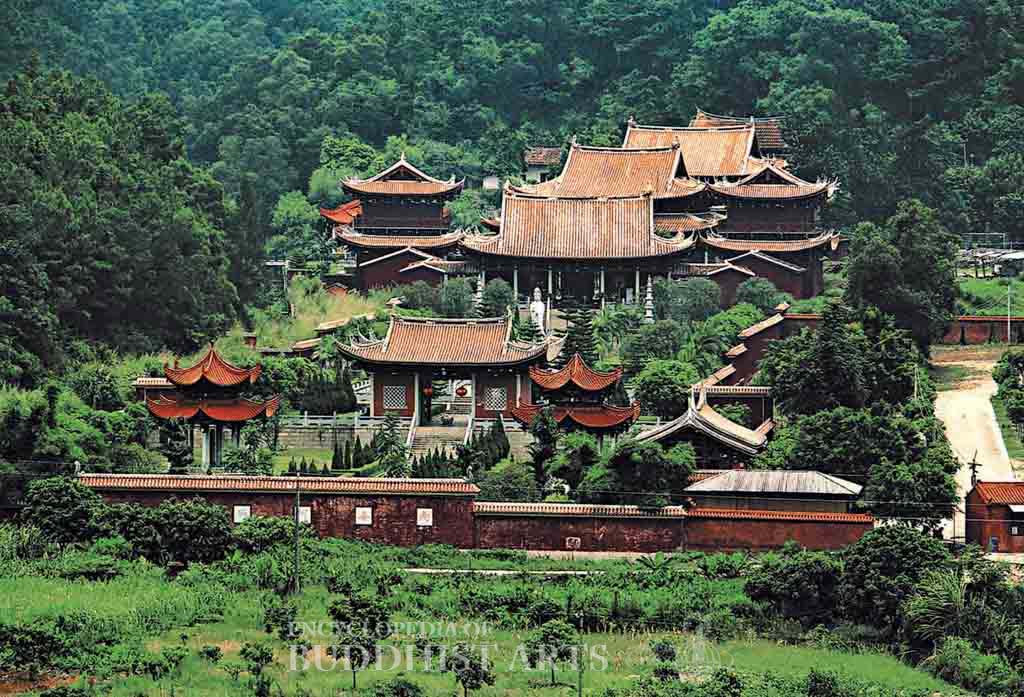
Wanfu Temple
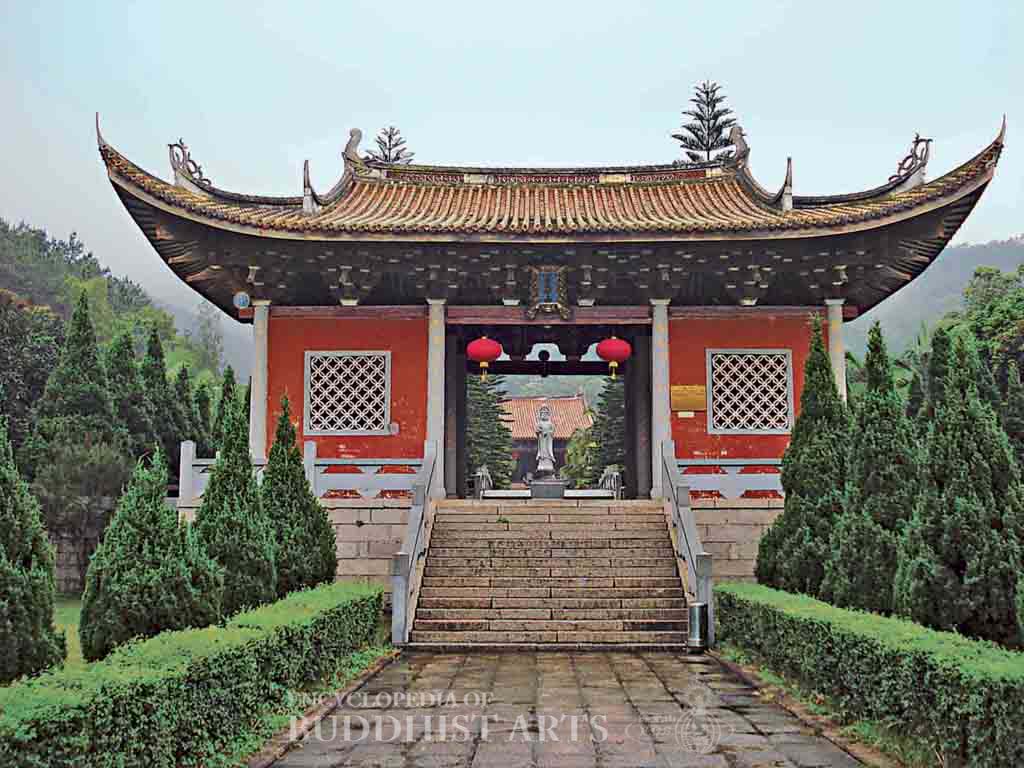
Wanfu Temple: Main Temple Gate
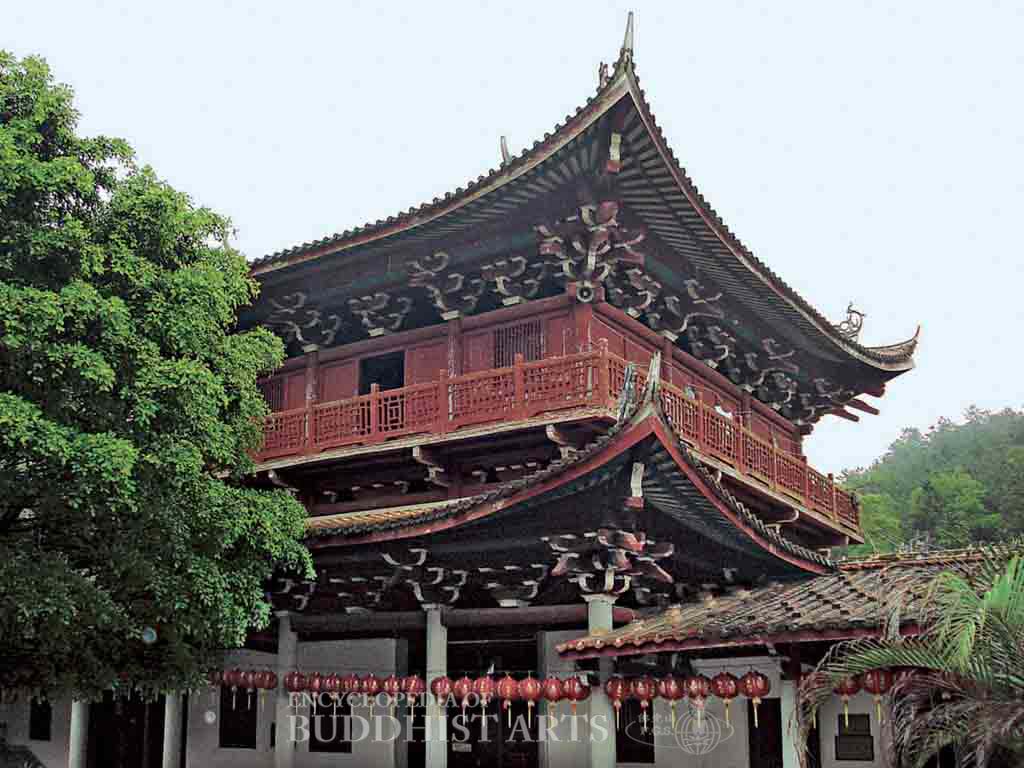
Wanfu Temple: Bell Tower
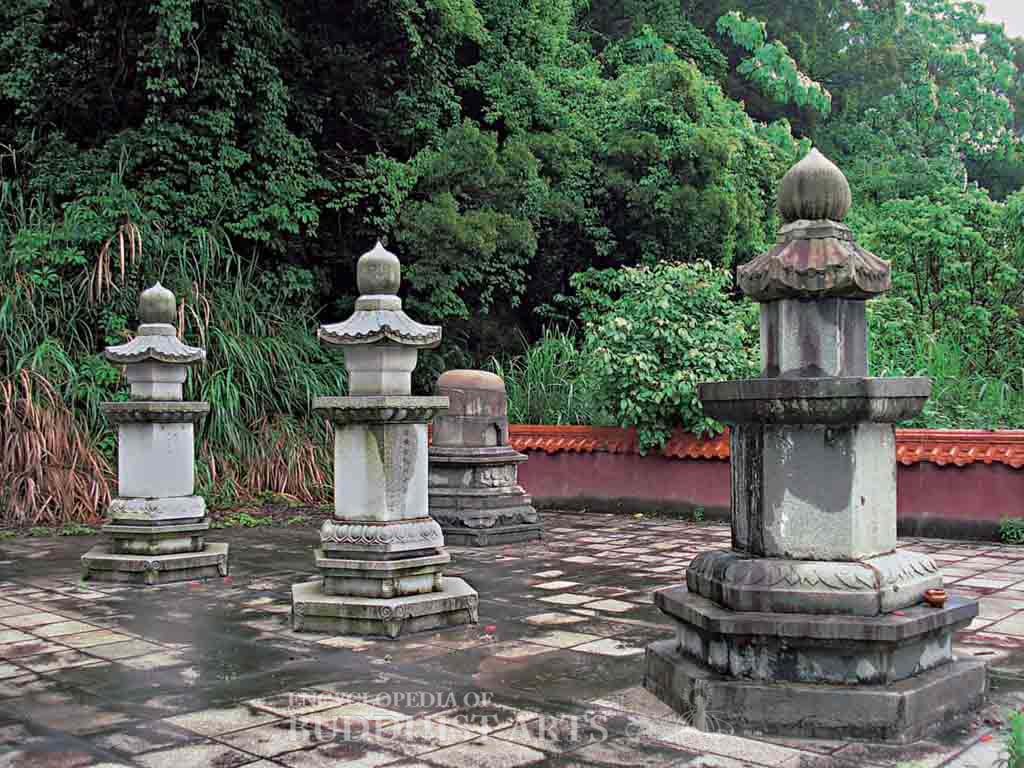
Wanfu Temple: Funerary Stupas of Huangbo Monks
Wanfu Temple
CHINA, Fujian, Fuqing
Wanfu means Ten Thousand Blessings. The temple is located on Huangboshan (Cork Tree Mountain), and therefore it is also known as Huangbo Temple. After the monk Zhenggan received Chan teachings from the Sixth Patriarch, Master Huineng, in 789 during the Tang dynasty, he returned to Fujian and founded this temple. In 848, Master Xiyun renounced here. He then made a pilgrimage to Baizhangshan to pay his respects to Chan Master Huaihai before returning here. During the Song dynasty (960–1279) the temple flourished but it was neglected during the Yuan dynasty (1271–1368). In 1637, Chan Master Yinyuan expanded the temple and then traveled to Japan in 1654 to establish the Obaku (Huangbo) school. The school recognizes this as its ancestral temple. The original Tang dynasty (618–907) Dharma Hall and abbot’s quarters were repaired in 1957. The temple was listed as a key Buddhist temple in the Han region of China in 1983.
In 1989 the temple underwent major reconstruction resulting in its present appearance. In front of the main entrance there is a Free Life Pond and a Longevity Courtyard. Along the central axis there are the main temple gate, Heavenly King Hall, Great Hero Hall, and the Dharma Hall. The side halls on the east and west include the abbot’s quarters, meditation hall, Sangharama Hall, Yinyuan Memorial Hall, and the bell and drum towers. The three-bay wide main temple gate has a single-eave hip-and-gable roof. The Great Hero Hall houses the Three Buddhas together with clay statues of the Eighteen Arhats along the sides. On the hill behind the temple, there are funerary stupas of past monks of the Huangbo lineage.
For more details, go to the Encyclopedia of Buddhist Arts: Architecture T-Z, page 1174.
Cite this article:
author = Hsingyun and Youheng and Johnson, Peter and Mankuang and Lancaster, Lewis,
booktitle = {Encyclopedia of Buddhist Arts: Architecture T-Z},
pages = 1174,
title = {{Wanfu Temple}},
volume = 4,
year = {2016}}