
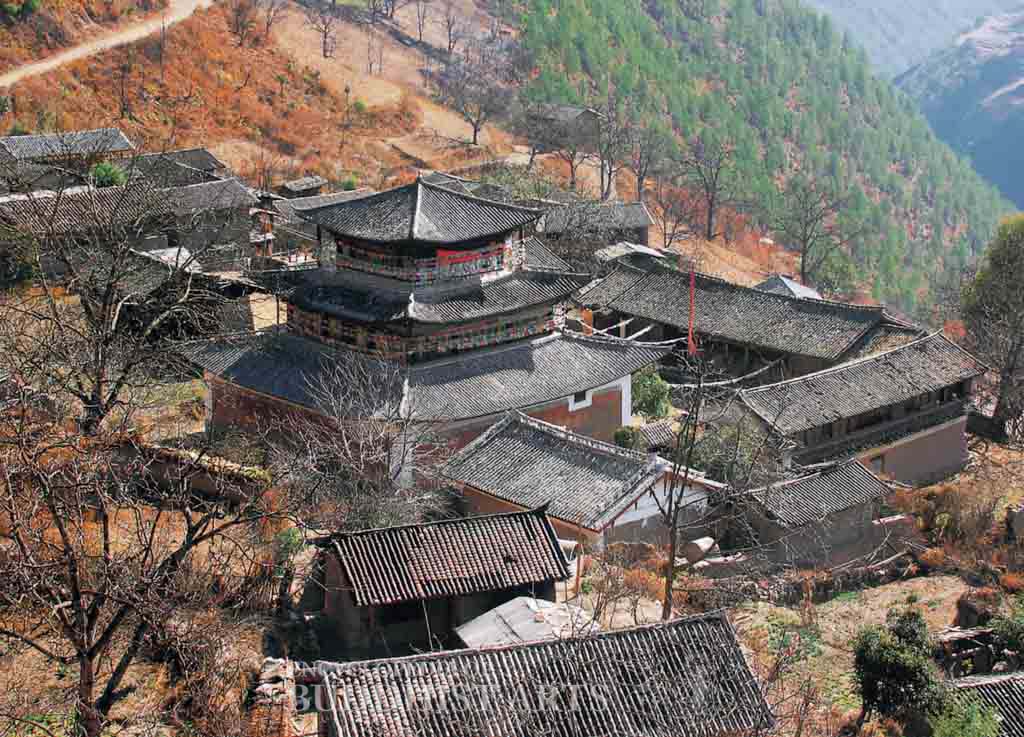
Shouguo Temple
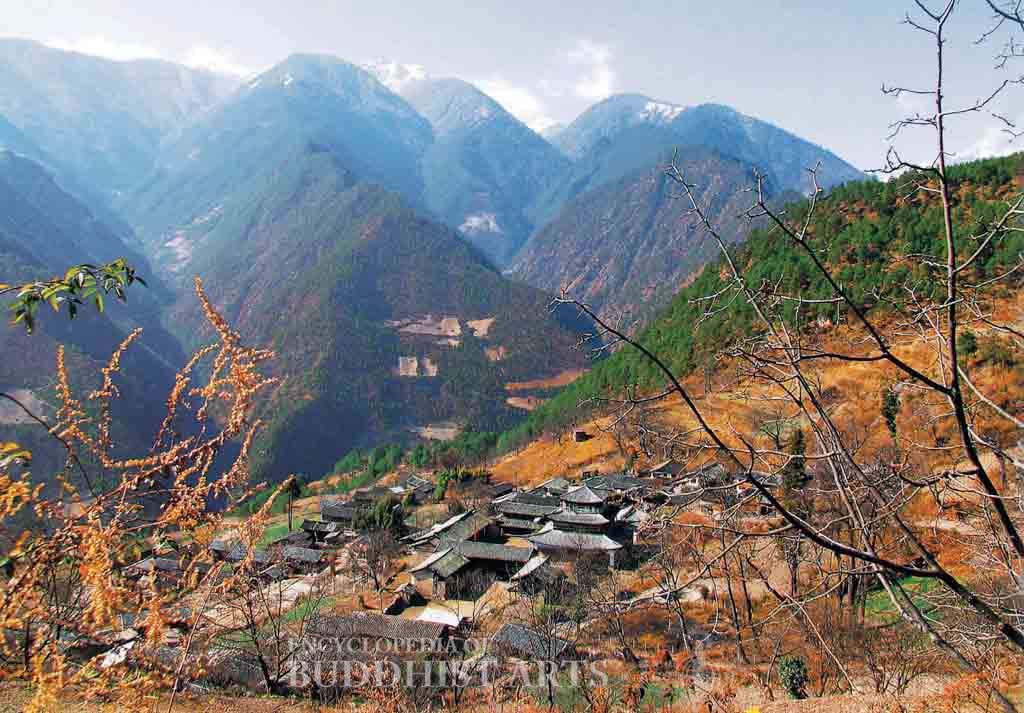
Shouguo Temple (aerial view)
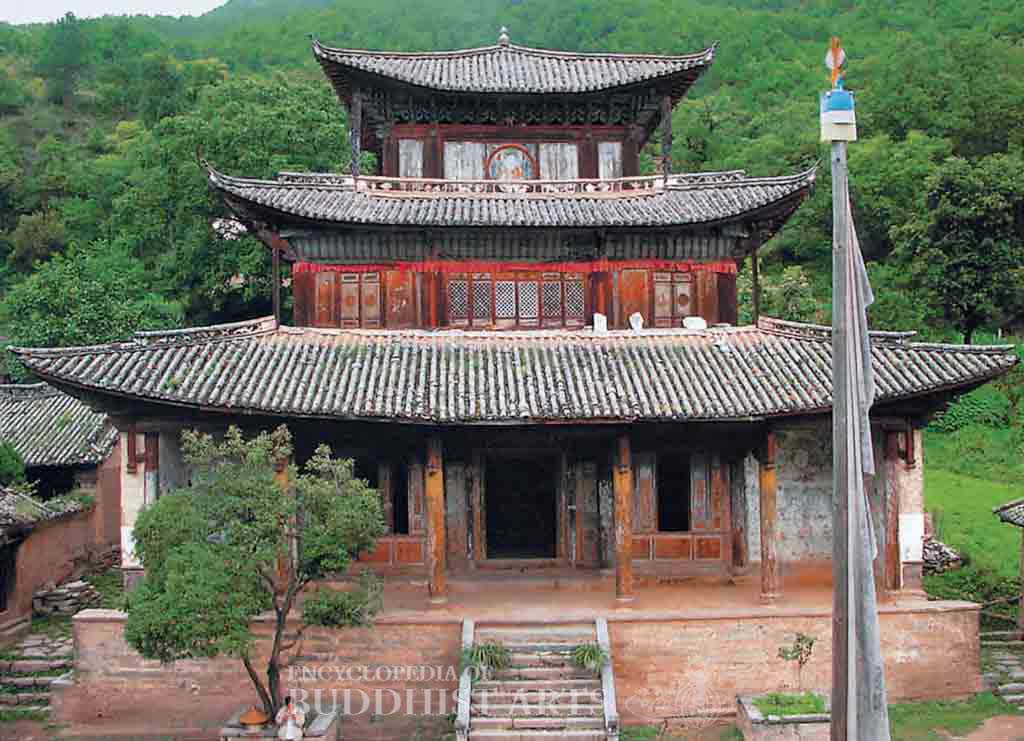
Shouguo Temple: Main Hall
Shouguo Temple
CHINA, Yunnan, Deqen
Shouguo means Longevity of the Nation. The temple follows the Karma Kagyu school of Tibetan Buddhism. In 1729 during the Qing dynasty, He Niang, the chieftain of the Nakhi ethnic group in Yunnan, donated funds toward its renovation but it was destroyed in 1745. It was moved to its current location in 1770 and renovated again in 1867. It was listed as a National Cultural Heritage Site in 2006.
Facing west, the temple includes the main hall, subsidiary buildings, gate tower, Mahakala Hall, and incarnate lama’s quarters. The main hall is constructed from wood. The building has a triple-eave pyramidal roof and extended eaves with upturned corners. While the exterior has Chinese architectural features, the interior is decorated with Tibetan-style murals.
For more details, go to the Encyclopedia of Buddhist Arts: Architecture M-S, page 1005.
Cite this article:
author = Hsingyun and Youheng and Johnson, Peter and Mankuang and Lancaster, Lewis,
booktitle = {Encyclopedia of Buddhist Arts: Architecture M-S},
pages = 1005,
title = {{Shouguo Temple}},
volume = 3,
year = {2016}}