
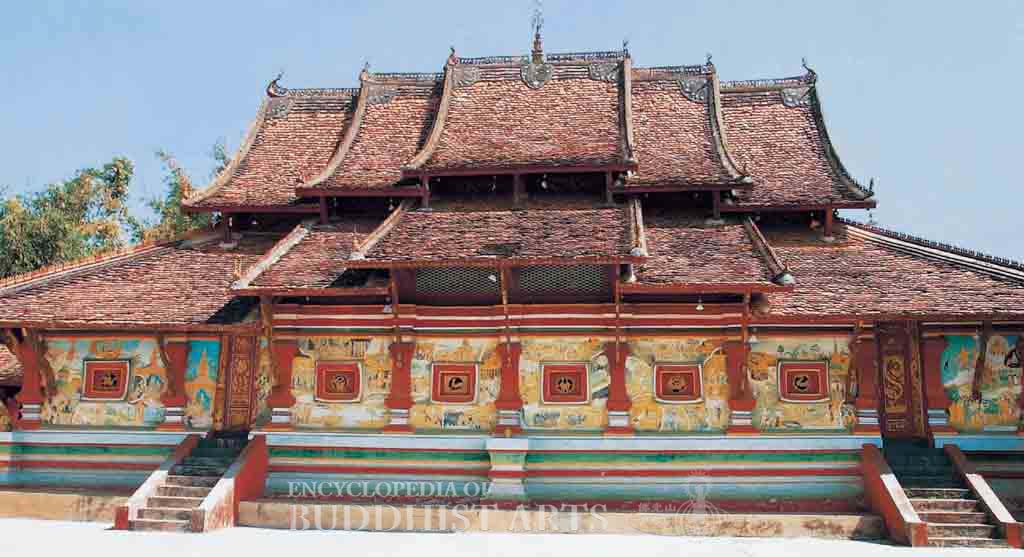
Manduan Buddhist Temple: Buddha Hall
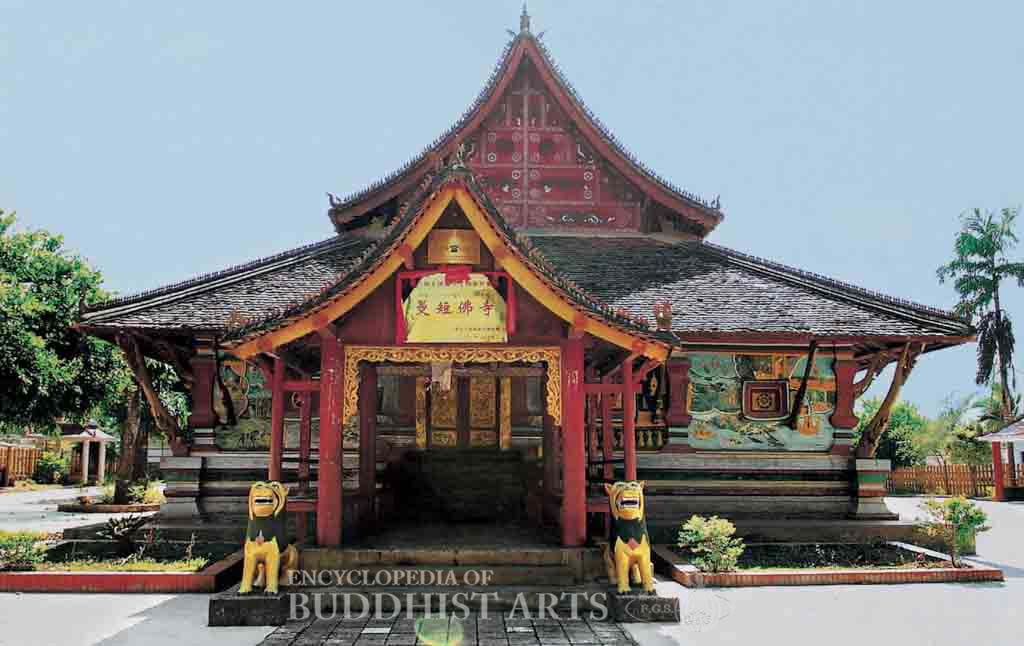
Manduan Buddhist Temple: Gate Pavilion and Buddha Hall
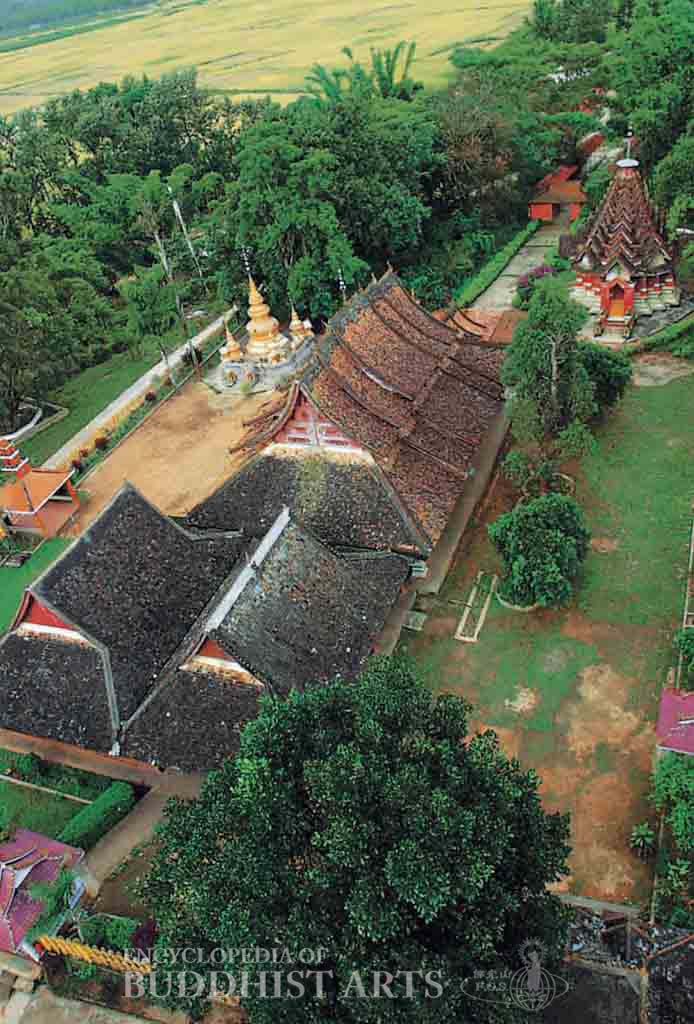
Manduan Buddhist Temple (aerial view)
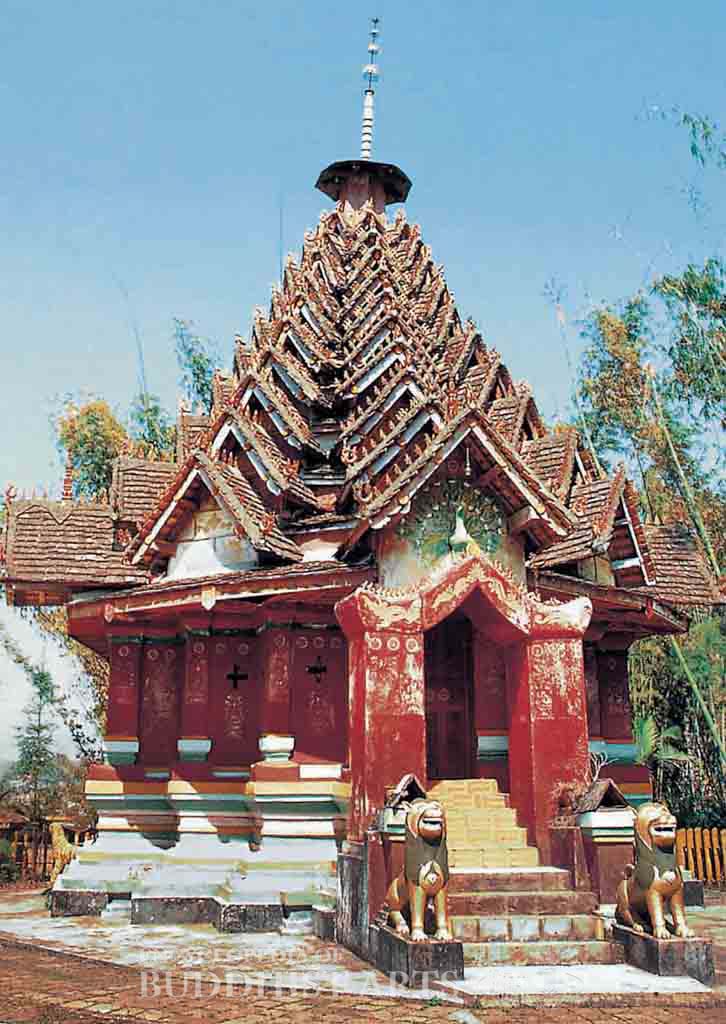
Manduan Buddhist Temple: Ordination Hall
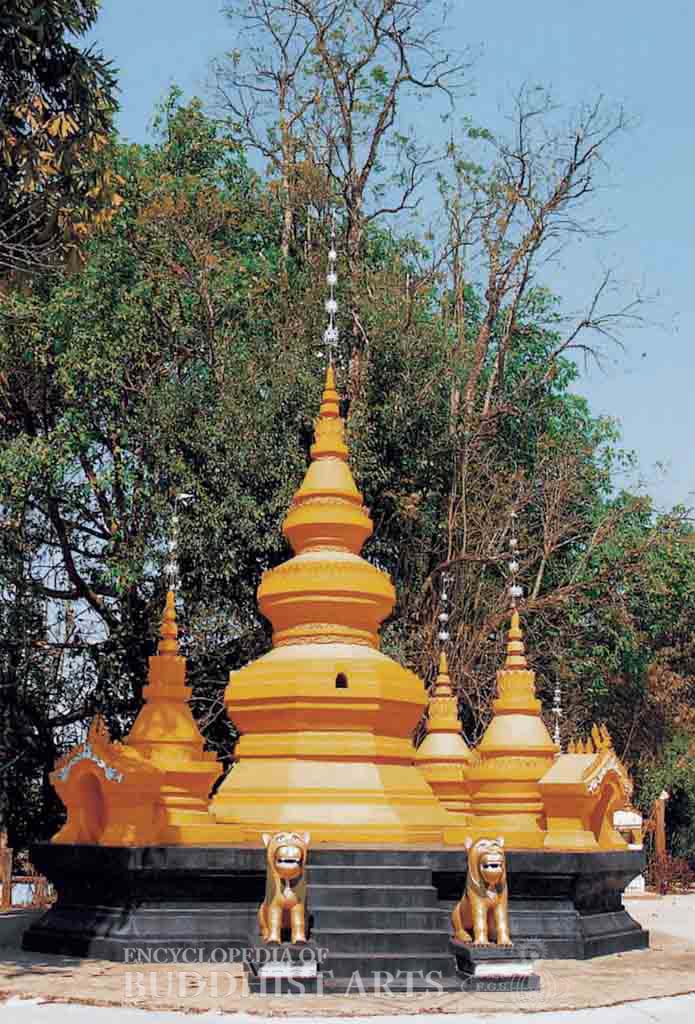
Manduan Buddhist Temple: Diamond Throne Stupa
Manduan Buddhist Temple
CHINA, Yunnan, Sipsongpanna
The temple was built in 950 and has undergone a number of repairs throughout its history. It is a Dai style temple that follows the Theravada tradition. It was listed as a National Cultural Heritage Site in 2006.
The temple faces east and occupies around 1,800 sq m. The main buildings are the gate pavilion, Buddha hall, ordination hall, Diamond Throne Stupa, monastic quarters, and the drum tower. The main building is the four-by-eight bay Buddha hall, which has a large hip-and-gable roof consisting of two-tier eaves and five sections of overlapping ridges. The upper roofs are steep while the lower roofs have a more gentle slope. The ridges and bargeboards are decorated with stylized nagas and in the center of the main ridge there is a stupa. At the center and top corners of the main roof, there are floral emblems. The walls are low and are embedded with slightly concave columns that support the building. Between the columns there are rectangular panels with openwork carvings in the center. The walls are filled with murals depicting Buddhist stories. The building houses a seated statue of Sakyamuni Buddha. The columns and beams are decorated with dragons, phoenixes, and auspicious patterns.
The ordination hall has a roof with ten-tier eaves facing eight directions. Each set of eaves decreases in size with height. The roof is surmounted by a spire consisting of a harmika, canopy, stacked rings and jeweled finial.
The Diamond Throne Stupa consists of five stupas, with the main one surrounded by four smaller ones. They stand on a Sumeru base with multiple corners. In front of each small stupa there is a Buddha niche.
For more details, go to the Encyclopedia of Buddhist Arts: Architecture M-S, page 721.
Cite this article:
author = Hsingyun and Youheng and Johnson, Peter and Mankuang and Lancaster, Lewis,
booktitle = {Encyclopedia of Buddhist Arts: Architecture M-S},
pages = 721,
title = {{Manduan Buddhist Temple}},
volume = 3,
year = {2016}}