
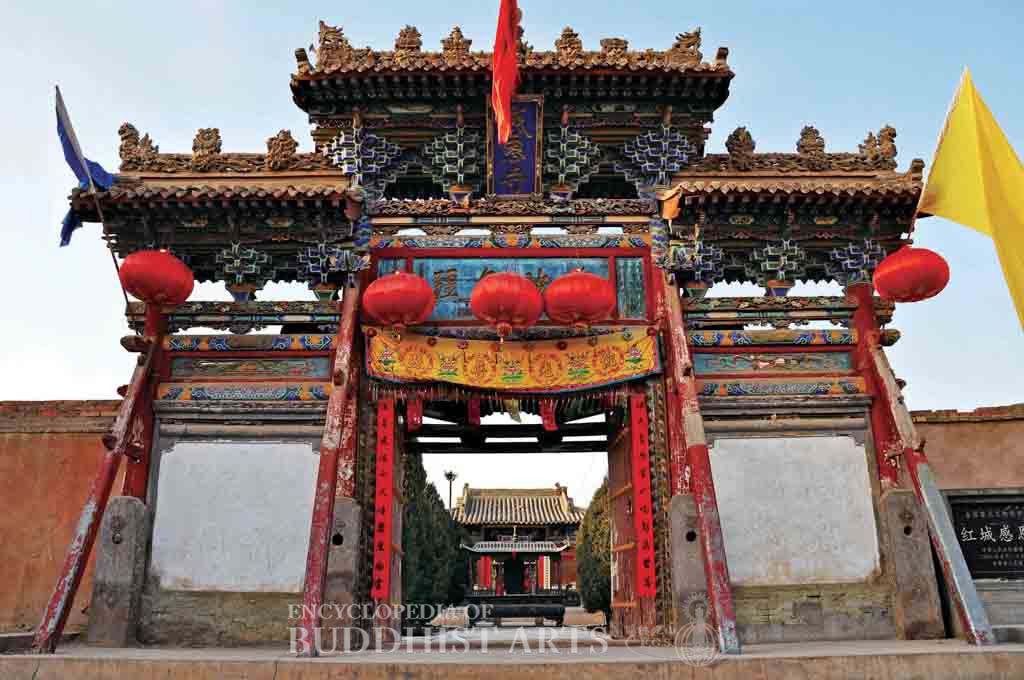
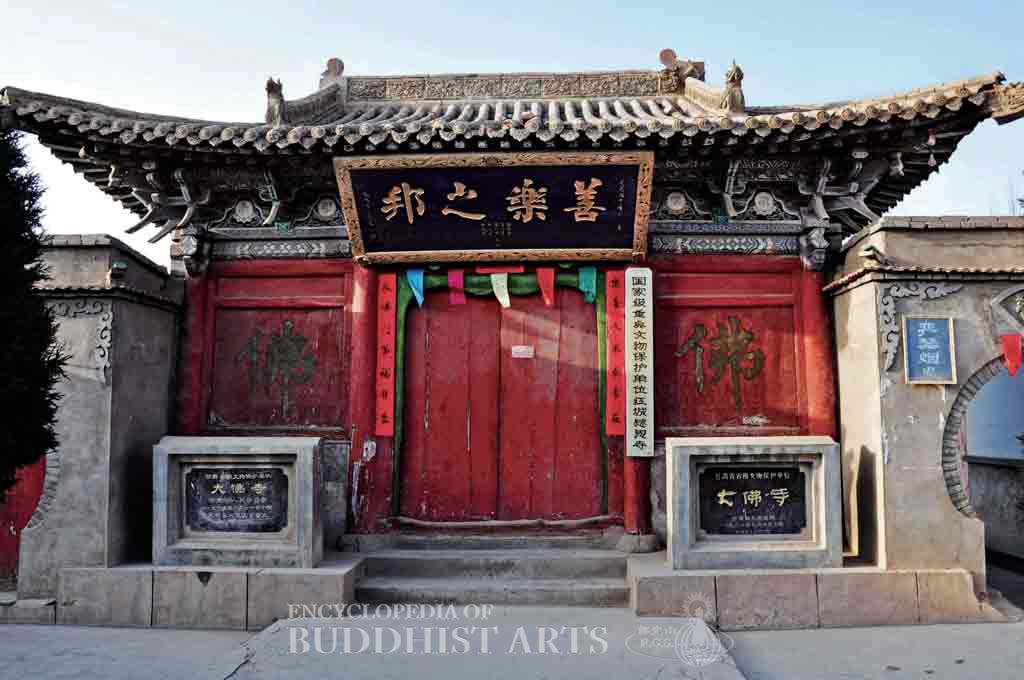
Gan’en Temple: Main Temple Gate
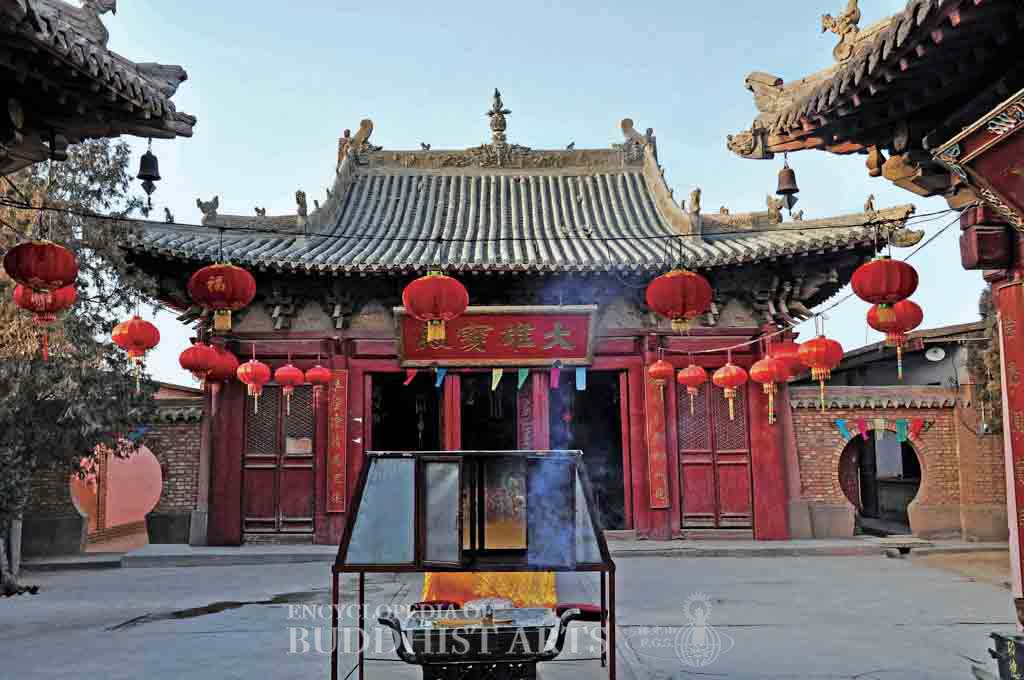
Gan’en Temple: Great Hero Hall
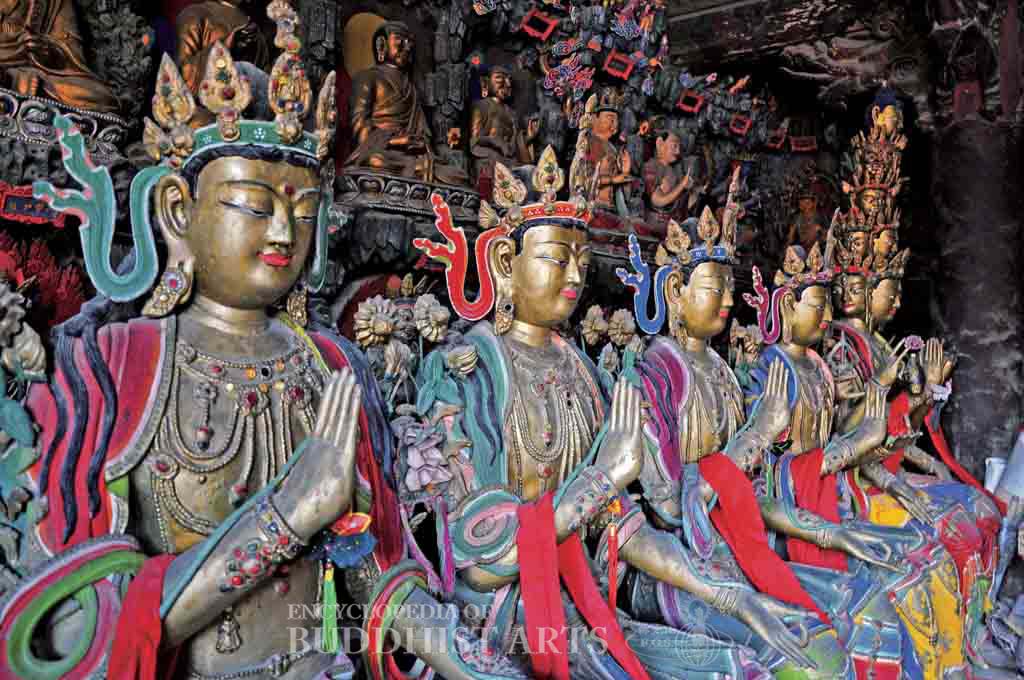
Gan’en Temple: Great Hero Hall - Eleven-Headed Avalokitesvara and Bodhisattvas
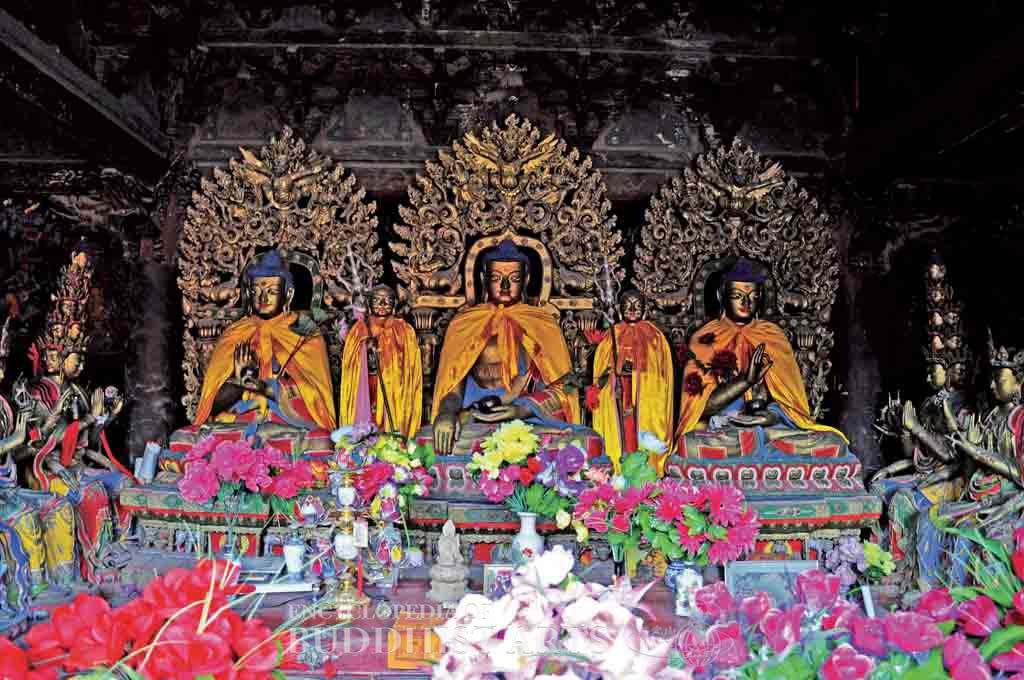
Gan’en Temple: Great Hero Hall (interior)
Gan’en Temple: Stele Pavilion
Gan’en Temple
CHINA, Gansu, Lanzhou
Gan’en means Grateful. It is also known as Dafo (Great Buddha) Temple and was built by the 5th chieftain Lu Ling between 1492 and 1495 during the Ming dynasty. The original layout and the buildings have not changed since then. It was listed as a National Cultural Heritage Site in 2006.
The temple faces south and the buildings from south to north include the main temple gate, stele pavilion, Suspended Flower Gate, Twin Guardian Hall, Heavenly King Hall, Ksitigarbha Hall, Jade Buddha Hall, Bodhisattva Hall, Dharma Protector Hall, and the Great Hero Hall. A painting of a donor was found on the bottom left hand corner of a mural within the Bodhisattva Hall. It is believed that the donor is Lu Ling, who built the temple. It is the only existing painting of a local ruler painted during the Ming dynasty (1368–1644).
The Great Hero Hall is three bays wide and has a hip-and-gable roof. The front wall has six sets of doors. The painted decorations on the beams are original. The hall contains the Three Buddhas in the center, with statues of Eleven-Headed Avalokitesvara, Bodhisattvas, and Dharma protectors along the east and west walls. There are 80 reliefs of the Eighteen Arhats and Dharma protectors on the north, east, and west walls. Sculptures depicting scenes from the Journey to the West are located on the top section of the walls.
The architecture of the temple is a combination of Tibetan and Chinese features. Each hall contains many murals painted upon boards, while a large number of paintings are found on the ceilings. There are also numerous colored molded sculptures and suspended sculptures, including original decorations that hold historical and artistic value. The temple houses a large number of steles with Chinese and Tibetan inscriptions providing important information on the cultural exchanges between Chinese and Tibetan during the Ming dynasty.
For more details, go to the Encyclopedia of Buddhist Arts: Architecture G-L, page 357.
Cite this article:
author = Hsingyun and Youheng and Johnson, Peter and Mankuang and Lancaster, Lewis,
booktitle = {Encyclopedia of Buddhist Arts: Architecture G-L},
pages = 357,
title = {{Gan’en Temple}},
volume = 2,
year = {2016}}