
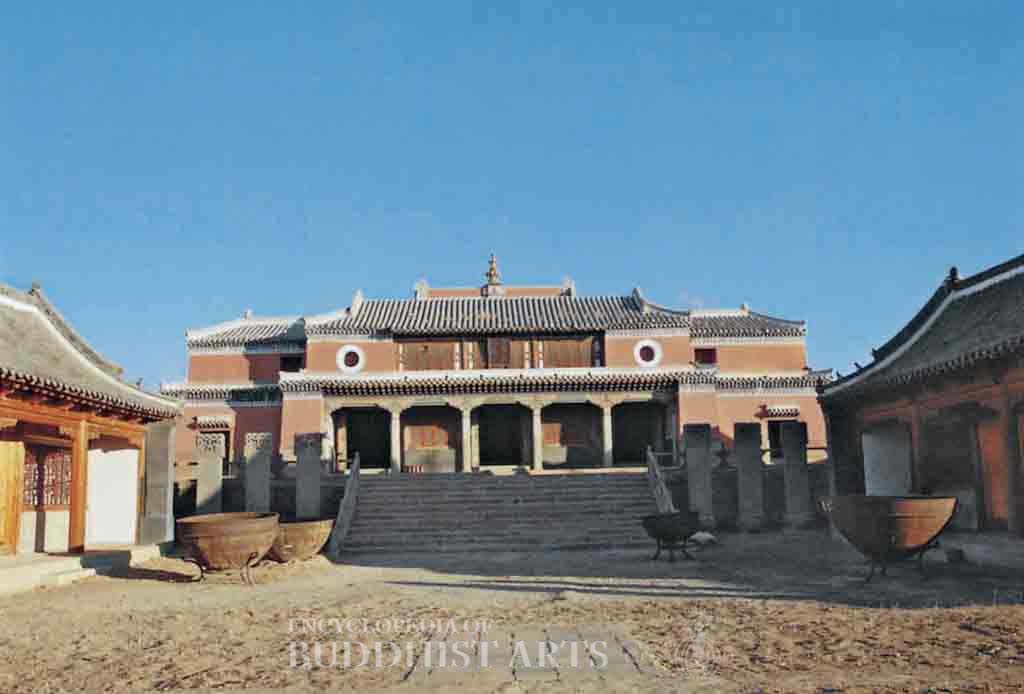
Hure Banner Three Major Temples: Xingyuan Temple
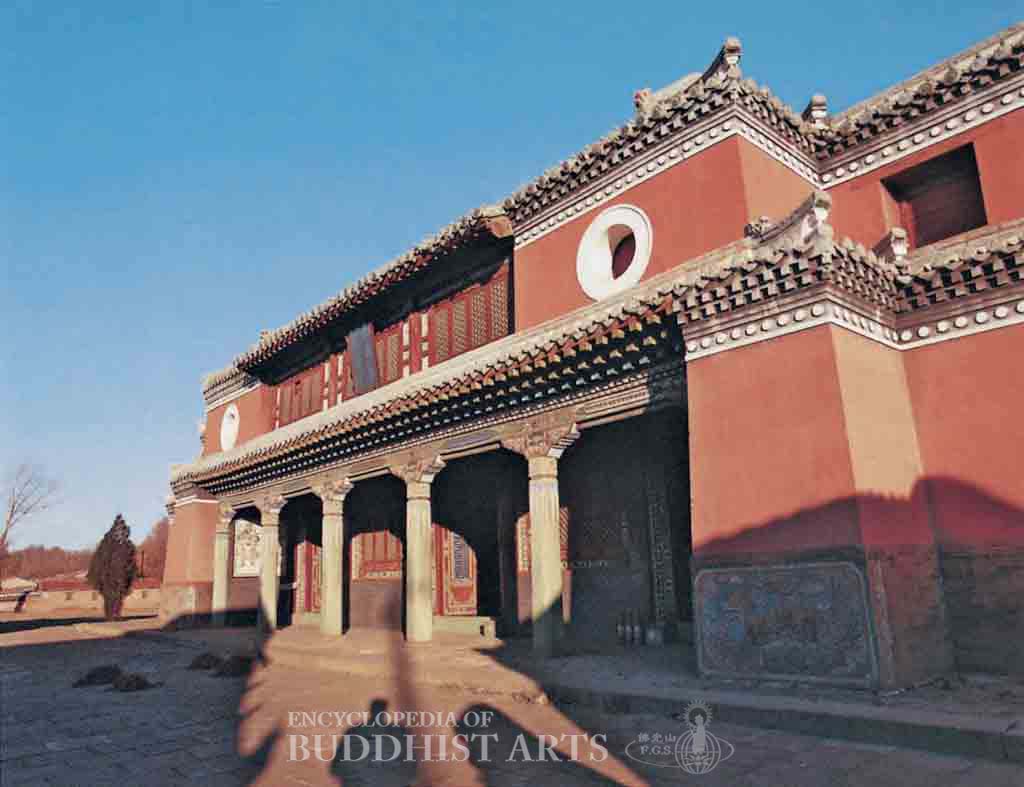
Hure Banner Three Major Temples: Xingyuan Temple - Hall of Mental Cultivation
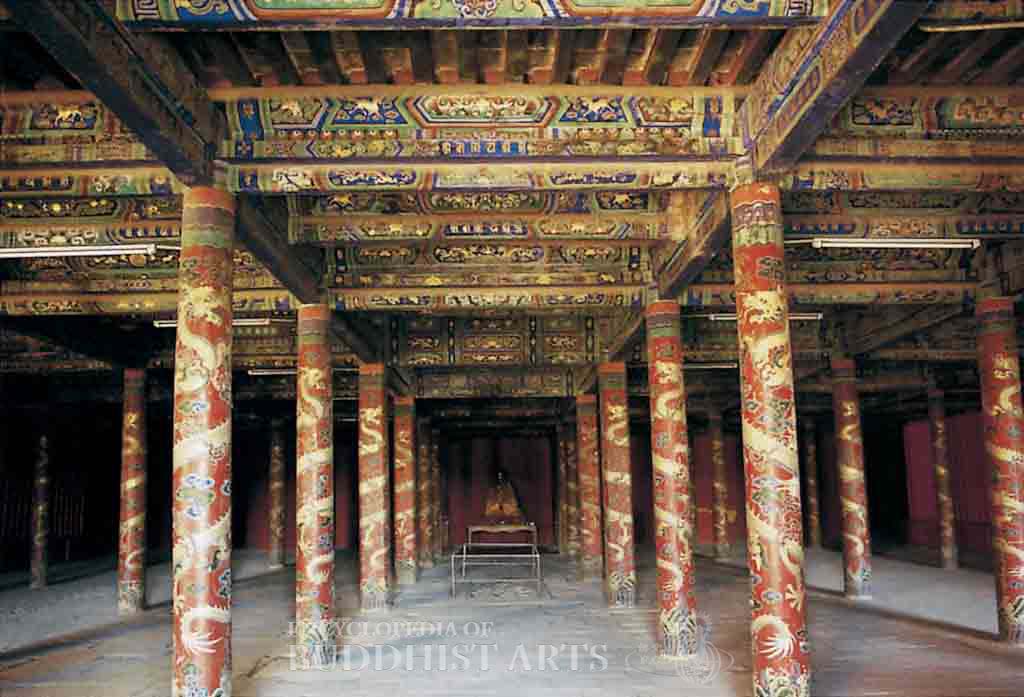
Hure Banner Three Major Temples: Xingyuan Temple - Hall of Mental Cultivation (interior)
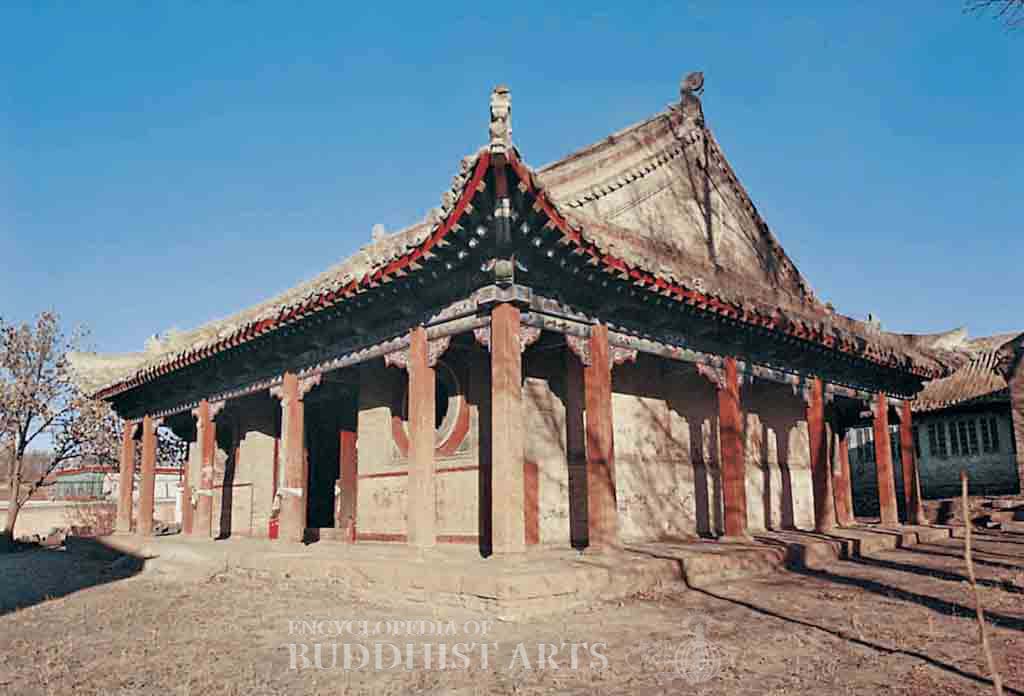
Hure Banner Three Major Temples: Xingyuan Temple - Mani Hall
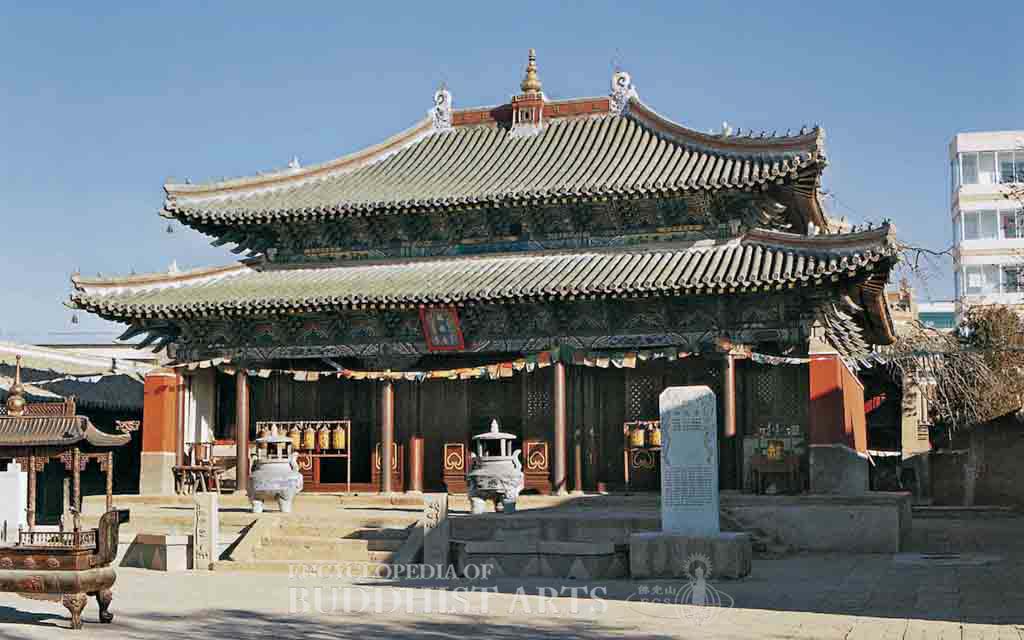
Hure Banner Three Major Temples: Fuyuan Temple - Main Hall
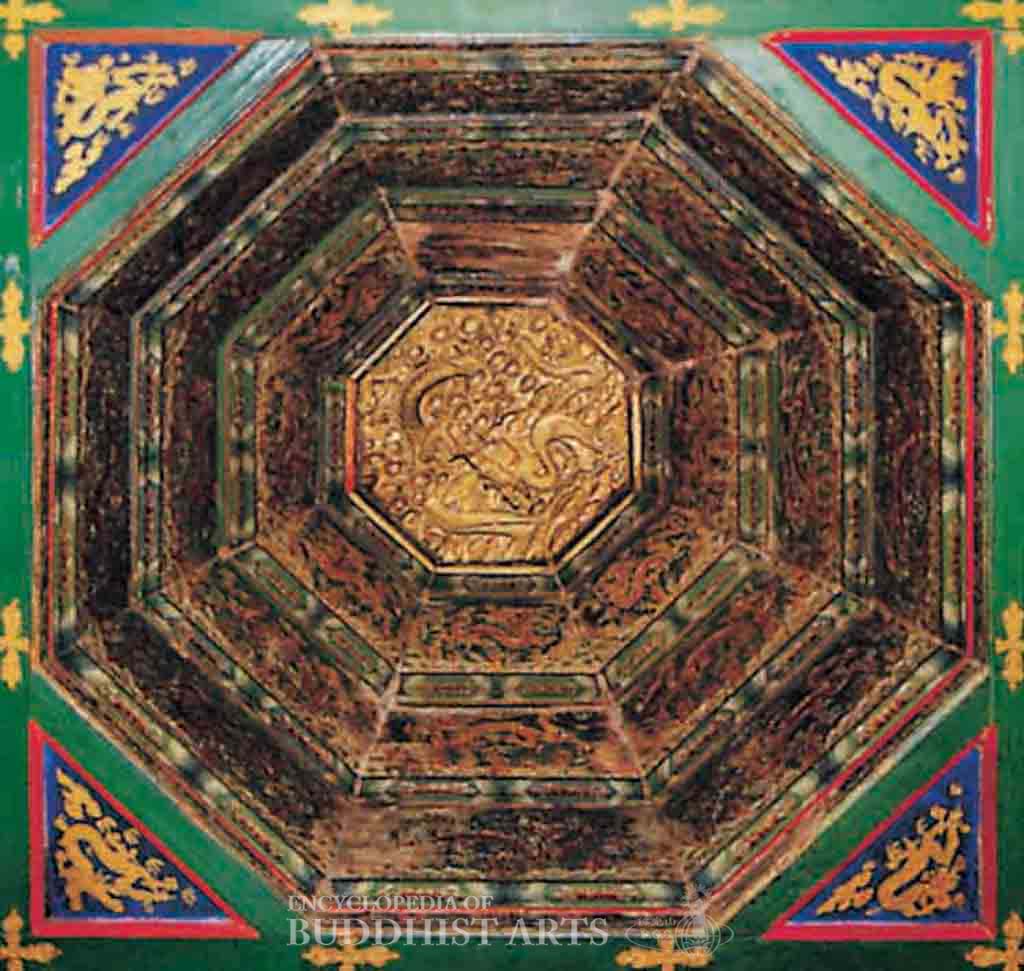
Hure Banner Three Major Temples: Fuyuan Temple - Main Hall - Plafond
Hure Banner Three Major Temples
CHINA, Inner Mongolia, Tongliao
The temples are Xingyuan, Fuyuan, and Xiangjiao and they are located within the walls of Hure Banner, a city built during the 17th century. Xingyuan Temple is the administrative center, Fuyuan Temple is the financial center, while Xiangjiao Temple is the lama’s residence and office. The entire complex was listed as a National Cultural Heritage Site in 2006.
Xingyuan Temple was built in 1649 during the Qing dynasty, and named by imperial decree. The temple was expanded between 1719 and 1724. The temple faces south and has four courtyards. Along the central axis there are the main temple gate, Heavenly King Hall, Hall of Mental Cultivation, and Mani Hall. On either side there are the bell and the drum towers, the Hall of the Eighteen Arhats and the Dharma Protector Hall. The Hall of Mental Cultivation is the main hall of the temple. Inside there are 64 red columns carved with gilded dragons. The three-by-three bay Mani Hall has a single-eave hip-and-gable roof. There is a veranda surrounding the building.
Fuyuan Temple was built in 1742 during the Qing dynasty. Along the central axis from the south to north there are the main temple gate, chanting hall, main hall, and the Classic Hall. The five-bay wide main hall has a double-eave hip roof. At the center of the main ridge there is a miniature stupa. There is a veranda along the front of the hall. Round floral patterns are painted on both sides of the beams while the octagonal caisson ceiling is highly decorated.
Xiangjiao Temple was built in 1670 during the Qing dynasty, and is also called the Upper Residence. It consists of the main temple gate, the Maitreya Hall, and the Amitabha Hall. To the sides of the main temple gate are slanted screen walls. The three-bay wide Maitreya Hall has a single-eave hip-and-gable roof. A bronze statue of Maitreya is enshrined within the hall.
The architectural style of the Three Major Temples is predominantly Tibetan, although some aspects also incorporate Chinese features.
For more details, go to the Encyclopedia of Buddhist Arts: Architecture G-L, page 476.
Cite this article:
author = Hsingyun and Youheng and Johnson, Peter and Mankuang and Lancaster, Lewis,
booktitle = {Encyclopedia of Buddhist Arts: Architecture G-L},
pages = 476,
title = {{Hure Banner Three Major Temples}},
volume = 2,
year = {2016}}