
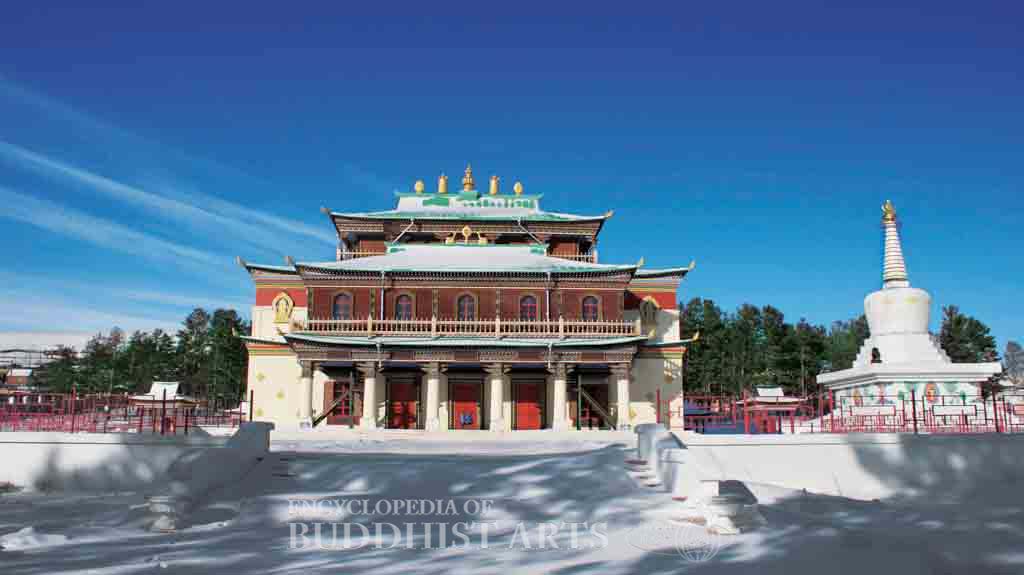
Aginsky Monastery: Eastern Section
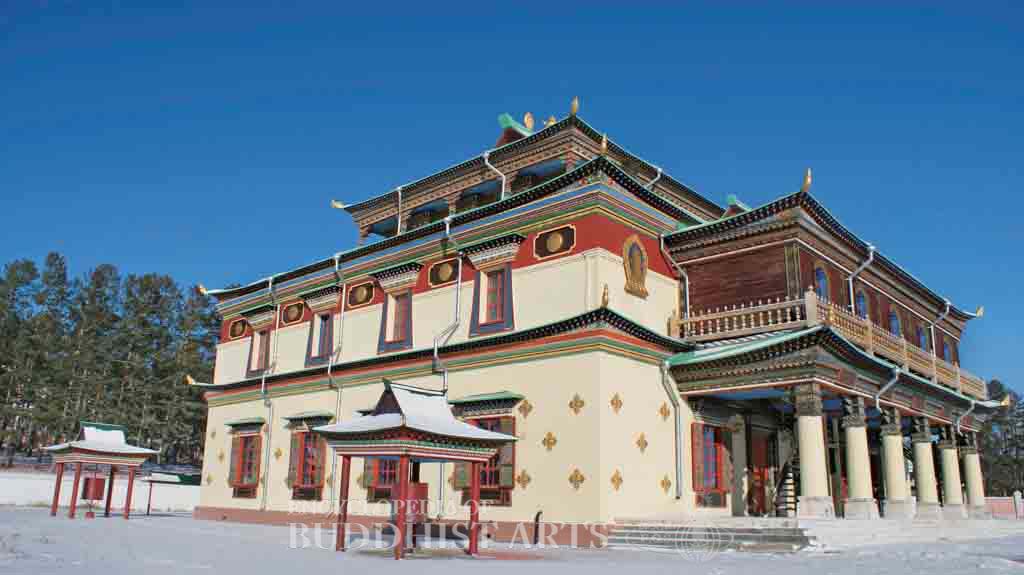
Aginsky Monastery: New Main Hall
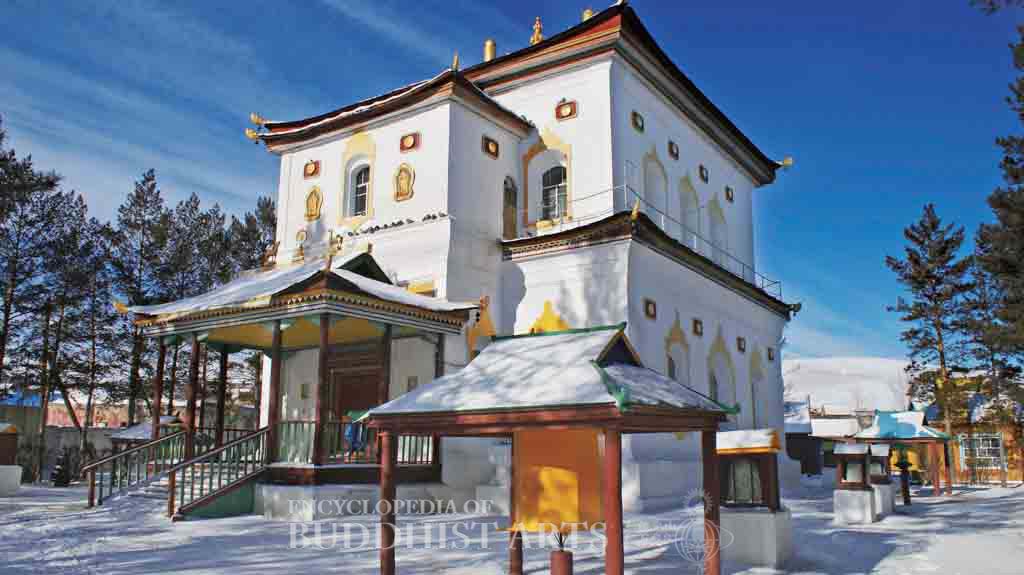
Aginsky Monastery: Old Main Hall
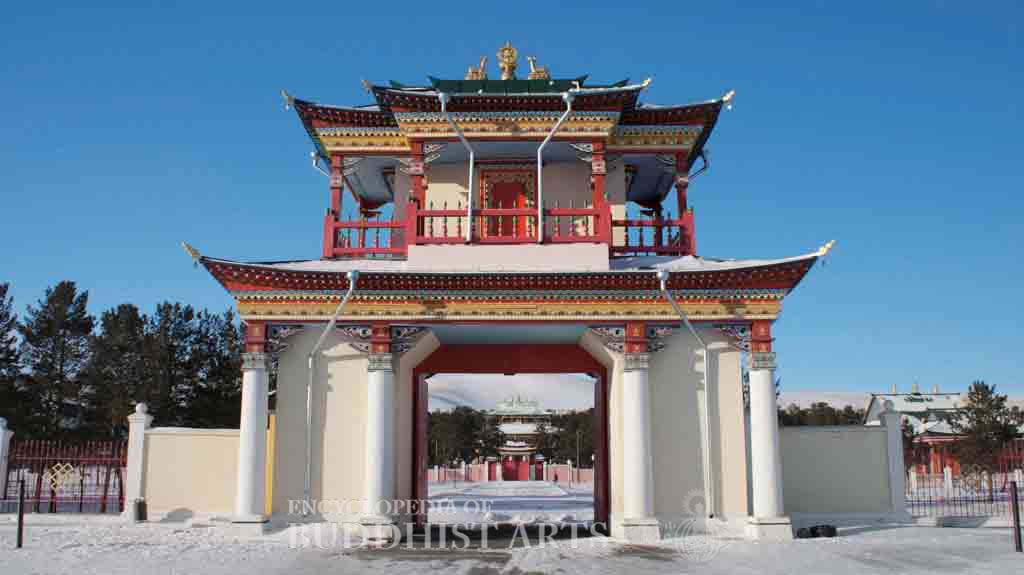
Aginsky Monastery: Old Main Gate
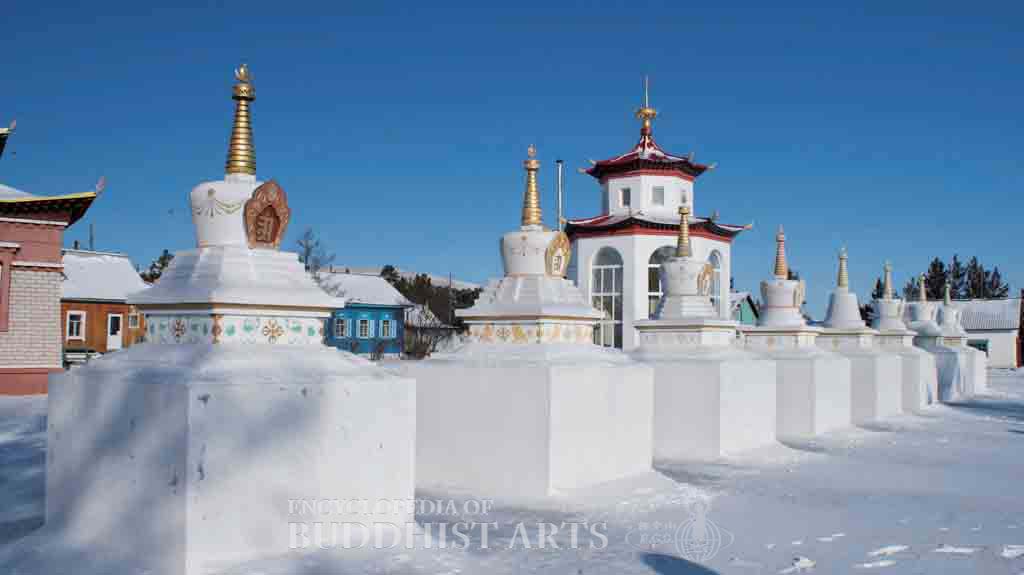
Aginsky Monastery: Astrology Buildling and Tibetan Stupas
Aginsky Monastery
RUSSIA, Buryatia
This university monastery follows the Gelug school of Tibetan Buddhism and was built in 1811. The School of Philosophy was established in 1850 and the School for Vajrayana Studies was set up in 1880. The Medical School followed in 1884. There are over a 1,000 monks in residence and the monastery flourishes as both a religious and academic center. It was once the publishing center for Mongolia and the Transbaikal region, and many important classics on Tibetan medicine were published there. Apart from printing Buddhist scriptures and texts relating to the five sciences of ancient India, which cover language, craftsmanship, medicine, logic, and philosophy, the monastery also publishes language and grammar textbooks, as well as Tibetan and Mongolian dictionaries. In the late 1930s, the Soviet government destroyed all temples and monasteries in the country. The Aginsky Monastery survived because part of the complex was used as a sanatorium. Buddhism in Russia was revived in the 1990s and the monastery was returned to the monks. It was then repaired and expanded.
The monastery faces south. The eastern section is new, while the western section contains the older buildings. The main buildings include four temple gates, the new main hall, old main hall, Astrology Building, and Tibetan stupas. The three-story new main hall has a hip-and-gable roof covered in green tiles. Beneath the eaves there are decorative horizontal bands in different colors. Beneath the colorful bands on the second story, there is a red ocher band, decorated with patterns of a circle inside a rectangle. There is a portico consisting of three doors and two windows on the first level, while on the second level there is an enclosed balcony with five windows. The cream-colored walls on the first story are decorated with double vajra motifs, which differ from the usual plain white-washed walls of Tibetan monasteries.
The two-story old main hall has a portico. Two doors open out onto a long balcony that surrounds the second story. The white walls are decorated with large gold circles inside red ocher rectangles.
For more details, go to the Encyclopedia of Buddhist Arts: Architecture A-F, page 3.
Cite this article:
author = Hsingyun and Youheng and Johnson, Peter and Mankuang and Lancaster, Lewis,
booktitle = {Encyclopedia of Buddhist Arts: Architecture A-F},
pages = 3,
title = {{Aginsky Monastery}},
volume = 1,
year = {2016}}