
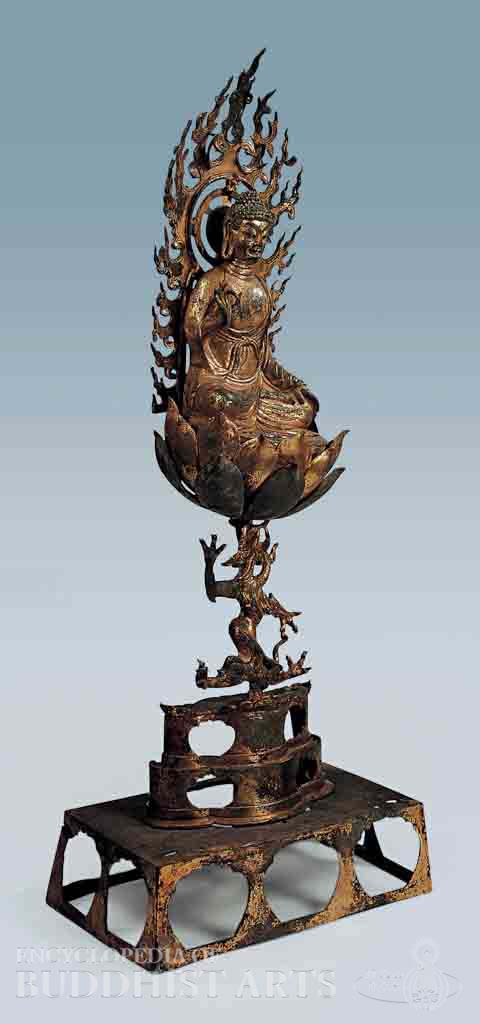
Leifeng Pagoda: Seated Buddha
Gilt bronze
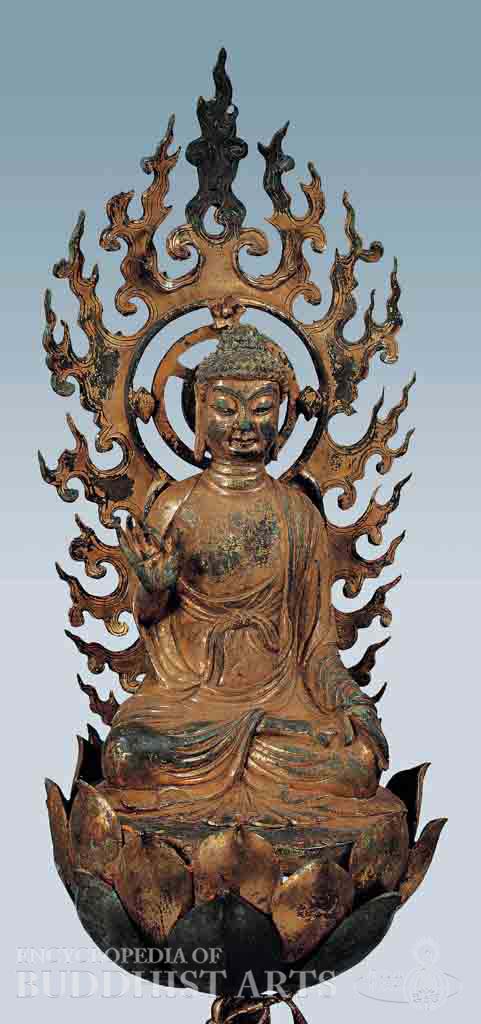
Leifeng Pagoda: Seated Buddha
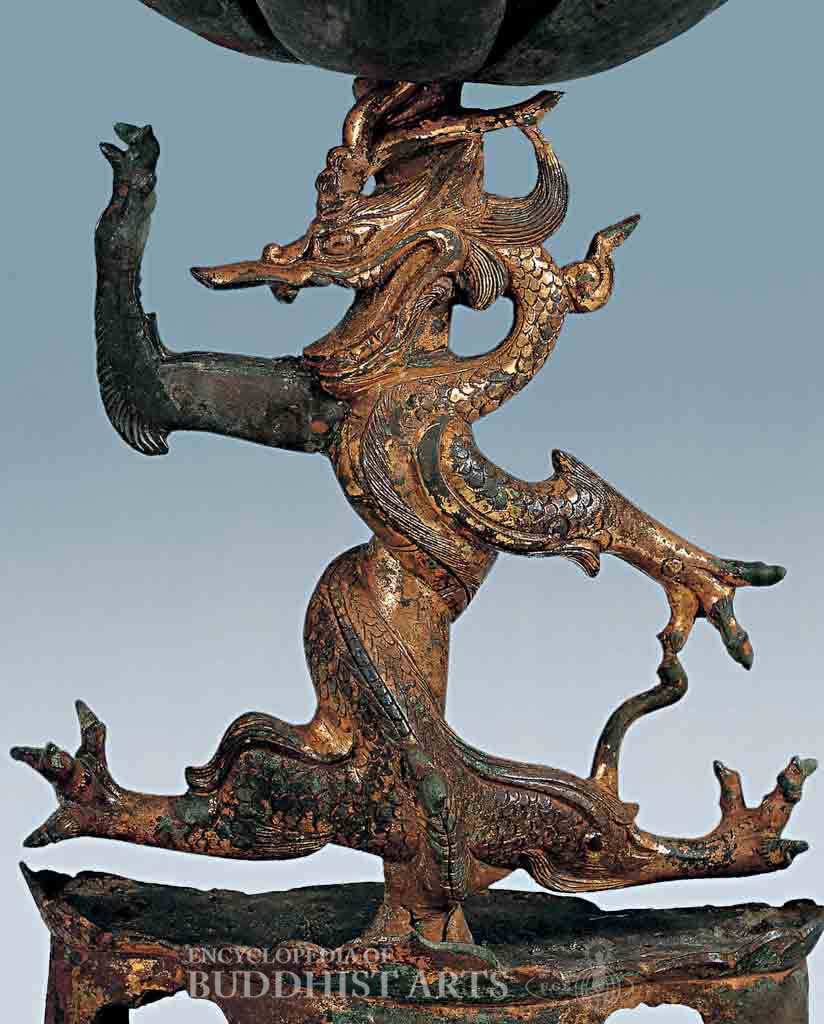
Leifeng Pagoda: Seated Buddha (detail)
Leifeng Pagoda: Seated Buddha
CHINA, Zhejiang, Hangzhou; Five Dynasties
The statue was discovered from the underground palace of Leifeng Pagoda in 2001. It preserves the Tang dynasty (618–907) style and is estimated to be made in the early Five Dynasties period (907–960). The exquisiteness of the artwork suggests that it most likely belonged in the palace of the coastal Wuyue Kingdom (907–978).
The seated Buddha’s right hand is raised in the lotus mudra which was a distinguishing characteristic of Amitabha Buddha at that time. The figure is in a full lotus position and wears a robe that leaves the right shoulder bare. The openwork mandorla behind the Buddha consists of tall flames that enclose a radiating nimbus. The figure is tipped slightly forward on a double lotus throne that is supported by a soaring dragon; this in turn is rising from a hollow stand.
For more details, go to the Encyclopedia of Buddhist Arts: Sculpture G-M, page 578.
Cite this article:
author = Hsingyun and Youheng and Lovelock, Yann and Chou, Yuan and Huntington, Susan and Edson, Gary and Neather, Robert,
booktitle = {Encyclopedia of Buddhist Arts: Sculpture G-M},
pages = 578,
title = {{Leifeng Pagoda: Seated Buddha}},
volume = 11,
year = {2016}}