
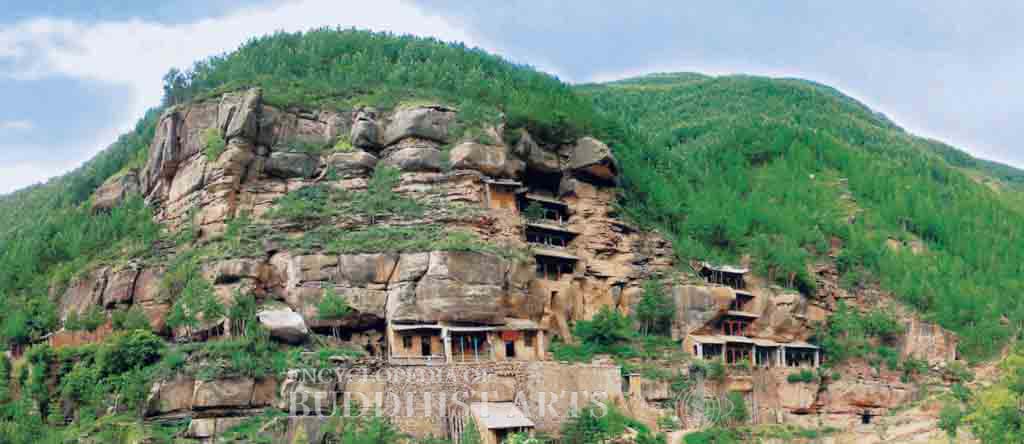
Longyanshan Caves
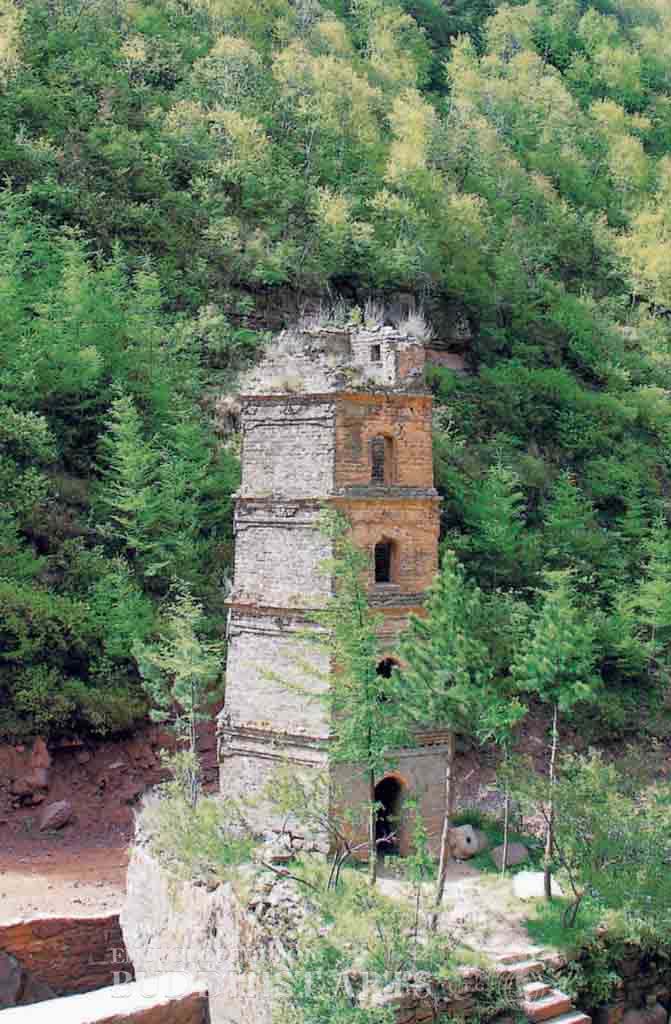
Longyanshan Caves: Pagoda; Tang dynasty
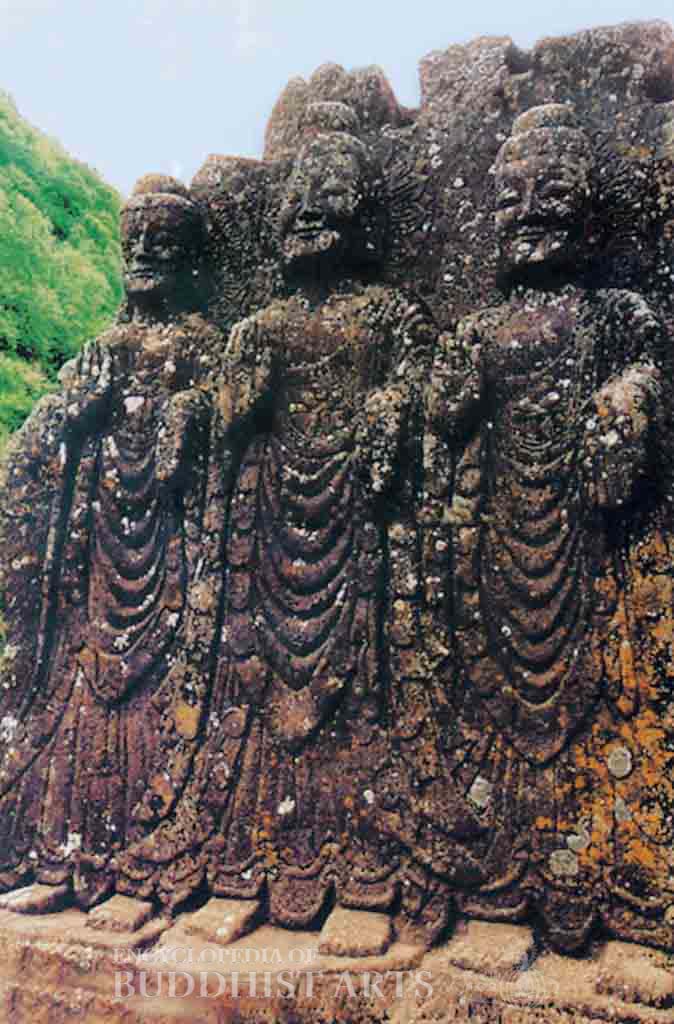
Longyanshan Caves: Three Buddhas; Northern Wei dynasty
Longyanshan Caves
CHINA, Gansu, Pingliang
Also known as Chenjiadong (Chen Family Caves), the Longyanshan (Dragon Eye Mountain) Caves are located on a cliff east of Chenbao village in Pingliang. Construction of the nine caves commenced during the Northern Wei dynasty (386–534). The painted clay sculptures were created in the Song (960–1279), Yuan (1271–1368), Ming (1368–1644), and Qing (1644–1911) dynasties. Only three statues remain from the original Northern Wei dynasty. Within the site, there is a multi-story brick and wood pagoda from the Tang dynasty (618–907), an inscription from the Jin dynasty (1115–1234), and steles from the Qing dynasty to the early 20th century. Only four stories of the brick pagoda remain. The caves were listed as a National Cultural Heritage Site in 2006.
The three well-preserved Buddhas from the Northern Wei dynasty are located on the cliff and are significant features of the site. Each Buddha stands barefoot on a lotus pedestal, and is approximately 5 m in height. Their monastic robes, which cover both shoulders, are secured with belts at the front. The hands of the Buddhas form the abhaya (fearlessness) and varada (wish-granting) mudras.
For more details, go to the Encyclopedia of Buddhist Arts: Caves R-L, page 725.
Cite this article:
author = Hsingyun and Youheng and Johnson, Peter and Mankuang and Huntington, Susan and Edson, Gary and Neather, Robert,
booktitle = {Encyclopedia of Buddhist Arts: Caves R-L},
pages = 725,
title = {{Longyanshan Caves}},
volume = 6,
year = {2016}}