
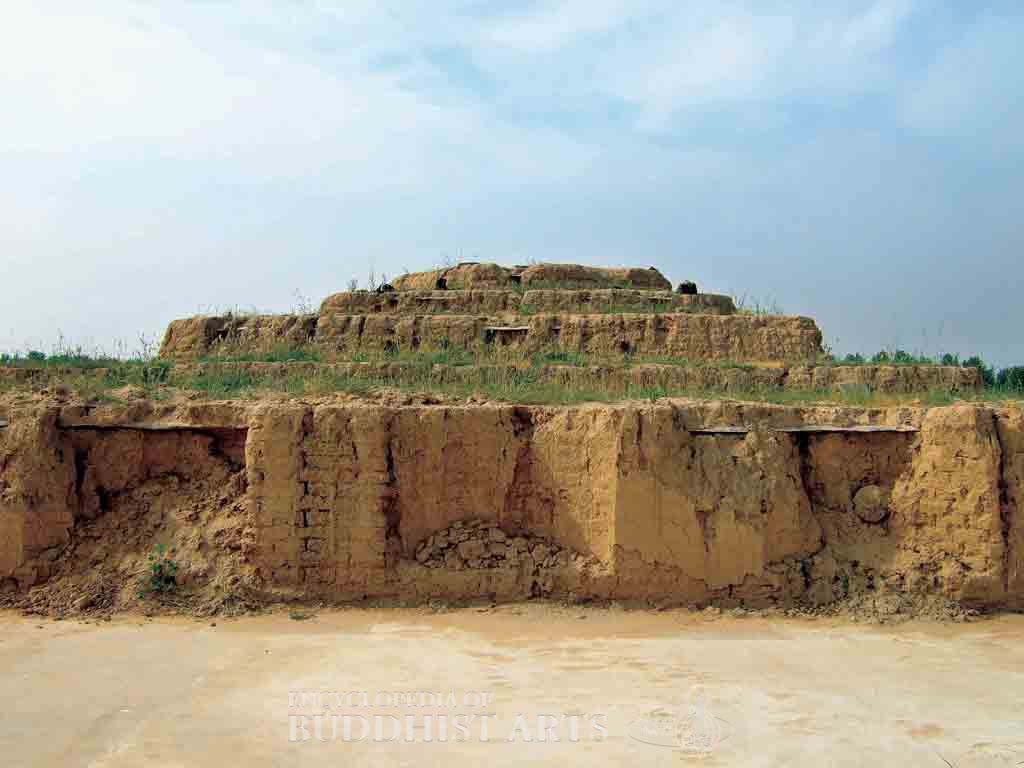
Yongning Temple
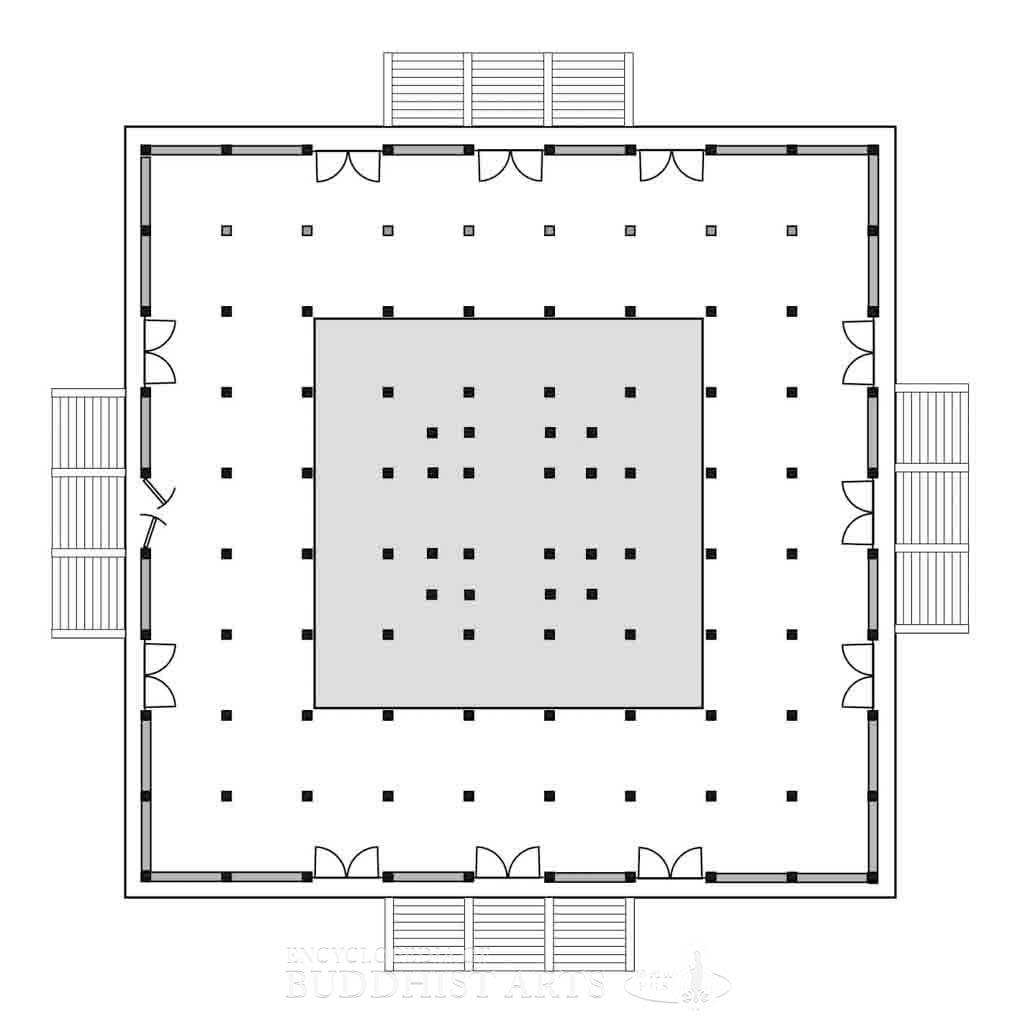
Yongning Temple: Pagoda (layout)
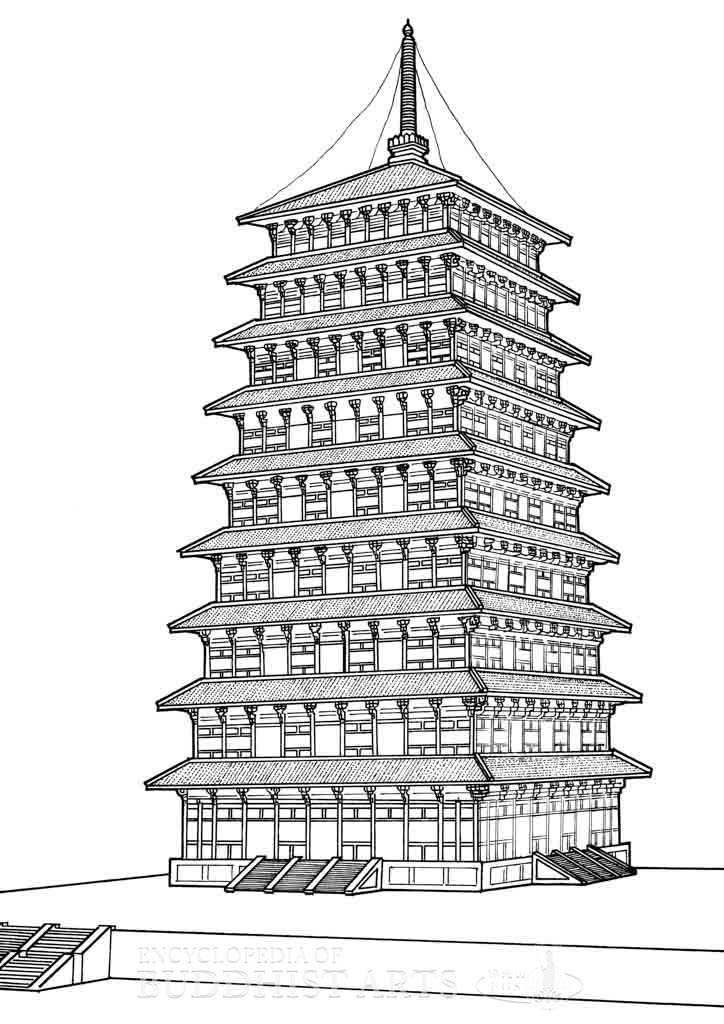
Yongning Temple: Pagoda (perspective drawing)
Yongning Temple
CHINA, Henan, Luoyang
This temple was built by Empress Dowager Hu in 516, after the capital was moved to Luoyang. It was the largest imperial temple to be built in Luoyang, but was destroyed by a great fire in 534. It was not until 1963 that excavation was started at the site of the ruins.
According to research, the exterior walls of the temple compound measured 305 m by 260 m. The pagoda base still exists and is situated in the exact center. The ruins of a large platform base made from rammed earth are located to the north of the pagoda. It is estimated that the structure there may have occupied more than 1,300 sq m and was probably the Great Hero Hall. The main temple gate was located in the center of the south wall. There were also gates located in the center of the other three walls. The main temple gate, pagoda, and Great Hero Hall were lined up along the central axis. This layout conforms to the classical style of early Chinese Buddhist temples.
According to the records, the pagoda was wooden with nine stories. It is thought that the pagoda may have been 134 m high, while it measured 38.2 m at the base. Examination of the ruins indicates that the pagoda had nine bays on each side. There was a five-bay wide, square central pillar made from rammed earth. There were five niches on the south, east, and west walls of the central pillar, while the north wall was unadorned. Apart from the remains of a number of statues, tiles and tile caps were also discovered.
For more details, go to the Encyclopedia of Buddhist Arts: Architecture T-Z, page 1359.
Cite this article:
author = Hsingyun and Youheng and Johnson, Peter and Mankuang and Lancaster, Lewis,
booktitle = {Encyclopedia of Buddhist Arts: Architecture T-Z},
pages = 1359,
title = {{Yongning Temple}},
volume = 4,
year = {2016}}