
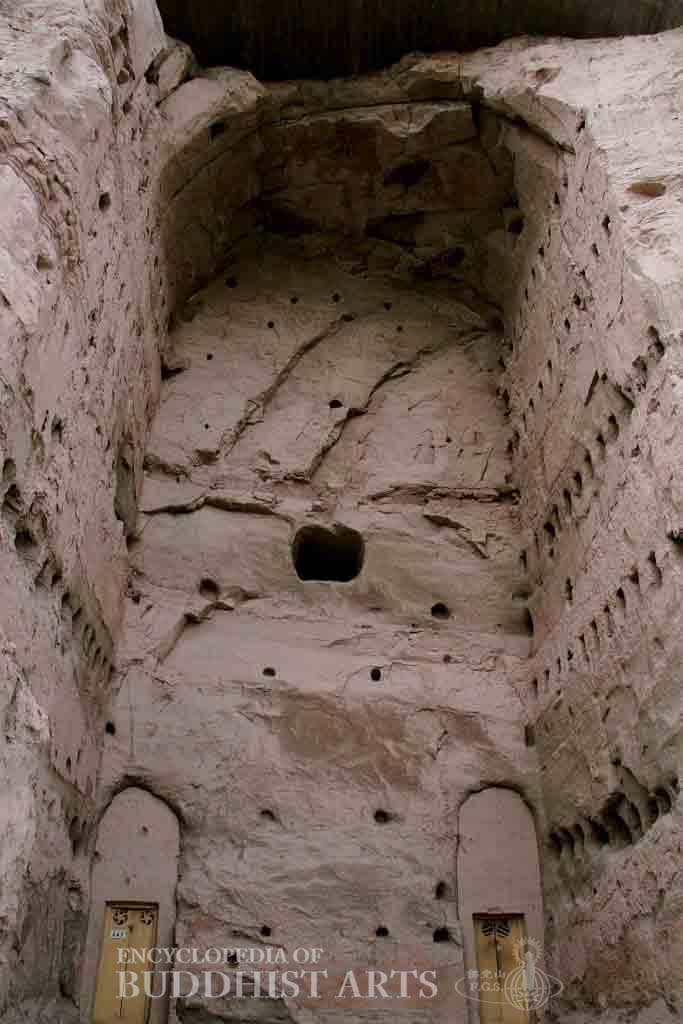
Kizil Cave 47
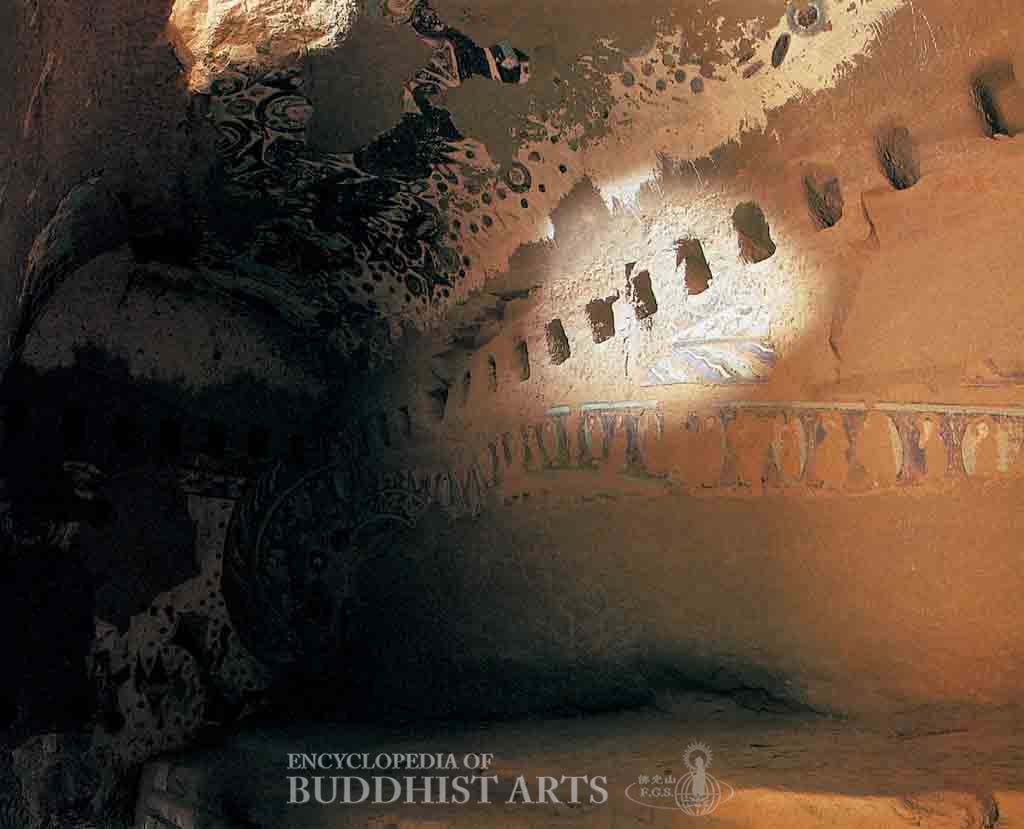
Kizil Cave 47: Parinirvana Platform (rear corridor)
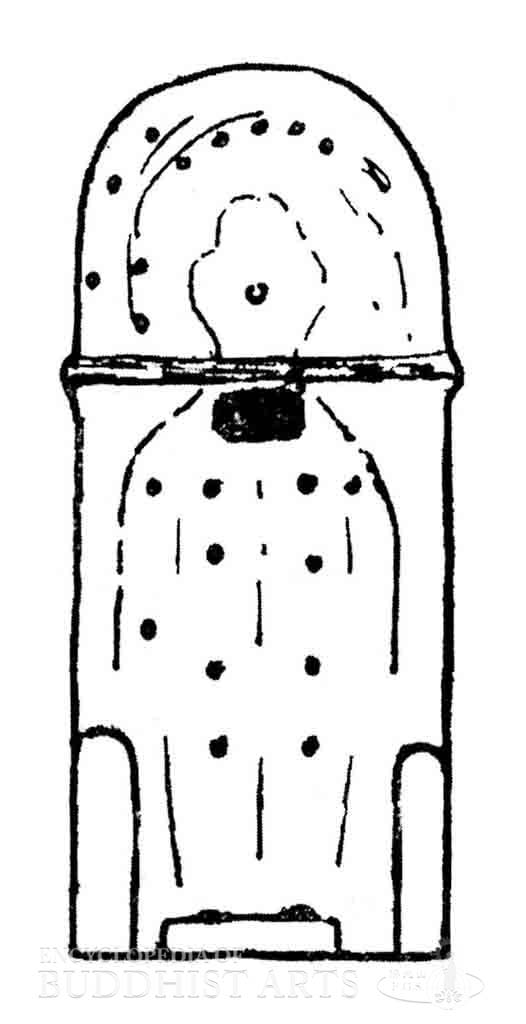
Kizil Cave 47 (plan)
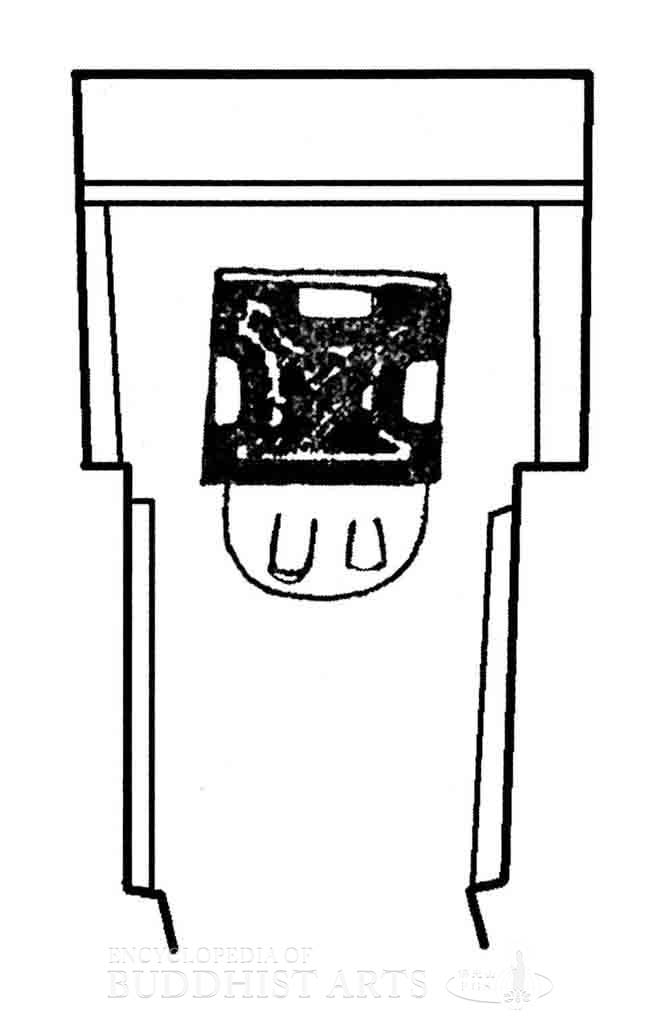
Kizil Cave 47 (section drawing)
Kizil Cave 47
CHINA, Xinjiang, Aksu
Located in the west valley, this great Buddha cave was built in the 4th century. It is the largest and most distinct of the Great Buddha Caves of Kizil. It is rectangular, with a main chamber, side corridors, and a rear corridor. The wide and open main chamber has a barrel-vaulted ceiling. Doorways on both sides of the back wall lead to a rear corridor that is rectangular, with a barrel-vaulted ceiling and a nirvana platform on the outer wall.
The main chamber measures 7.6 m in width, 16.5 m in height, and 7.8 m in depth. A standing Buddha statue, once sculpted into the back wall, no longer remains. Judging from the remnants left on the wall, it is likely to have reached the ceiling. Its statue platform remains on the ground. Rows of niches on each side of the chamber are thought to have held statues in place.
Statue platforms remain along the walls of the corridors, which join with the nirvana platform in the rear corridor. Many of the murals in the corridors have fallen away. All that remain are some images of standing Buddhas, deities and flowers, a Naga King and Queen at the back of the inner wall of the left corridor, and Dharma Protectors at the front of the outer wall.
A reclining Buddha statue, now missing, was originally sculpted on the parinirvana platform along the back wall within the rear corridor. A nimbus and aureole, embellished with standing Buddha images, along with a gathering of barefoot disciples clothed in monastic robes, are depicted on the wall above the Buddha. Flames leap from behind the disciples’ shoulders and they appear in mourning. An illustration of the Prince Mahasattva Jataka is on the left wall, and apsaras are painted on the barrel-vaulted ceiling, a large portion of which is damaged. The six remaining apsaras in the center of the ceiling wear flowing stoles and decorative ornaments, and are clothed in dhotis. Patterns of precious ornaments and flowers are interspersed in the spaces between them.
The sculpting and design of this Great Buddha Cave is heavily influenced by the styles of Great Buddhas in other Kuchean temples.
For more details, go to the Encyclopedia of Buddhist Arts: Caves R-L, page 509.
Cite this article:
author = Hsingyun and Youheng and Johnson, Peter and Mankuang and Huntington, Susan and Edson, Gary and Neather, Robert,
booktitle = {Encyclopedia of Buddhist Arts: Caves R-L},
pages = 509,
title = {{Kizil Cave 47}},
volume = 6,
year = {2016}}