
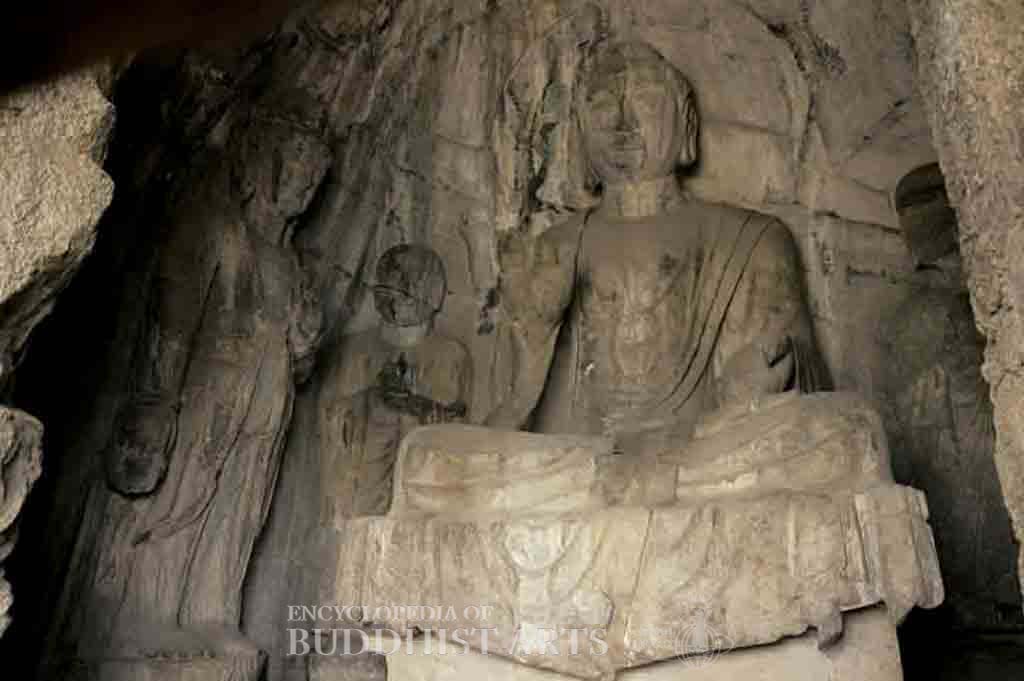
Longmen Grotto 20: Seated Buddha (back wall)
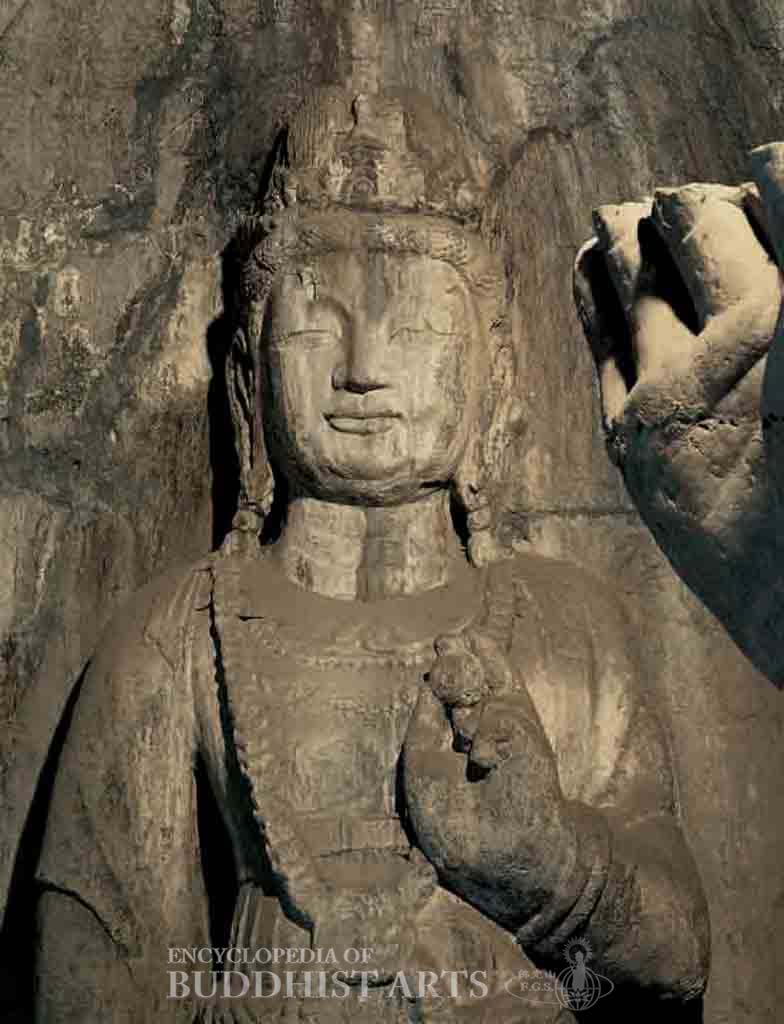
Longmen Grotto 20: Attendant Bodhisattva (detail) (left side)
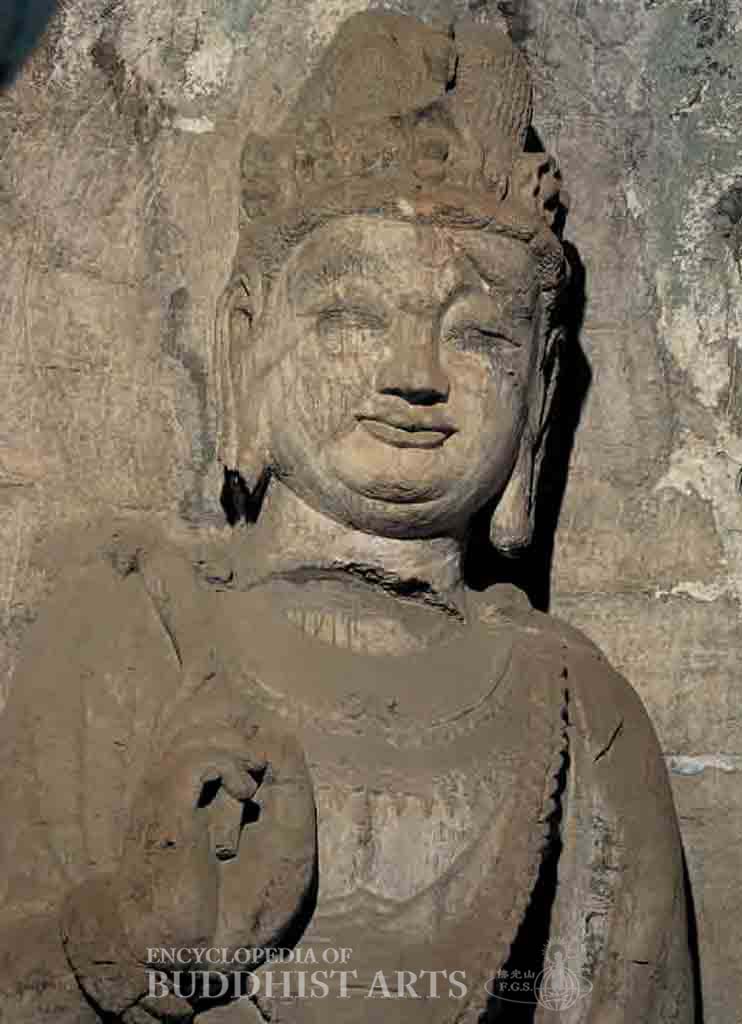
Longmen Grotto 20: Attendant Bodhisattva (detail) (right side)
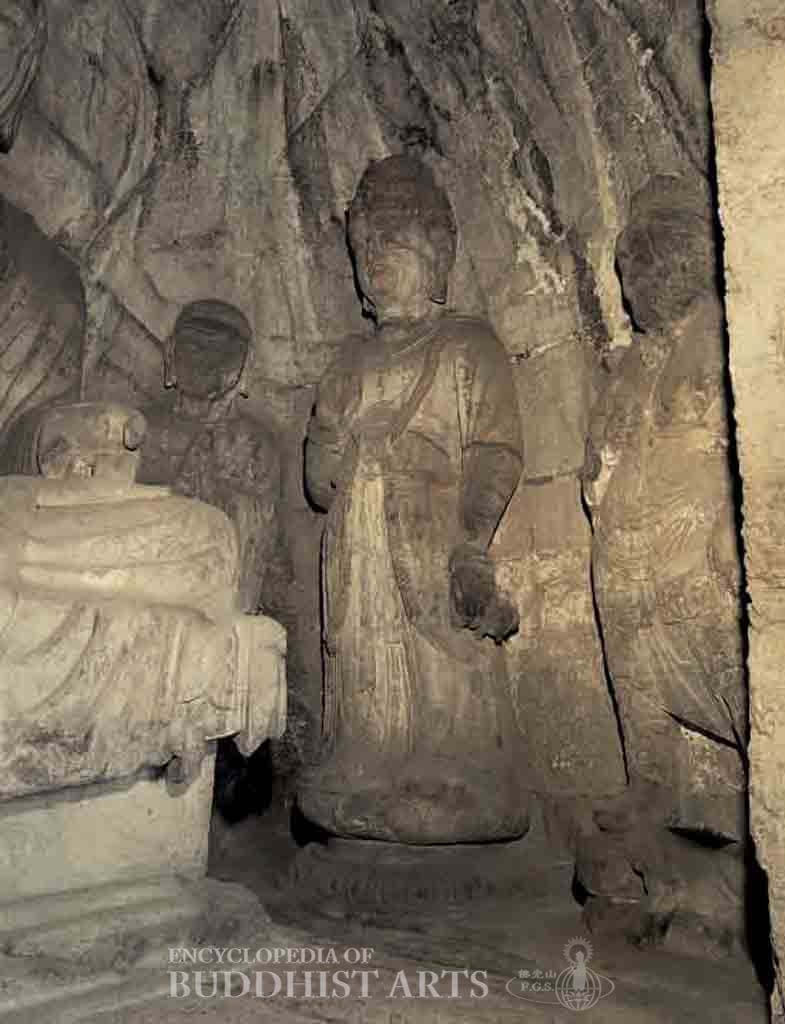
Longmen Grotto 20: Mahakasyapa, Attendant Bodhisattva, and Heavenly King (right side)
Longmen Grotto 20
CHINA, Henan, Luoyang
Grotto 20, also known as Hidden Stream Temple, is located in the northern area of the Yi River’s west bank and is the largest of the Longmen Grottoes. Construction began during the rule of Emperor Gaozong (reigned 649–683) of the Tang dynasty. The grotto was completed with the addition of a wooden structure, later removed, during the Qing dynasty (1644–1911). The grotto measures 9.45 m in width, 9.7 m in height, and 6.72 m in depth. It has an apsidal layout and a vaulted ceiling with a lightly engraved lotus. Carved in high relief on the back (west) wall, the grotto features sculptures of a Buddha, two disciples, two Bodhisattvas, and two Heavenly Kings.
The 7.8 m high main Buddha has an oval nimbus and a round face with thick lips and full cheeks. The Buddha’s shoulders and chest are broad. An outer monastic robe covers both shoulders and an inner robe is tied with a sash at the waist. The Buddha’s right hand, which is slightly damaged, forms the abhaya (fearlessness) mudra, while the left hand displays the varada (wish-granting) mudra. The Buddha is seated in full lotus position on a Sumeru throne, over which drapes the edges of his outer robe.
On each side of the Buddha is a disciple with a damaged face. They stand on double lotus pedestals, and wear monastic robes with double collars. The disciple to the right of the Buddha is Mahakasyapa, who stands with palms joined at the chest. Ananda stands on the left, holding a jewel with both hands. Two Bodhisattvas flanking the Buddha have large heads and wear headdresses with hair coiled in topknots. Their faces are round and assume soft, peaceful expressions. The Bodhisattvas wear stoles, necklaces, and lower garments, and stand barefoot on double lotus pedestals. Sturdy Heavenly Kings, who wear armor and stand beside the Bodhisattvas, trample demons beneath their feet. Aside from the Buddha’s nimbus, the walls behind the sculptures are unadorned.
For more details, go to the Encyclopedia of Buddhist Arts: Caves R-L, page 659.
Cite this article:
author = Hsingyun and Youheng and Johnson, Peter and Mankuang and Huntington, Susan and Edson, Gary and Neather, Robert,
booktitle = {Encyclopedia of Buddhist Arts: Caves R-L},
pages = 659,
title = {{Longmen Grotto 20}},
volume = 6,
year = {2016}}