
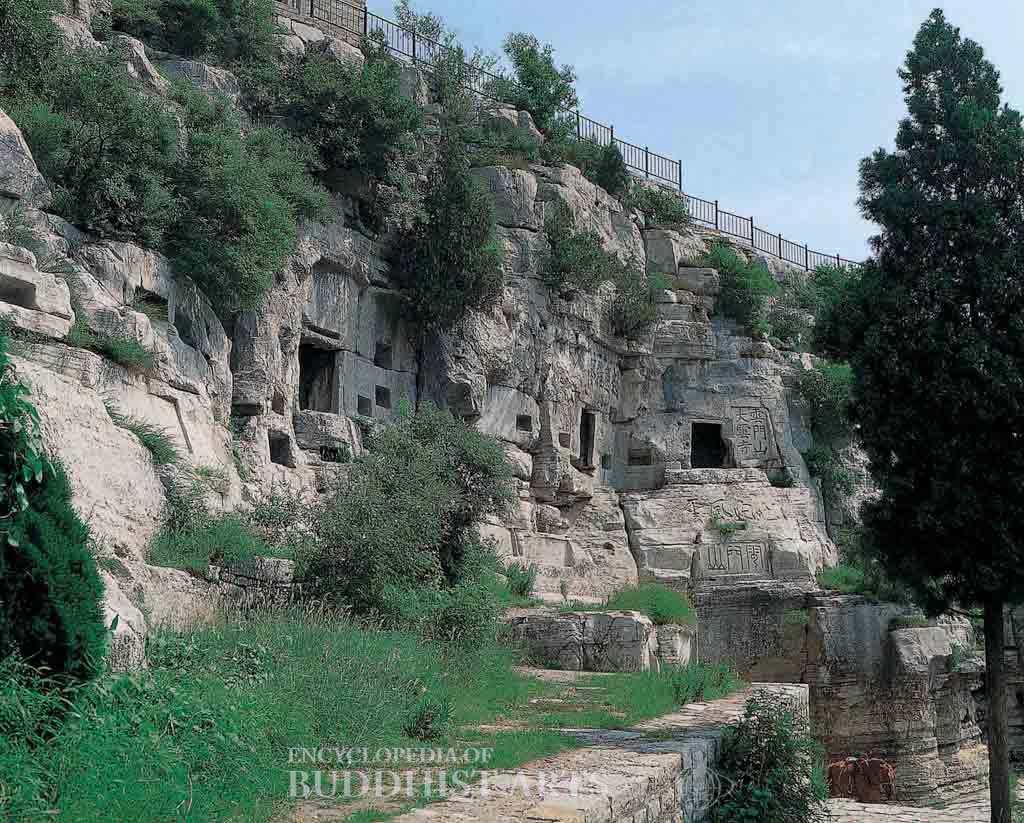
Yunmenshan Grottoes: Grottoes 3 to 5
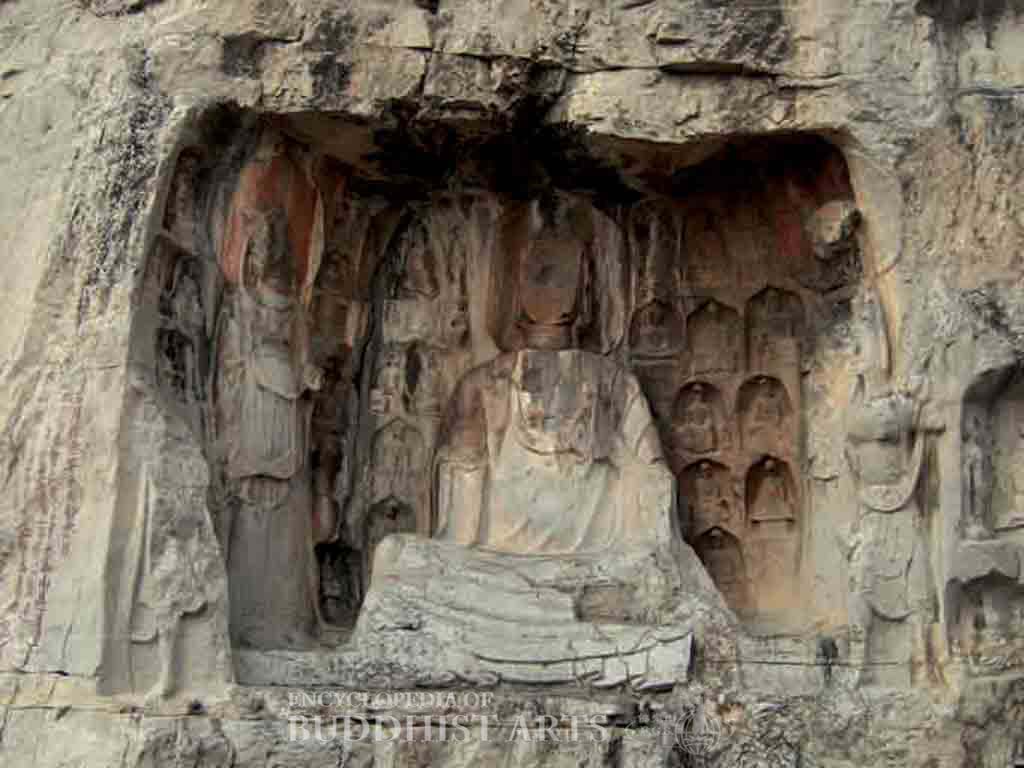
Yunmenshan Grottoes: Niche 1
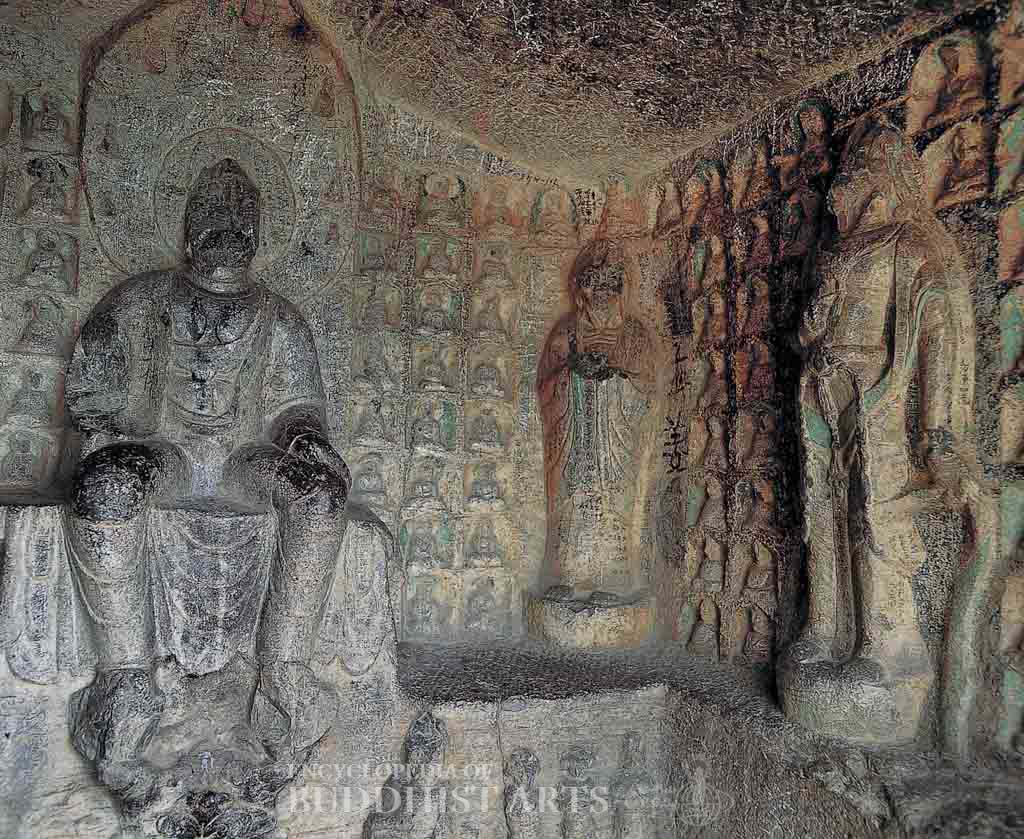
Yunmenshan Grottoes: Grotto 5
Yunmenshan Grottoes
CHINA, Shandong, Weifang
These grottoes are located south of Qingzhou, Weifang. The site consists of two large niches and three middle-sized grottoes. The two niches are located in the southwest area of Yunmenshan Grottoes, and the three grottoes are situated in the south area of the site. Niches 1 and 2 were created in the early Sui dynasty (581–618), while Grottoes 3, 4, and 5 were constructed during the Tang dynasty (618–907).
Niche 1 contains reliefs of one Buddha, two Bodhisattvas, and two warriors. All of the figures’ heads have been damaged. The Buddha wears an inner robe, secured with a sash, and an outer monastic robe with very little fold details, leaving the right shoulder bare. Seated in full lotus position, the Buddha has unfortunately lost both hands. The bodies of the attendant Bodhisattvas are adorned in draping stoles and neck ornaments, along with long lower garments with smooth lines. The two warriors, in contrast, have bared upper bodies. Numerous smaller statues adorn the walls inside and outside the niche. The Amitabha Buddha, located beside the main statue, was carved in 598 of the Sui dynasty, while statues of Sakyamuni and Prabhutaratna Buddhas, dated to 590, is situated to the left of the left attendant Bodhisattva.
Inside Niche 2 are carvings of one Buddha and two Bodhisattvas. The main statue was a standing Buddha, which was destroyed during the rule of Emperor Zhengde (reigned 1505–1521) of the Ming dynasty. The two attendant Bodhisattvas are fairly well preserved, except for the hands and the head of the Bodhisattva on the right, which have been badly damaged. The sculpting technique used in this niche is very detailed, with both the inner and outer walls decorated with reliefs of small seated Buddhas.
Grottoes 3, 4, and 5 are rectangular with flat ceiling and U-shaped altars. A Buddha, two disciples, two Bodhisattvas, and two warriors adorn the each altar. The Buddhas in all three grottoes sit with legs pendent. The walls inside Grotto 5 are decorated with the Thousand Buddhas. An inscription dated to 731 of the Tang dynasty can also be found in this grotto.
For more details, go to the Encyclopedia of Buddhist Arts: Caves T-Z, page 1745.
Cite this article:
author = Hsingyun and Youheng and Johnson, Peter and Mankuang and Huntington, Susan and Edson, Gary and Neather, Robert,
booktitle = {Encyclopedia of Buddhist Arts: Caves T-Z},
pages = 1745,
title = {{Yunmenshan Grottoes}},
volume = 9,
year = {2016}}