
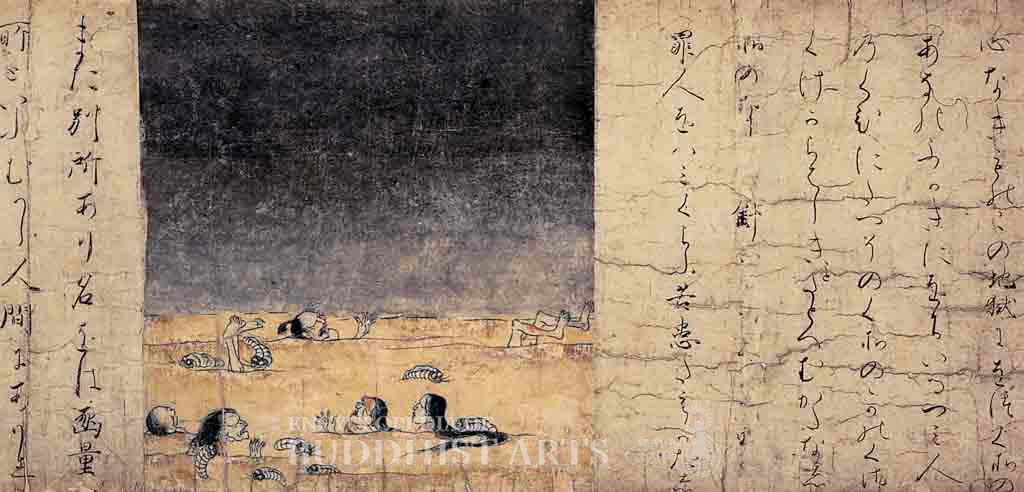
Scroll of the Hells - Hell of Excrement
Ink and color on paper
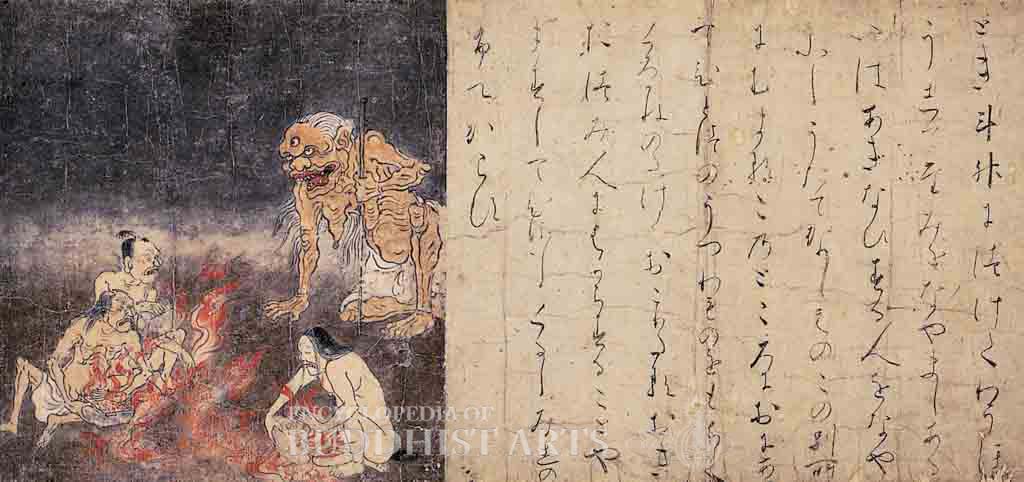
Scroll of the Hells - Hell of Measures
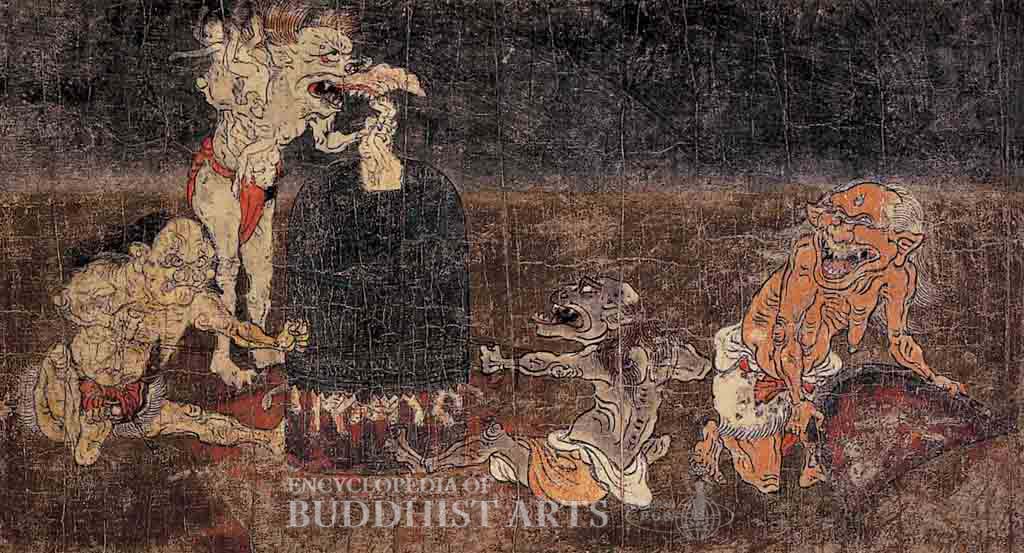
Scroll of the Hells - Hell of the Iron Mortar
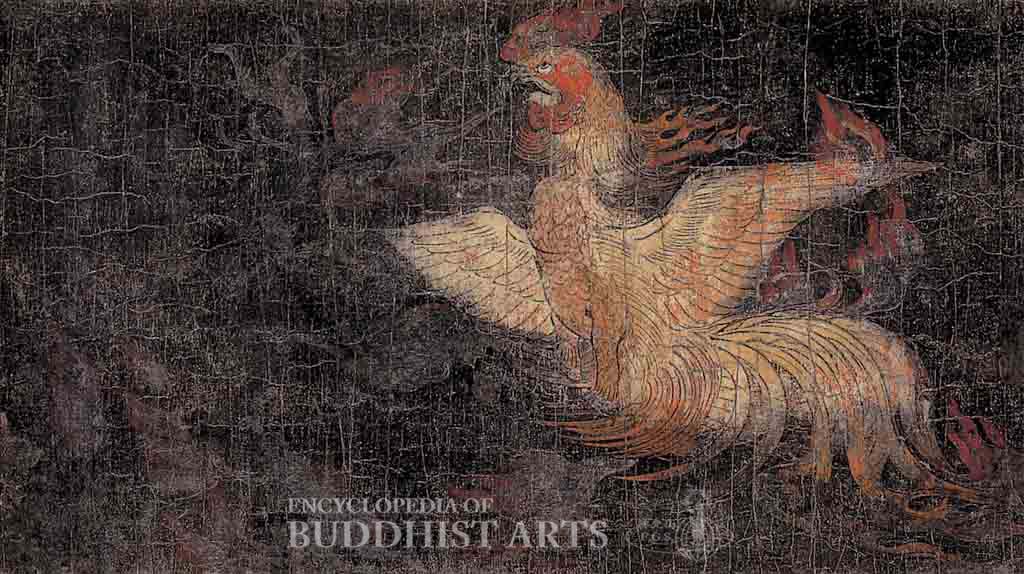
Scroll of the Hells - Hell of the Flaming Rooster
Scroll of the Hells
JAPAN; Kamakura period
This 12th century scroll is 26.7 cm high and 435 cm long. Thought to be one of the Scrolls of the Six Realms created during the rule of Emperor Go-Shirakawa (reigned 1155–1158), it was kept in Daishoin in Higashiokubo, Tokyo, until the Meiji period (1868–1912), when it became part of a private collection before ending up in the possession of Japanese government in 1950. It was listed as a National Treasure in 1956, and is now kept in Nara National Museum. According to the Formation of the World Sutra, there are many different kinds of hells in which beings suffer for many kalpas until their negative karma has been extinguished. Each hell inflicts a punishment suited to the evil deeds committed by the beings imprisoned within it.
In the Hell of Excrement, beings are immersed in a pit of excrement and bitten by needle-like worms as a result of their ignorance and disrespect to the Triple Gem. In the Hell of Measures, those who were dishonest and cheated others are punished with burning iron weights. The illustration of the Hell of the Iron Mortar shows fearsome hell guardians grinding up bodies. In the next hell, reserved for those who are cruel or argumentative, an enormous flaming rooster terrorizes helpless beings.
Along with the Scroll of Hungry Ghosts, this is considered to be one of the finest Japanese painted scrolls. Blood and flames are vividly painted in red and orange. Guardians and suffering beings stand out from a black background that represents the darkness of hell. The torments of hell are graphically portrayed, serving as a stern lesson on the fruits of negative karma.
For more details, go to the Encyclopedia of Buddhist Arts: Painting P-Z, page 795.
Cite this article:
author = Hsingyun and Youheng and Youlu and Wilson, Graham and Manho and Mankuang and Huntington, Susan,
booktitle = {Encyclopedia of Buddhist Arts: Painting P-Z},
pages = 795,
title = {{Scroll of the Hells}},
volume = 16,
year = {2016}}