
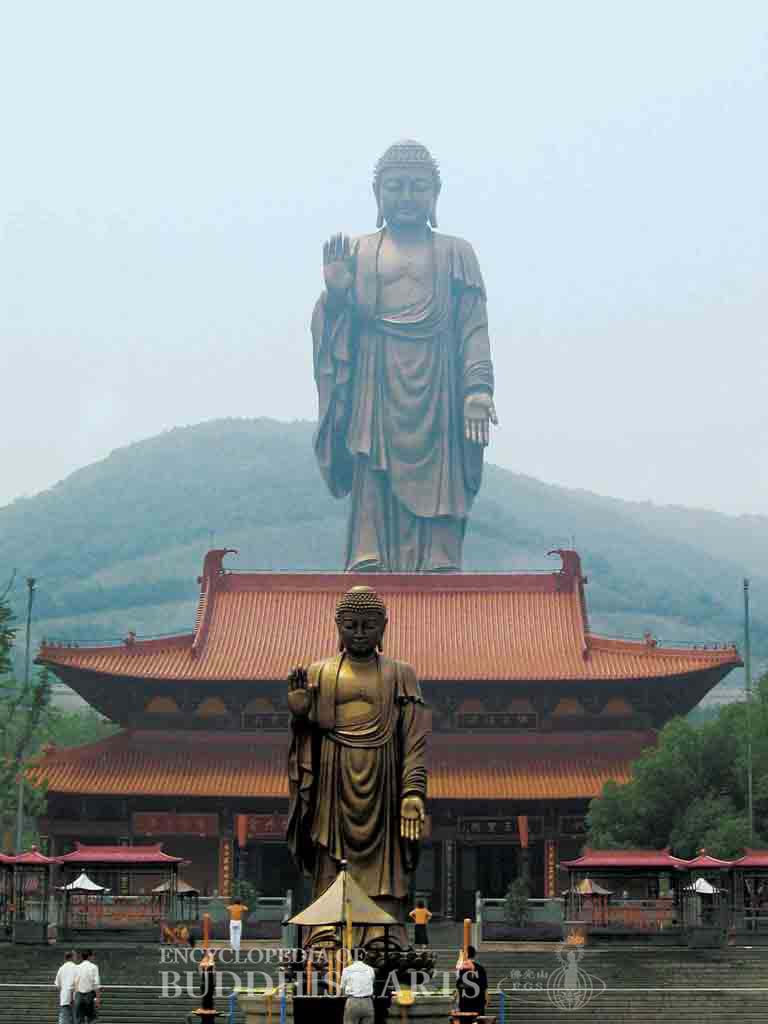
Xiangfu Temple: Great Hero Hall and Lingshan Great Buddha
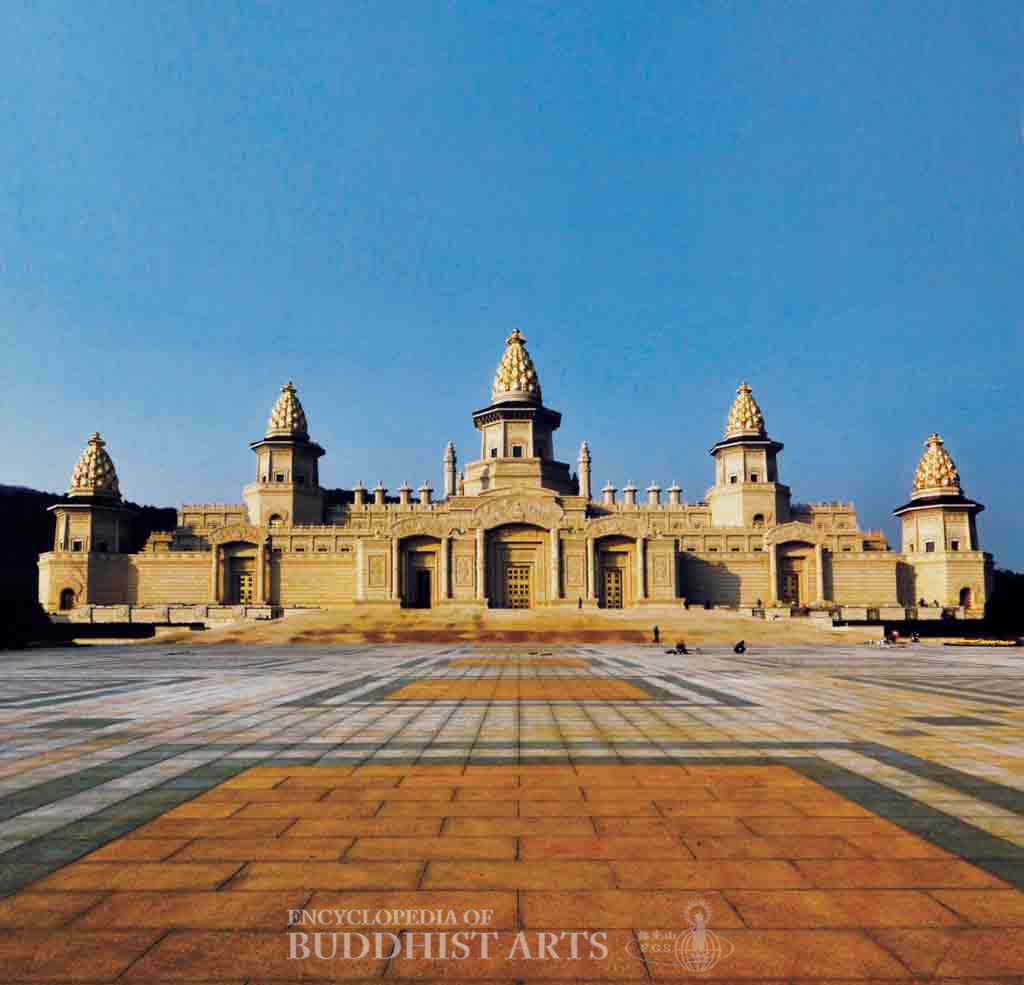
Xiangfu Temple: Lingshan Buddhist Palace
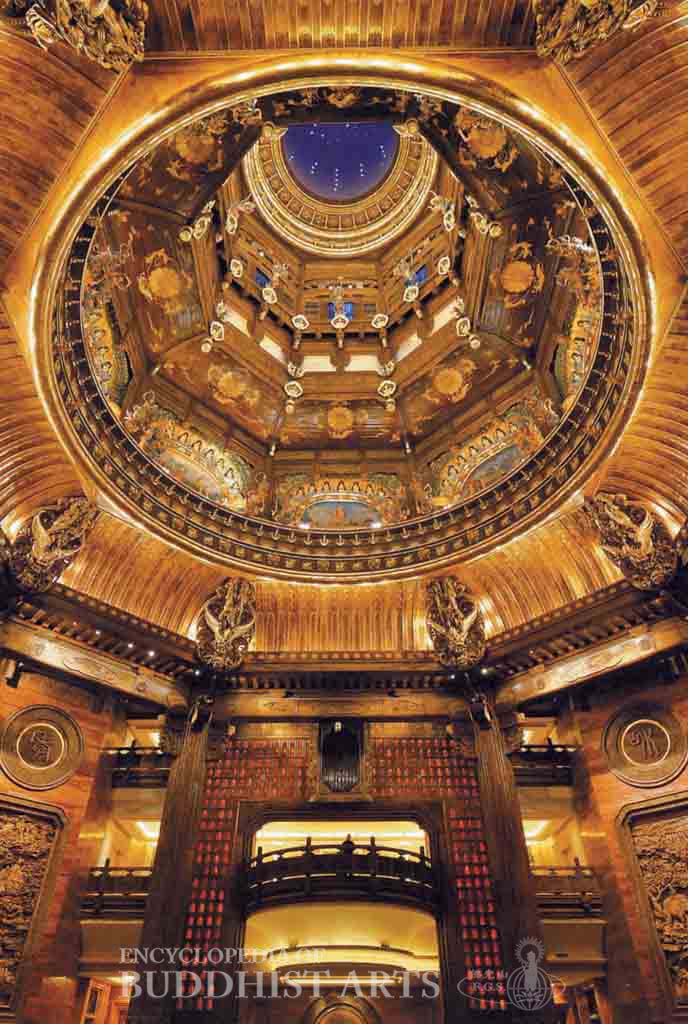
Xiangfu Temple: Lingshan Buddhist Palace - Pagoda Hall (interior)
Xiangfu Temple
CHINA, Jiangsu, Wuxi
When Master Xuanzang first saw the mountain, he commented that it was very similar to Vulture Peak, and thus named it Xiaolingshan (Small Vulture Peak). A temple was built and named Xiaolingshan Temple with Kuiji, Xuanzang’s disciple, as its first abbot. It was destroyed in 1938 during the Chinese civil war, and was not rebuilt until 1994. At that time, an 88 m high bronze Buddha statue, the Lingshan Great Buddha, was constructed behind the temple. The Lingshan Buddhist Palace was completed in 2009.
The main structures of the temple include the Heavenly King Hall, Avalokitesvara Hall, Ksitigarbha Hall, Sangharama Hall, Reclining Buddha Hall, Great Hero Hall, and the bell and drum towers. The Great Hero Hall has a double-eave hip-and-gable roof. It is 18.5 m high, 32 m wide, and 22.1 m deep. Statues of Sakyamuni Buddha, Mahakasyapa, and Ananda are enshrined within the building. A 3.5 m high bell that weighs 12.8 t hangs in the bell tower.
The Lingshan Buddhist Palace and the Lingshan Great Buddha are situated next to each other. The palace occupies more than 7 ha and is constructed mainly from stone. There are five flower pagodas on the roof of the palace. Their design was inspired by murals in the Mogao Caves. Inside the massive structure there are the lobby, hallway, Pagoda Hall, ordination hall, Sanchuan Conference Hall, and the Grand Ballroom, which can hold 1,000 people. The interior is magnificently decorated using the finest materials worked by the most skillful craftsmen in China. The architectural features are especially designed to complement each other. The wood engravings alone occupy 1.5 ha.
For more details, go to the Encyclopedia of Buddhist Arts: Architecture T-Z, page 1306.
Cite this article:
author = Hsingyun and Youheng and Johnson, Peter and Mankuang and Lancaster, Lewis,
booktitle = {Encyclopedia of Buddhist Arts: Architecture T-Z},
pages = 1306,
title = {{Xiangfu Temple}},
volume = 4,
year = {2016}}