
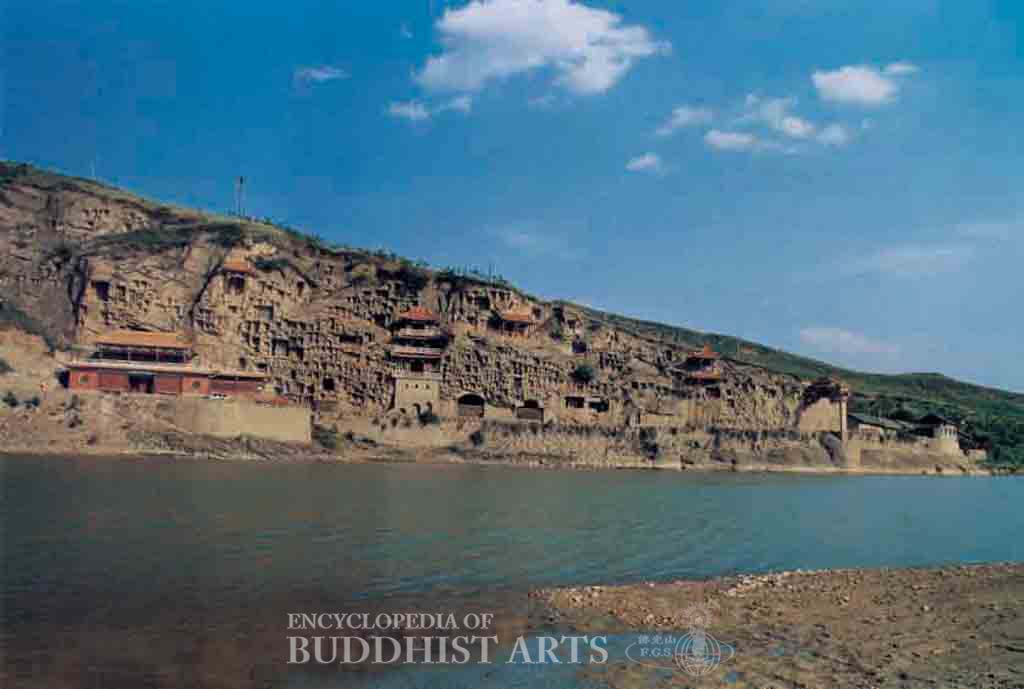
Guangyuan Thousand Buddha Cliff Rock Carvings
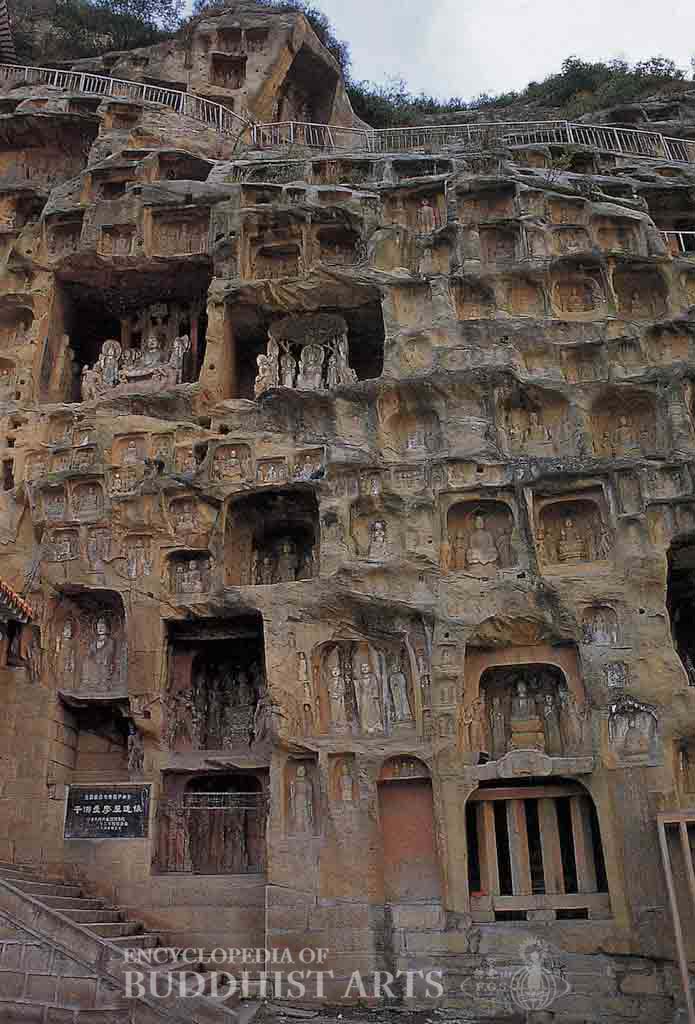
Guangyuan Thousand Buddha Cliff Rock Carvings
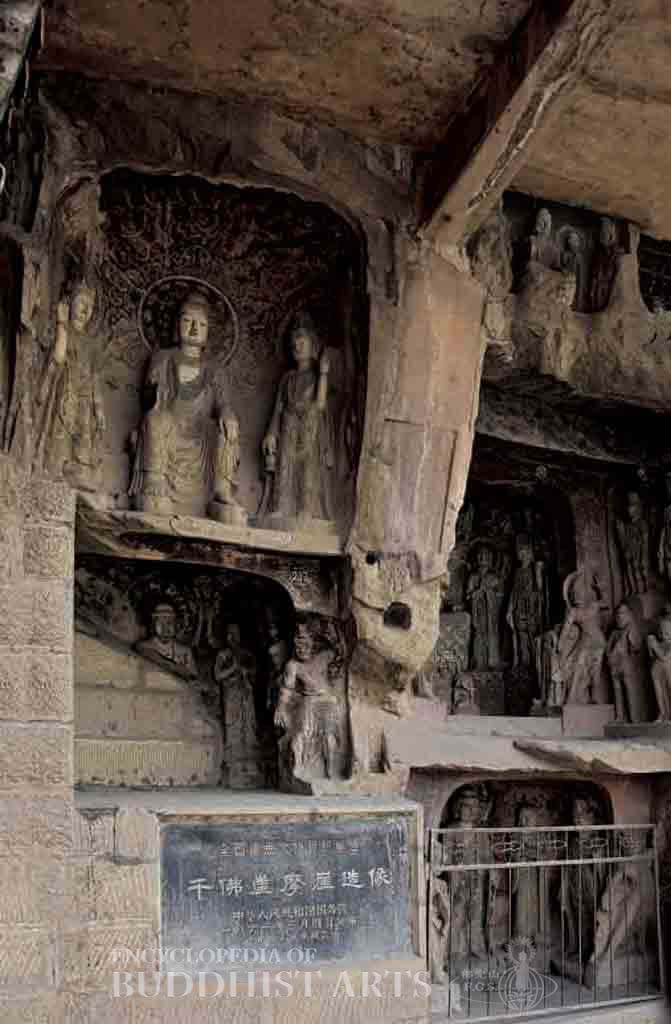
Guangyuan Thousand Buddha Cliff Rock Carvings (detail)
Guangyuan Thousand Buddha Cliff Rock Carvings
CHINA, Sichuan, Guangyuan
The Thousand Buddha Cliff Rock Carvings are located on Daliangshan, 5 km north of Guangyuan city in Sichuan. The first carvings at this site were done during the late Northern Wei dynasty (386–534), with construction reaching its climax during the Sui (581–618) and Tang (618–907) dynasties. Although additional smaller caves were constructed during the Ming (1368–1644) and Qing (1644–1911) dynasties, the main focus in these periods was the restoration of existing carvings. The Thousand Buddha Cliff was previously known as Botang Temple until the name was changed during the Yuan dynasty (1271–1368). Due to its location on the main road linking Chang’an and Chengdu, the rock carvings served as a congregation point for talented artists and a hotbed for cultural exchange. Many of the sculptures have a close stylistic resemblance to artworks from the Central Plains region. They were listed as a National Cultural Heritage Site in 1961.
The caves and niches at the site are situated along 400 m of a cliff face that runs north-south and is up to 45.5 m above ground. According to an inscription from the year 1854, the rock carvings originally consisted of over 17,000 sculptures; however more than half of these were destroyed during the construction of the Chuanshan Highway in 1936. There are currently 848 caves and niches, containing over 7,000 sculptures of varying sizes. In addition, over 130 inscriptions are preserved at the site. Most of the large caves made during the Tang dynasty contain central altars backed with screen walls that are exquisitely engraved with a wide variety of figures. The combination of functionality and decoration makes these some of the most refined cave sculptures in Sichuan.
Notable caves and niches include: Niche 211 (Su Ting Niche), Cave 223 (Treasure Buddha Cave), Cave 226 (Three Sages Cave), Cave 365 (Maitreya Buddha Cave), Cave 366 (Bodhi Figure Cave), Cave 400 (Central Pillar Cave), Cave 512 (Dayungu Cave), Cave 535 (Lotus Cave), Cave 689 (Thousand Buddha Cave), Cave 726 (Great Buddha Cave), Cave 744 (Sakyamuni Pavilion Cave), Cave 746 (Reclining Buddha Cave), and Cave 806 (Sakyamuni and Prabhutaratna Cave).
Niche 211 contains a large Buddha Triad. An inscription outside of the niche gives an account of the famous writer Su Ting passing by the Thousand Buddha Cliff on his way to Yizhou (present day Chengdu, Sichuan) from Chang’an (present day Xi’an, Shaanxi). Cave 226 is a small rectangular cave with a flat ceiling constructed during the Western Wei dynasty (535–556). Three niches were constructed on the three walls of the cave, each containing a Buddha and two Bodhisattvas. The dragons carved on the lintels display a relatively primitive carving technique characteristic of this period.
Cave 366 is a rectangular cave with a flat ceiling and a central altar. A Buddha sits in full lotus position on a raised platform atop the altar, flanked by attendant Bodhisattvas and two warriors. A stele near the entrance of the cave states that this carving depicts the Bodhi Figure and was commissioned by Bi Zhonghua, the governor of Lizhou (present day Guangyuan, Sichuan). The neighboring Cave 365 was constructed at the same time and contains a seated Maitreya Buddha flanked by disciples, Bodhisattvas, and warriors. The design of these two caves is similar to Longmen Grottoes 2050, 2055, and 2062 (Leigutai Grottoes).
Cave 512 was constructed during the High Tang period (712–756). A central altar supporting a carving of Maitreya Buddha extends from the middle of the cave to the back wall. An inscription inside the cave dates it to the year 715, while the benefactor’s name, Wei Kang, is inscribed outside the cave entrance. Other carvings in this cave include two niches containing a Buddha, two disciples, and two Bodhisattvas.
Cave 535 was made during the rule of Emperor Gaozong (reigned 649–683). A small restored niche in the cave is also inscribed with the reign years of Empress Wu Zetian (reigned 684–705). This large cave contains three walls and three niches, and was named for the lotus reliefs carved on the ceiling.
Cave 726 was constructed during the late Northern Wei dynasty. It has an apsidal layout and a height of approximately 5.4 m, and features a large Buddha triad. The central Buddha and the Bodhisattva on the north side have suffered severe weathering, although the Bodhisattva on the south side is relatively well preserved.
Caves 744 and 746 were originally neighboring caves which were later connected. Within Cave 746, the reclining Buddha statue is no longer extant, but an illustration of the Mahaparinirvana Sutra is preserved on the wall. Cave 744 contains a central altar featuring carvings of Sakyamuni Buddha, two disciples, two Bodhisattvas, and two warriors. The openwork screen wall behind the altar in this cave is a particularly exquisite example of High Tang carving.
For more details, go to the Encyclopedia of Buddhist Arts: Caves R-L, page 402.
Cite this article:
author = Hsingyun and Youheng and Johnson, Peter and Mankuang and Huntington, Susan and Edson, Gary and Neather, Robert,
booktitle = {Encyclopedia of Buddhist Arts: Caves R-L},
pages = 402,
title = {{Guangyuan Thousand Buddha Cliff Rock Carvings}},
volume = 6,
year = {2016}}