
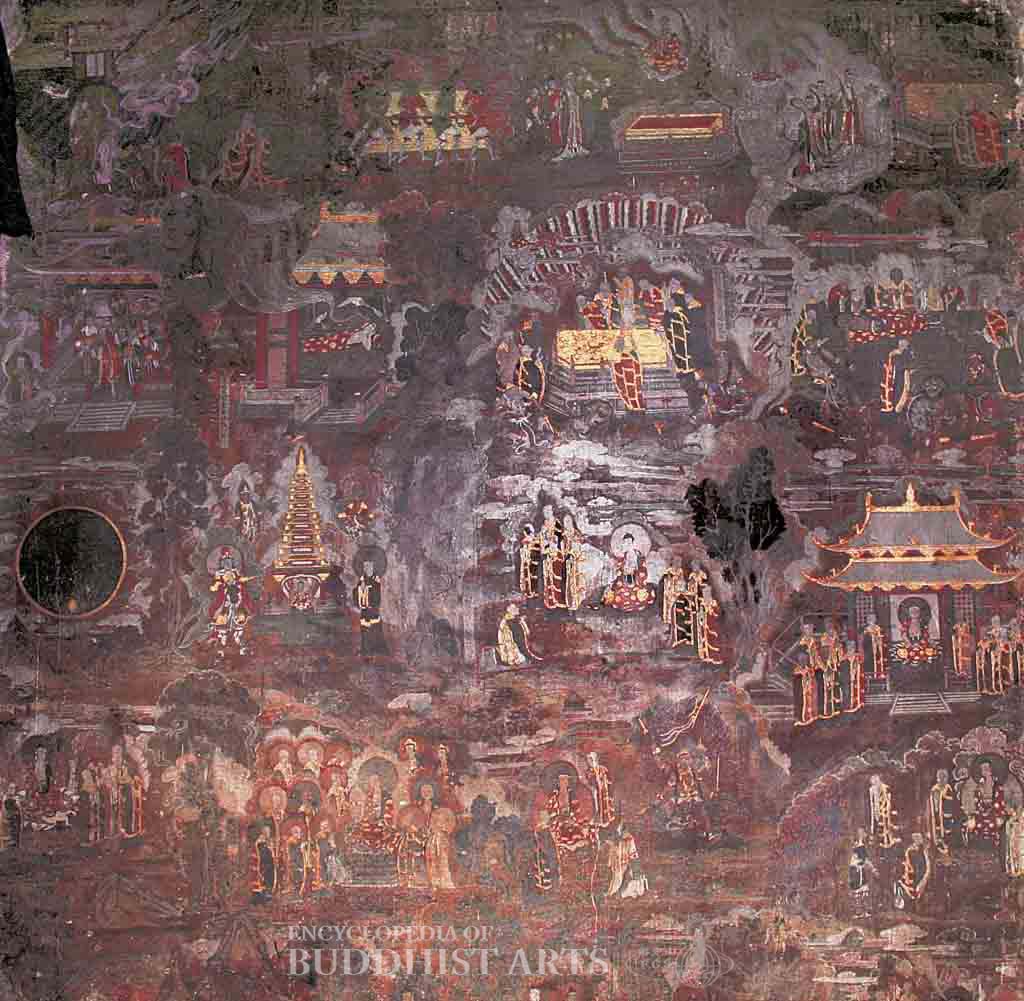
Jueyuan Temple Great Hero Hall: Life of the Buddha (detail) (west wall, third panel)
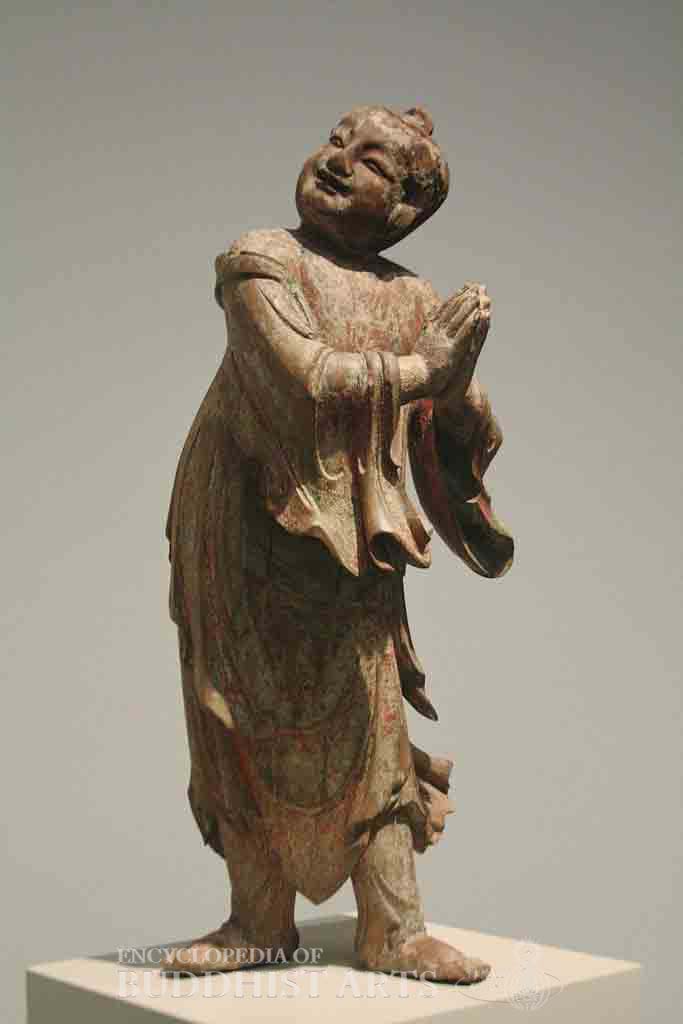
Jueyuan Temple Great Hero Hall: Life of the Buddha (detail) (west wall, fourth panel)
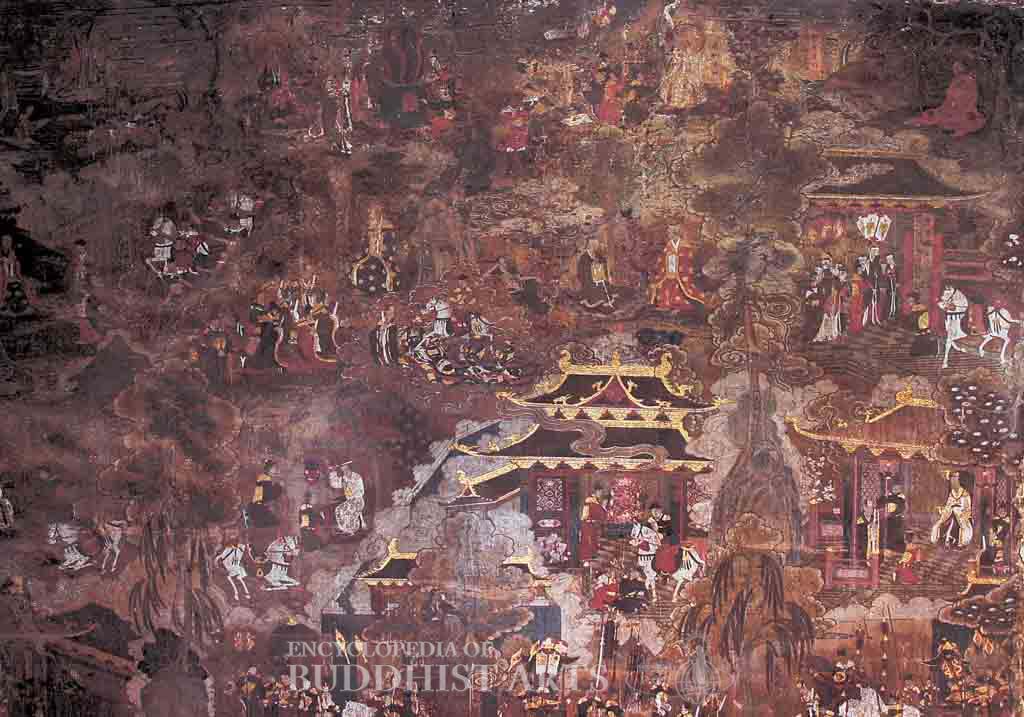
Jueyuan Temple Great Hero Hall: Life of the Buddha (detail) (east wall, second panel)
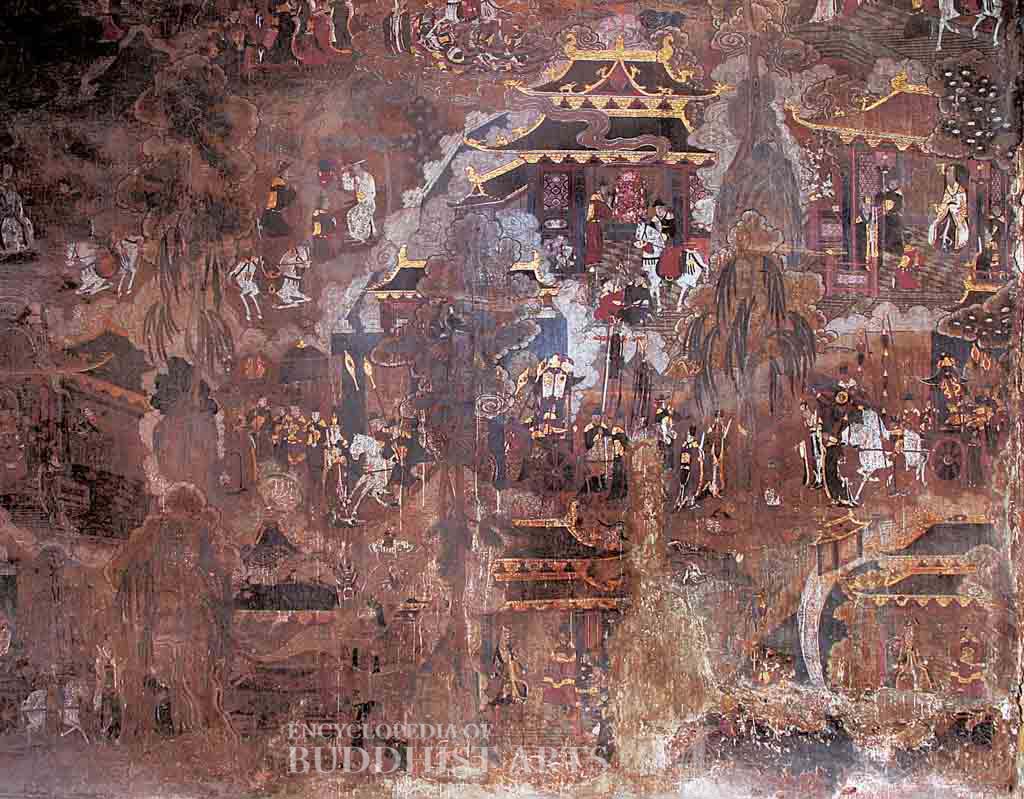
Jueyuan Temple Great Hero Hall: Life of the Buddha (detail) (east wall, second panel)
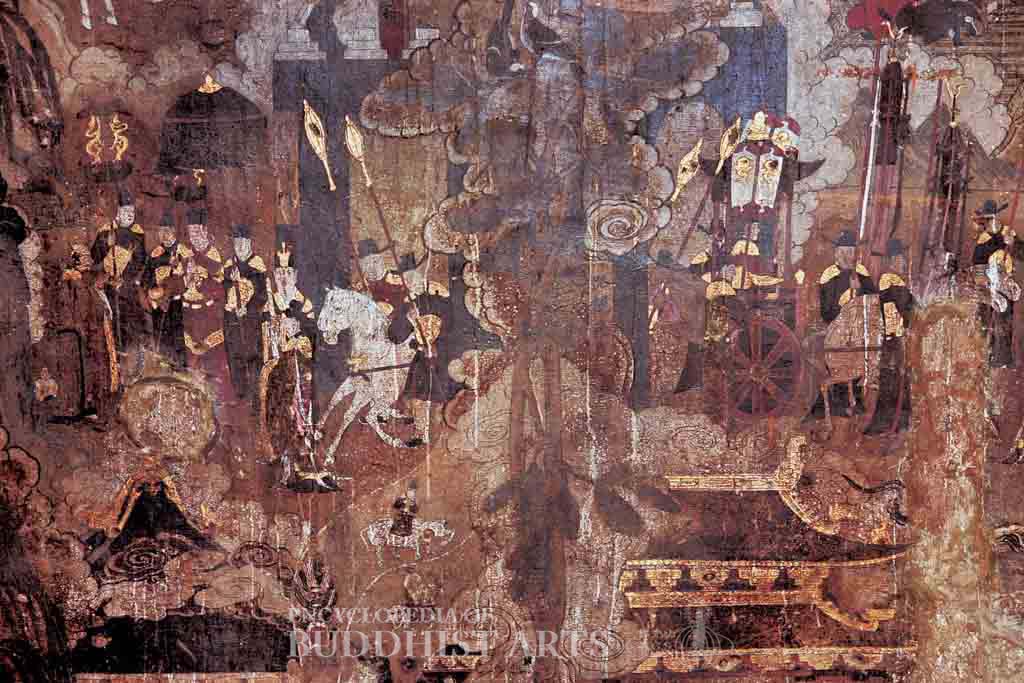
Jueyuan Temple Great Hero Hall: Life of the Buddha - Encountering a Corpse and a Monk (east wall, second panel)

Jueyuan Temple Great Hero Hall: Life of the Buddha (detail) (north wall, second panel)
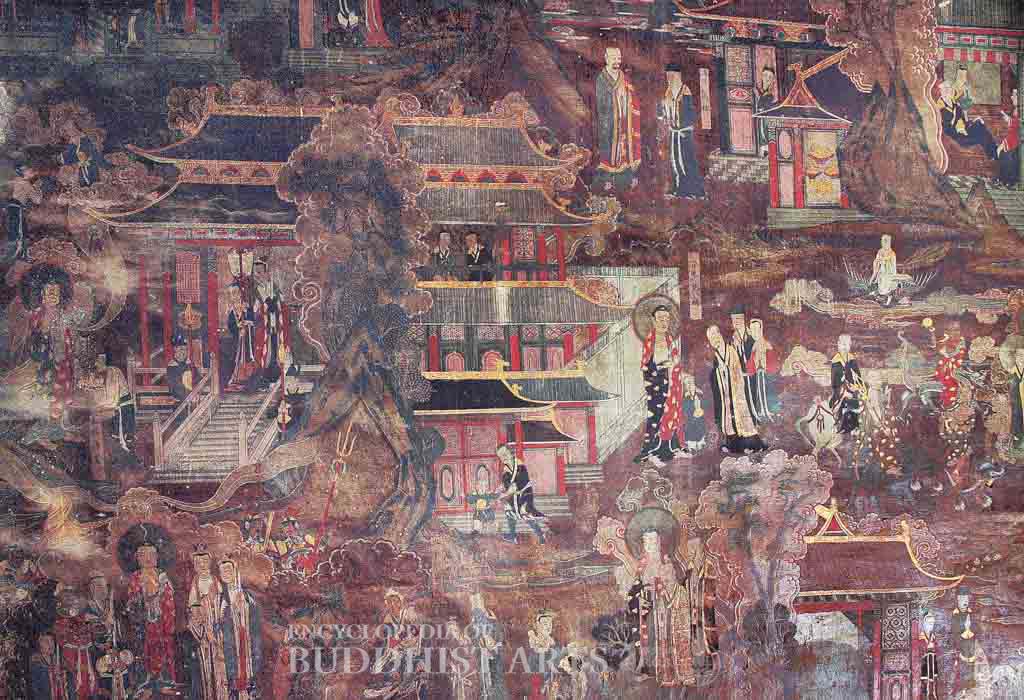
Jueyuan Temple Great Hero Hall: Life of the Buddha (detail) (north wall, third panel)

Jueyuan Temple Great Hero Hall: Life of the Buddha - Liberated Due to a Woman (north wall, third panel)
Jueyuan Temple Great Hero Hall: Life of the Buddha
CHINA, Sichuan, Guangyuan; Ming dynasty
These murals in Jueyuan Temple’s Great Hero Hall, depicting scenes from the Life of the Buddha, are some of the finest surviving murals from the Ming dynasty. They are divided by columns into 14 panels. Each scene is identified by a four-character inscription. The stories begin on the left side of the south wall and proceed counterclockwise, ending on the right side of the south wall. On the left side of the south wall, there are illustrations of scenes from the Jataka tales, including the Buddha’s Ascent to Tusita Heaven, the Offering of Flowers to Dipamkara Buddha, and Covering the Muddy Ground with Hair. Beginning on the right side of the east wall, the first three panels contain 57 scenes that begin with the Buddha’s birth and end with his enlightenment. The fourth panel on the east wall, all four panels on the north wall, and the first two panels on the right side of the west wall contain 108 scenes, beginning with the Buddha teaching the Dharma and continuing through to his parinirvana. The 39 scenes on the last two panels of the west wall and the end panel on the right side of the south wall depict Cunda’s offering, the Buddhas last Dharma teaching, his passing into parinirvana, and the mourning of his death. The stories continue with the distribution of the Buddha’s relics among the eight kings, the formation of the Buddhist council, King Asoka building stupas, and the propagation of the Dharma in the east.
Buildings, clouds, trees, and rocks in the background give unity to the numerous scenes as well as help to distinguish them. The halls and pavilions are carefully illustrated with the ruled-line technique. Numerous figures including kings, queens, officials, servants, Mara, female demons, the naga king, heavenly beings, and boatmen are depicted in detail. Gold powder is used to highlight the clothing of the figures and the roofs of the buildings, adding a bright elegance to the murals.
Xinghua Temple in Jishan, Shanxi, and the Yanshan Temple in Fanshi, Shanxi also include similar murals. The Chongshan Temple in Taiyuan, Shanxi retains a set of paper copies of similar illustrations. However, these murals in Jueyuan Temple are considered to be the most complete and detailed set of Ming dynasty depictions of the Life of the Buddha. They also contain accurate portrayals of the palace architecture and court fashion from this period.
For more details, go to the Encyclopedia of Buddhist Arts: Painting I-O, page 397.
Cite this article:
author = Hsingyun and Youheng and Youlu and Wilson, Graham and Manho and Mankuang and Huntington, Susan,
booktitle = {Encyclopedia of Buddhist Arts: Painting I-O},
pages = 397,
title = {{Jueyuan Temple Great Hero Hall: Life of the Buddha}},
volume = 15,
year = {2016}}