
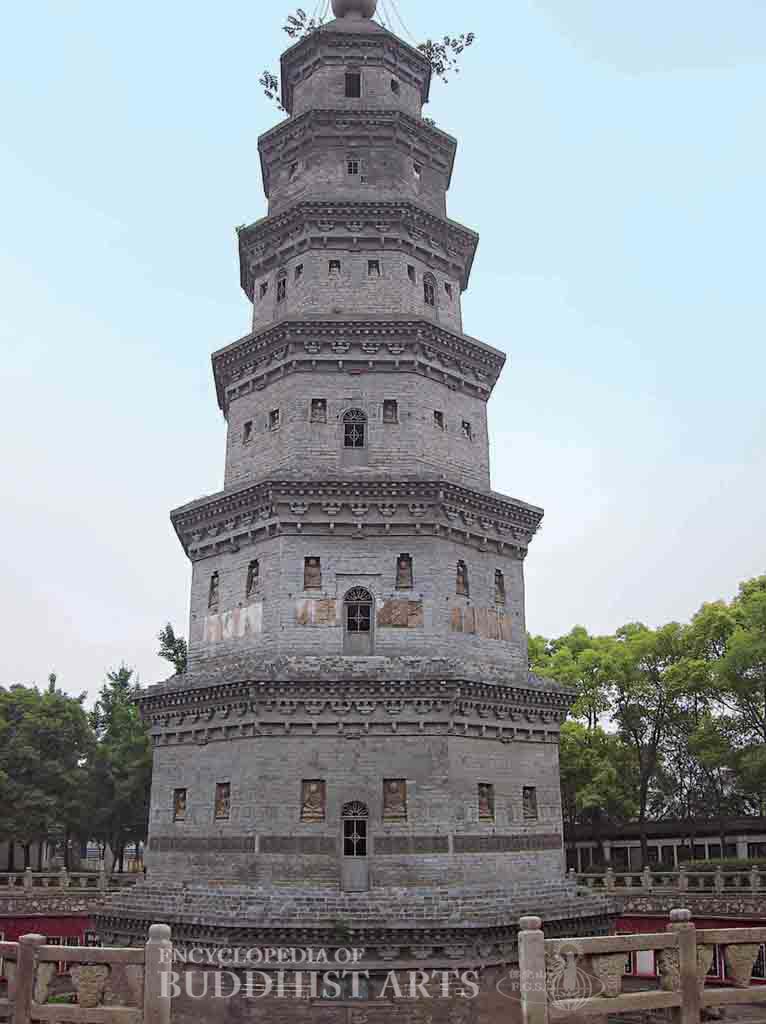
Wanshou Pagoda
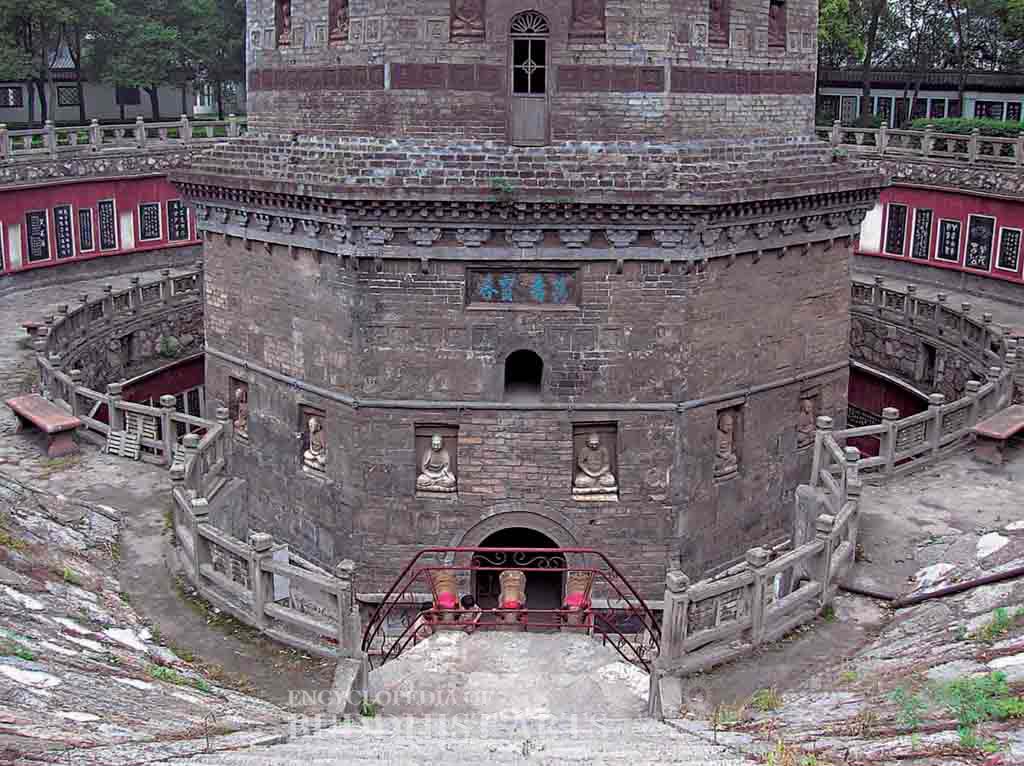
Wanshou Pagoda (detail)
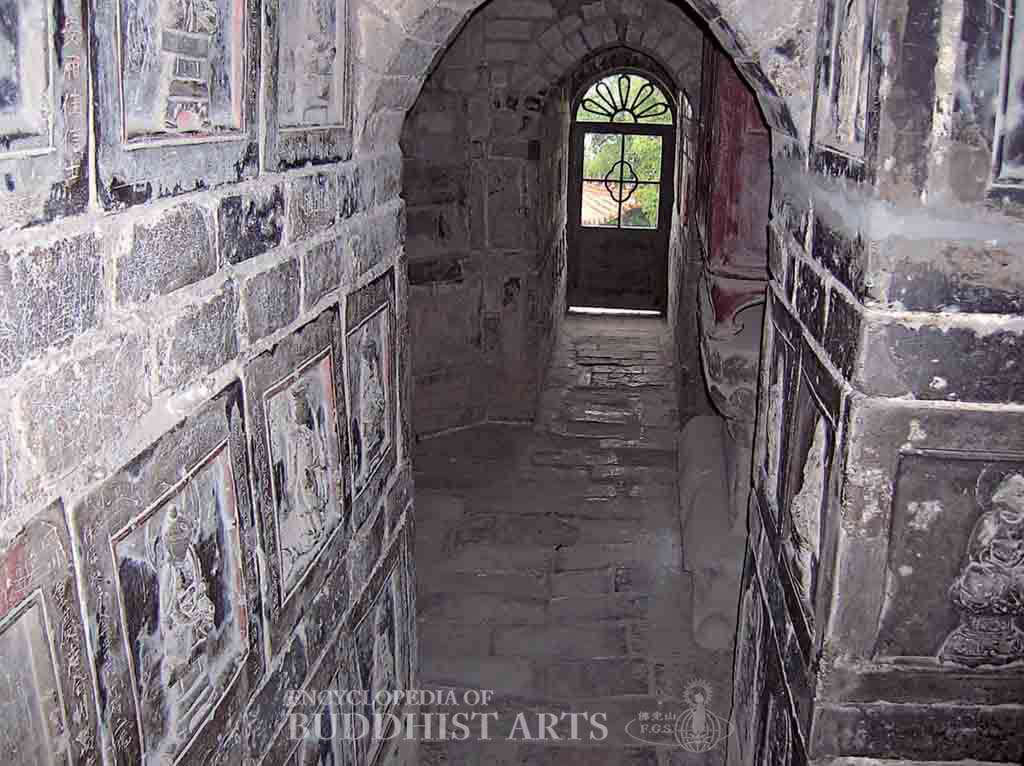
Wanshou Pagoda (detail)
Wanshou Pagoda
CHINA, Hubei, Jingzhou
Wanshou means Longevity. It is also known as Guiding Pagoda. According to the records, construction of the pagoda started in 1548 during the Ming dynasty and was completed in 1552. It was built in order to pray for the well-being of Emperor Jiajing (reigned 1521–1566). It was repaired a number of times during the Qing dynasty (1644–1911), and was listed as a National Cultural Heritage Site in 2006.
The seven-story, octagonal, brick pagoda is 40.8 m high. It has a 1.1 m high Sumeru base, at each corner of which there is a white marble statue of a warrior supporting the weight of the pagoda. The interior is hollow and there are stone stairways leading to the top. There is an arched doorway on the south side of the first story. A golden Buddha is enshrined in each of the first five stories, with the 3 m high Guiding Buddha on the first story. Imitation bracket sets and beams support the eaves. Buddha niches can be found covering the interior and exterior walls. Only 96 of the 142 niches still contain white marble high reliefs of seated Buddhas. The spire is in the form of a gilt bronze vase. The walls and corridors within the pagoda contain many carvings of Buddhas in various positions, as well as floral motifs and inscriptions. The inscriptions are written in Chinese, Tibetan, and Manchu. The decorative bricks were donated by people from different areas, so that each brick displays a distinctive art.
For more details, go to the Encyclopedia of Buddhist Arts: Architecture T-Z, page 1178.
Cite this article:
author = Hsingyun and Youheng and Johnson, Peter and Mankuang and Lancaster, Lewis,
booktitle = {Encyclopedia of Buddhist Arts: Architecture T-Z},
pages = 1178,
title = {{Wanshou Pagoda}},
volume = 4,
year = {2016}}