
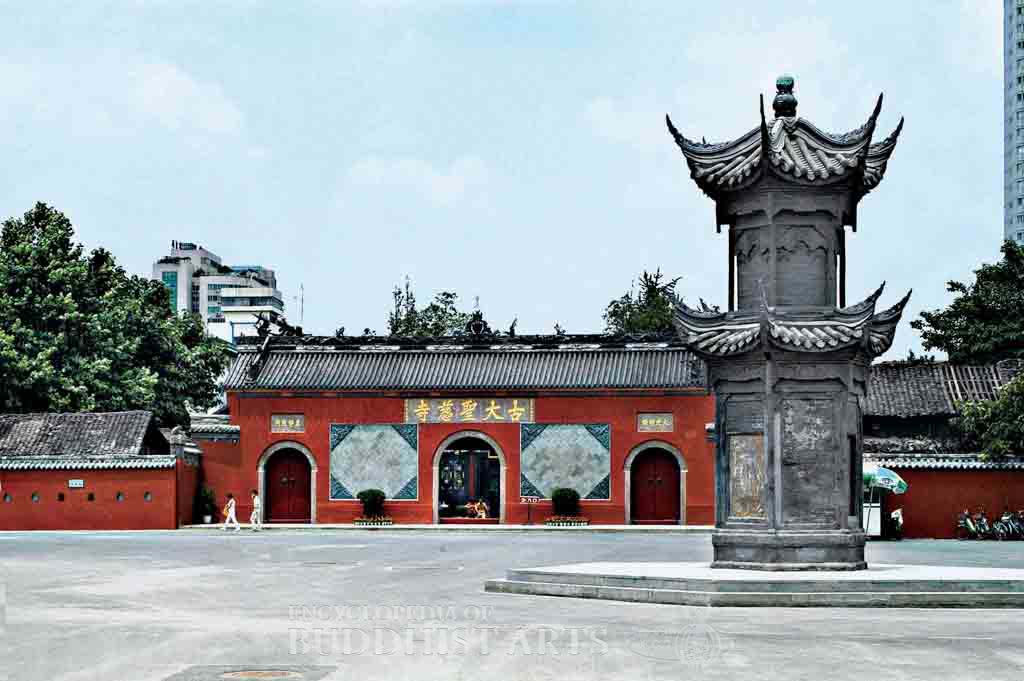
Daci Temple: Main Temple Gate
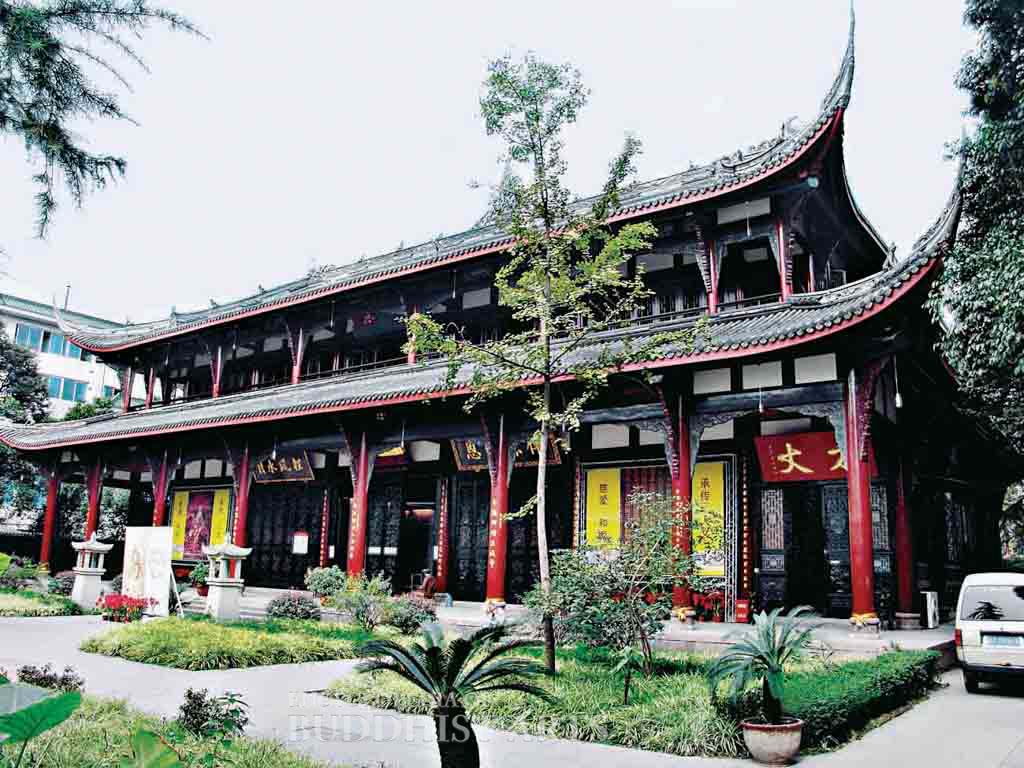
Daci Temple: Sutra Repository
Daci Temple
CHINA, Sichuan, Chengdu
According to the records, the temple was founded by Emperor Xuanzong (reigned 712–756) of the Tang dynasty during the turmoil of the An Shi Rebellion. At that time, the monk Yinggan fed disaster victims and recommended the emperor to build a temple to pray for the well-being of the country. The emperor donated land for the temple and construction started in 757. There were numerous halls, pavilions, and pagodas. For a time, it was known as the temple with the most artists taking part in its decoration. Since it had been constructed by imperial decree, it escaped destruction during the persecution of Buddhism under Emperor Wuzong (reigned 840–846). However, it was destroyed during wartime in 1435 during the Ming dynasty. It was reconstructed in 1446, only to be destroyed again. Finally, the temple was rebuilt during the rule of Emperor Shunzhi (reigned 1644–1661) and Emperor Tongzhi (reigned 1862–1874) of the Qing dynasty, and has remained unchanged since then. It was listed as a Municipal Cultural Heritage Site in 1981.
The temple faces south and occupies 1.2 ha. The principal buildings along the central axis include the main temple gate, Heavenly King Hall, Avalokitesvara Hall, Great Hero Hall, Dharma Hall, and the sutra repository. Along the sides there are the meditation hall and ordination hall. The seven-by-three bay Great Hero Hall is the main building and has a single-eave hip-and-gable roof. The seven-by-five bay sutra repository has a double-eave hip-and-gable roof. It was originally a place for studying the Buddhist canon.
For more details, go to the Encyclopedia of Buddhist Arts: Architecture A-F, page 184.
Cite this article:
author = Hsingyun and Youheng and Johnson, Peter and Mankuang and Lancaster, Lewis,
booktitle = {Encyclopedia of Buddhist Arts: Architecture A-F},
pages = 184,
title = {{Daci Temple}},
volume = 1,
year = {2016}}