
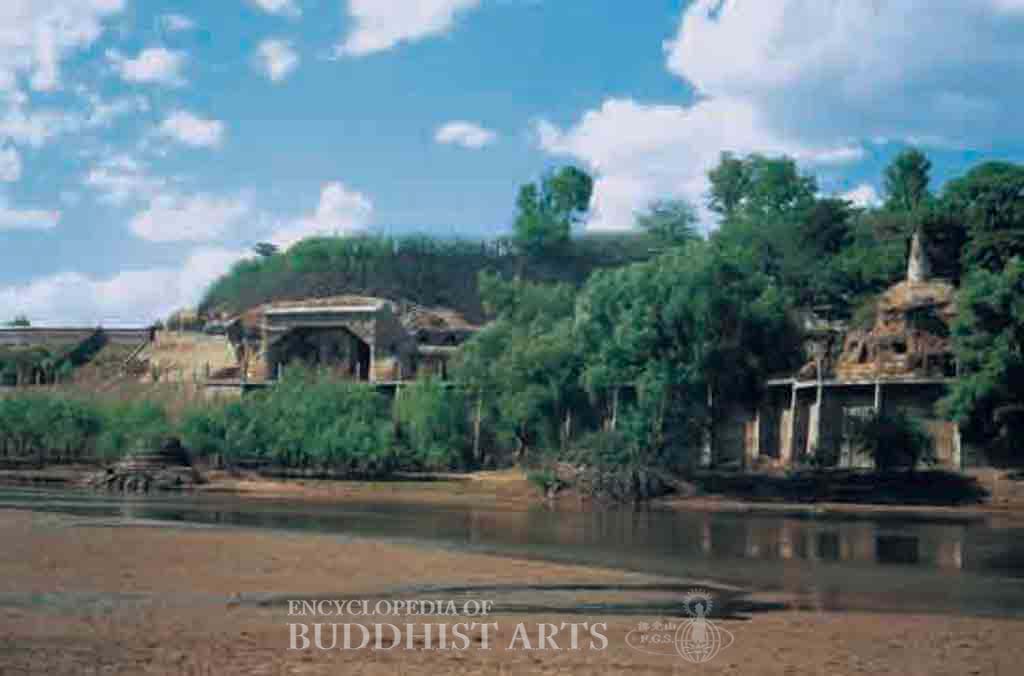
Wanfotang Caves
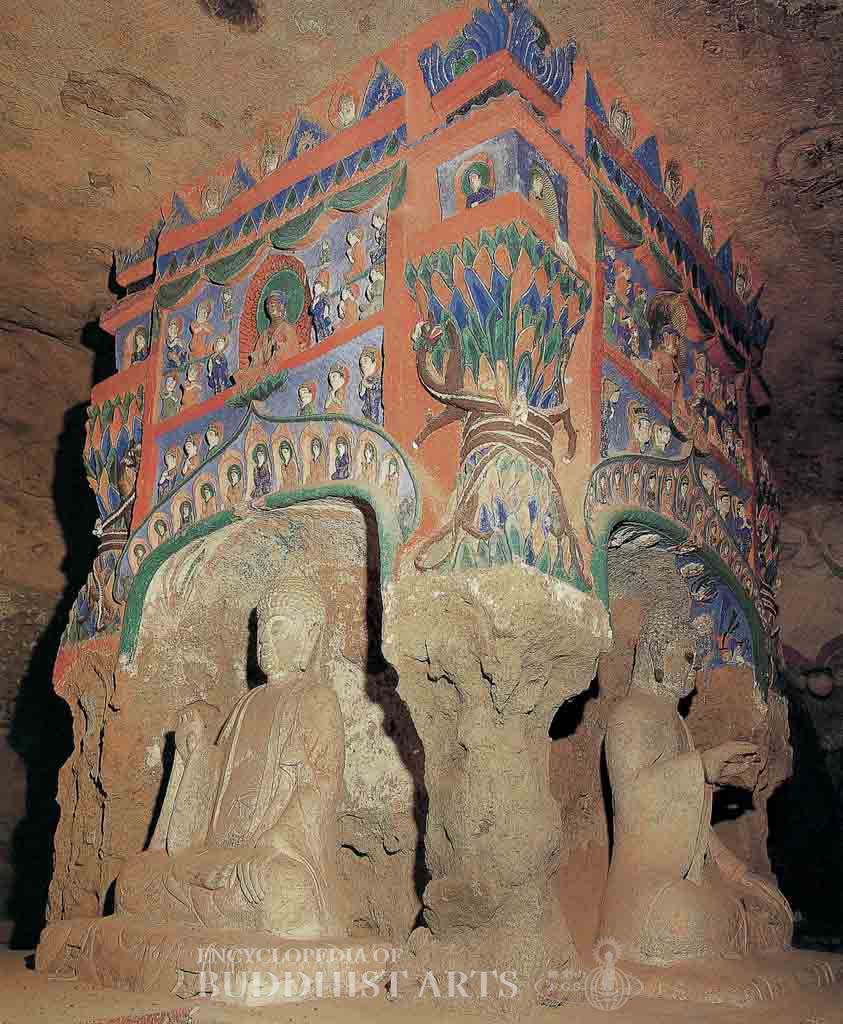
Wanfotang Caves: Cave 1 - Central Pillar
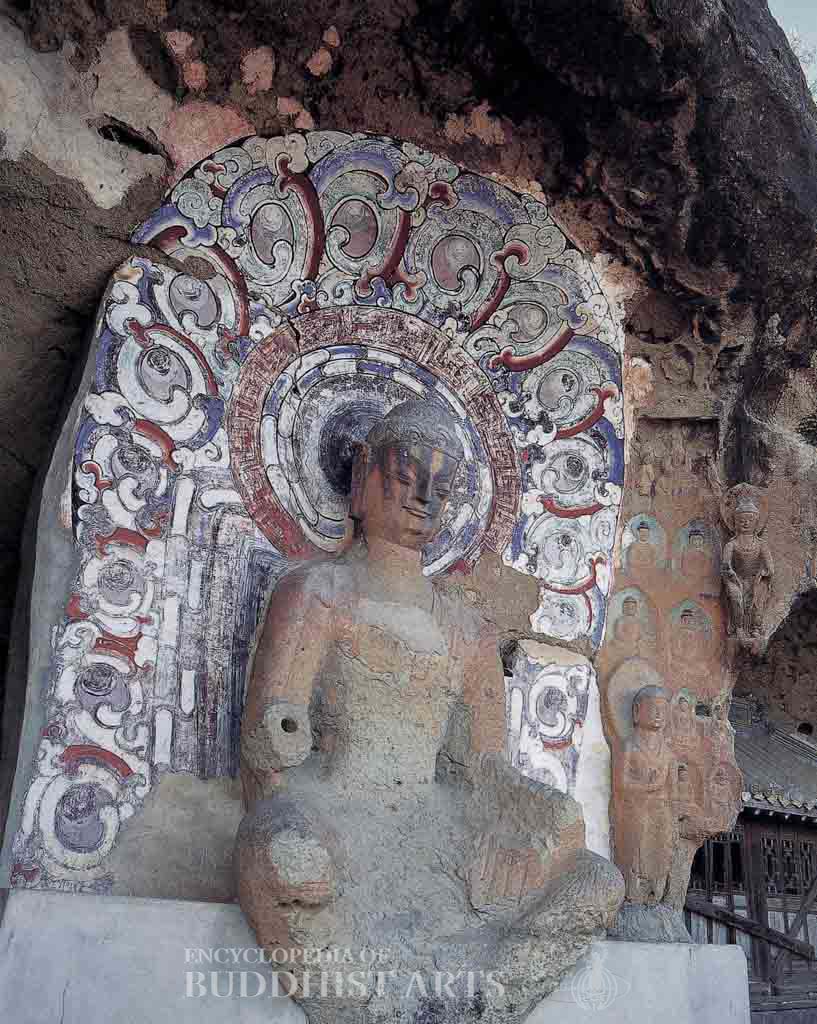
Wanfotang Caves: Cave 6 - Maitreya Buddha
Wanfotang Caves
CHINA, Liaoning, Yixian
Excavation of the Wanfotang Caves began late during the rule of Emperor Xiaowen (reigned 471–499) and continued through to Emperor Xuanwu (reigned 499–515). This site represents one of the most important cave networks from the Northern Wei dynasty (386–534). There are a total of 17 caves separated into east and west sections. Over 500 statues are enshrined within the caves. Wanfotang caves were listed as a National Cultural Heritage Site in 1988.
The west section has two levels and contains three small caves on the upper level and six on the lower level. The caves on the upper level have suffered from weathering. Caves 1, 5, and 6 on the lower level are considered important. Cave 1 is a central pillar cave containing an antechamber and main chamber. The central pillar in the main chamber is carved with two niches on each side. The lower niches are larger, but the main sculptures housed inside have been destroyed. Fragments of Bodhisattva sculptures can be found on the exterior of both sides of the lower niches. The shallow upper niches contain Buddhas seated in full lotus position. The central pillar’s south side also has a Buddha flanked by crouching deer.
Cave 5 contains an inscription noting that Yuanjin, the governor of Yingzhou, built this cave for Emperor Xiaowen. Most of the cave has collapsed, and only fragments of large niches remain on the back and west walls. Cave 6 has experienced major restoration. A Maitreya Bodhisattva is carved on the back wall and measures 3 m in height.
The caves of the east section have suffered serious damage. The sculptures that have survived in these caves are similar to those constructed from the late second phase to early third phase of the Yungang Grottoes, and prove that the Yungang Grottoes influenced the construction of caves in eastern China.
For more details, go to the Encyclopedia of Buddhist Arts: Caves T-Z, page 1481.
Cite this article:
author = Hsingyun and Youheng and Johnson, Peter and Mankuang and Huntington, Susan and Edson, Gary and Neather, Robert,
booktitle = {Encyclopedia of Buddhist Arts: Caves T-Z},
pages = 1481,
title = {{Wanfotang Caves}},
volume = 9,
year = {2016}}