
Gongxian Caves
Gongxian Caves
Gongxian Caves (site layout)
Gongxian Caves
CHINA, Henan, Zhengzhou
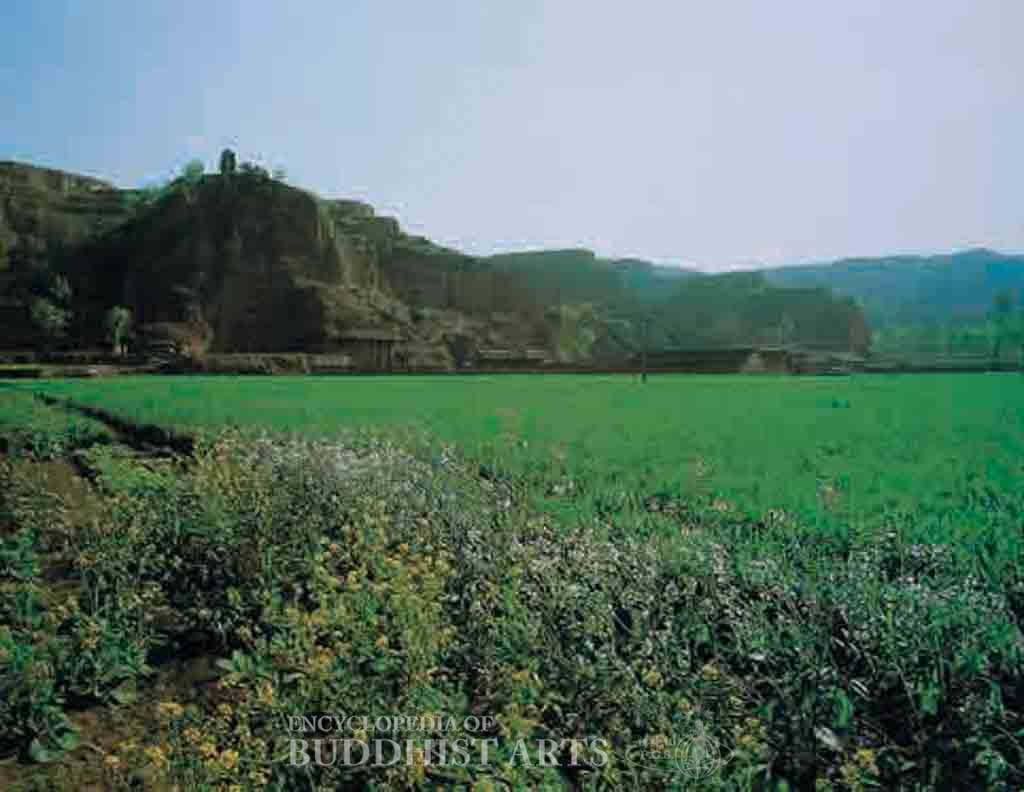
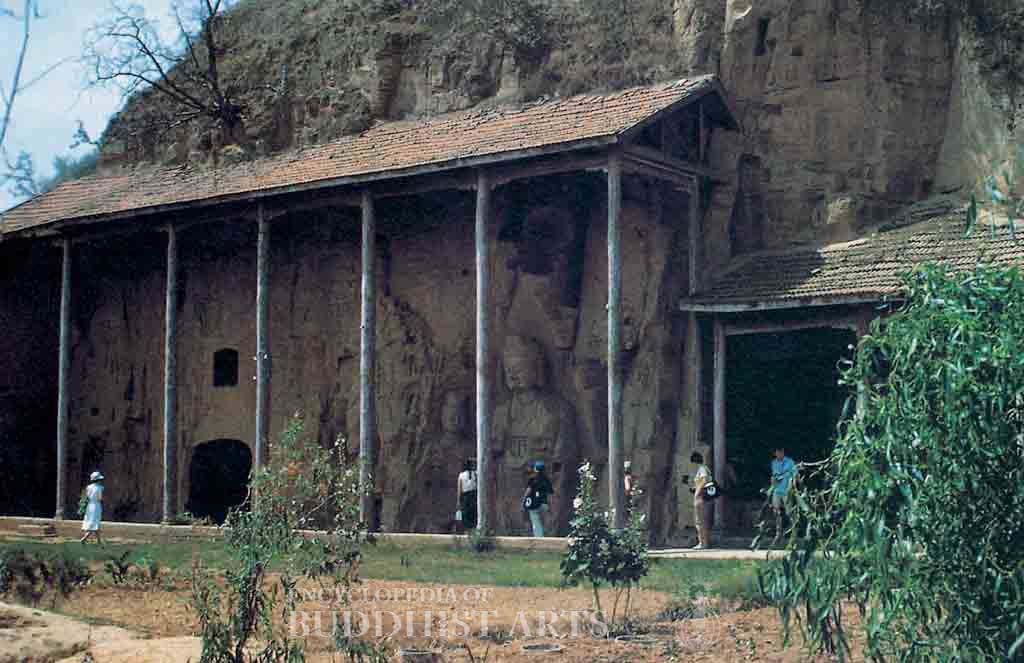
Located in the southern foothills of Dalishan (Great Power Mountain), 10 km northeast of Gongyi near the Luo River, the site currently consists of five caves, three cliffside rock carvings, a Thousand Buddhas carving, and a few hundred small niches. After the Longmen Grottoes, this is the largest Northern Wei dynasty (386–534) cave site in Luoyang. Outside Cave 4 is an inscription engraved in the year 662 which indicates that Emperor Xiaowen (reigned 471–499) of the Northern Wei dynasty established the Xuanxi Temple at the site. Other sources indicate that work at the site began between the years 500 and 504. The Gongxian Caves were listed as a National Cultural Heritage Site in 1982.
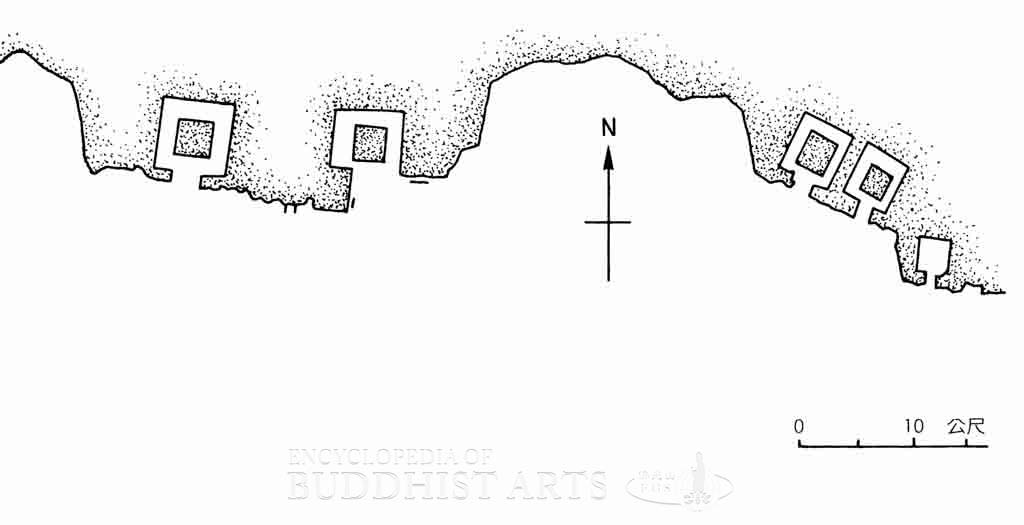
Of the five caves, Cave 1 is believed to have been excavated first, followed by Cave 4. Both caves were made around the same time as Longmen Grottoes 1181 (Weizi Grotto) and 1034 (Putai Grotto). The next caves to begin excavation were Caves 5 and 3. Cave 2 was never completed. Based on the Stele of Emperor Xiaowen’s Establishment of Xuanxi Temple, as well as features such as the scale of the caves and the emperor and empress images on some of the cave walls, the Gongxian Caves are believed to have been closely associated with the imperial family.
All of the caves at this site face south, and can be divided roughly into the eastern and western sections. Caves 1 and 2 are located in the west section, while Cave 3, 4, and 5 are in the east. Caves 1, 3, and 4 are central pillar caves with decorated ceilings. Cave 2 is unfinished, and Cave 5 is a rectangular cave with niches on three walls.
Cave 1 is the largest cave at the site. It also has the most exquisite carvings and the most complicated layout. Niches containing Buddhas, Bodhisattvas, and disciples are carved into each side of the central pillar. The Thousand Buddha motif covers much of the four walls. Caves 3 and 4 have similar layout. A niche is carved in each of the three walls, and the Thousand Buddhas cover the surrounding wall space. The remnants of a Thousand Buddhas niche excavated between 666 and 667 of the Tang dynasty (618–907) is found on the cliff to the east of Cave 1. It contains a large seated Buddha surrounded by neat rows of 999 small Buddha niches.
An overview of the cave statues reveals that there are two distinct styles. One is characterized by slender and rigorous simple figures, while the other is a newer style characterized by more robust physiques and more detailed carving. The latter marks the establishment of the new sculptural style of the Northern Qi dynasty (550–577). Of particular note is the fact that many of the design and layout features of these caves are mirrored in the carvings at Xiangtangshan Grottoes, suggesting that Gongxian provided a reference or inspiration for the carvings there.
For more details, go to the Encyclopedia of Buddhist Arts: Caves R-L, page 382.
Cite this article:
author = Hsingyun and Youheng and Johnson, Peter and Mankuang and Huntington, Susan and Edson, Gary and Neather, Robert,
booktitle = {Encyclopedia of Buddhist Arts: Caves R-L},
pages = 382,
title = {{Gongxian Caves}},
volume = 6,
year = {2016}}