
Drotsang Monastery
Drotsang Monastery: Main Temple Gate
Drotsang Monastery: Prosperous Nation Hall
Drotsang Monastery (site layout)
Drotsang Monastery
CHINA, Qinghai, Ledu
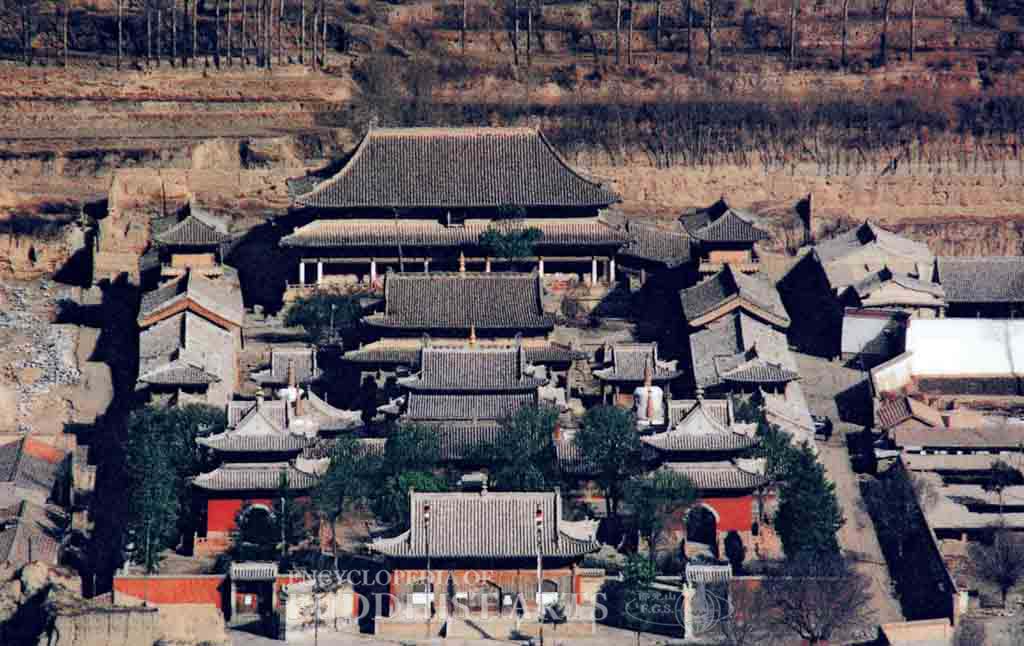
Also known as Qutan Temple, it is located 20 km south of Ledu and is one of the better-preserved Tibetan Buddhist temples in the northwest, built in Ming dynasty (1368–1644) style. It was established in 1392 during the Ming dynasty by Samlo Lama. Originally the temple followed the Kagyu school, but later converted to the Gelug school. The temple was expanded during the rule of emperors Yongle (reigned 1402–1424) and Xuande (reigned 1425–1435), and was repaired during the Qing dynasty (1644–1911). Throughout the Ming dynasty it enjoyed great prosperity but started to decline during the rule of Emperor Yongzheng (reigned 1722–1735) of the Qing dynasty. It was listed as a National Cultural Heritage Site in 1982.
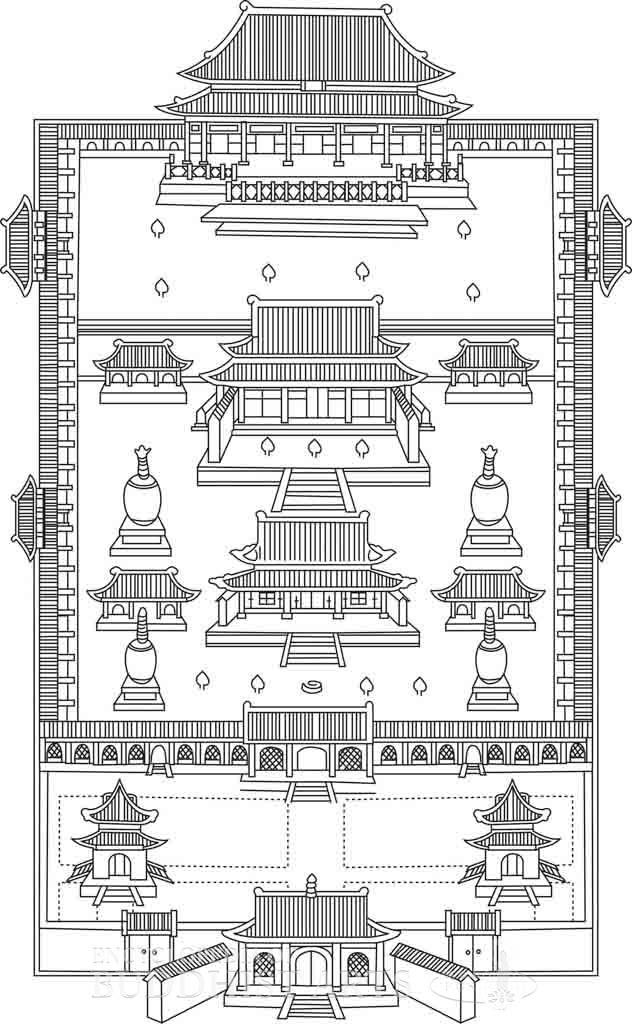
Facing east, the temple occupies 8,446 sq m and is divided into three courtyards. Along the central axis there are the main temple gate, Vairocana Hall, Vajradhara Hall, Amitabha Hall, and the Prosperous Nation Hall. Along the sides there are the Imperial Stele Pavilion, Protector Shrine, Shrine of the Buddhas of the Three Times, four stupas, side halls, the bell and drum towers and the covered walkways.
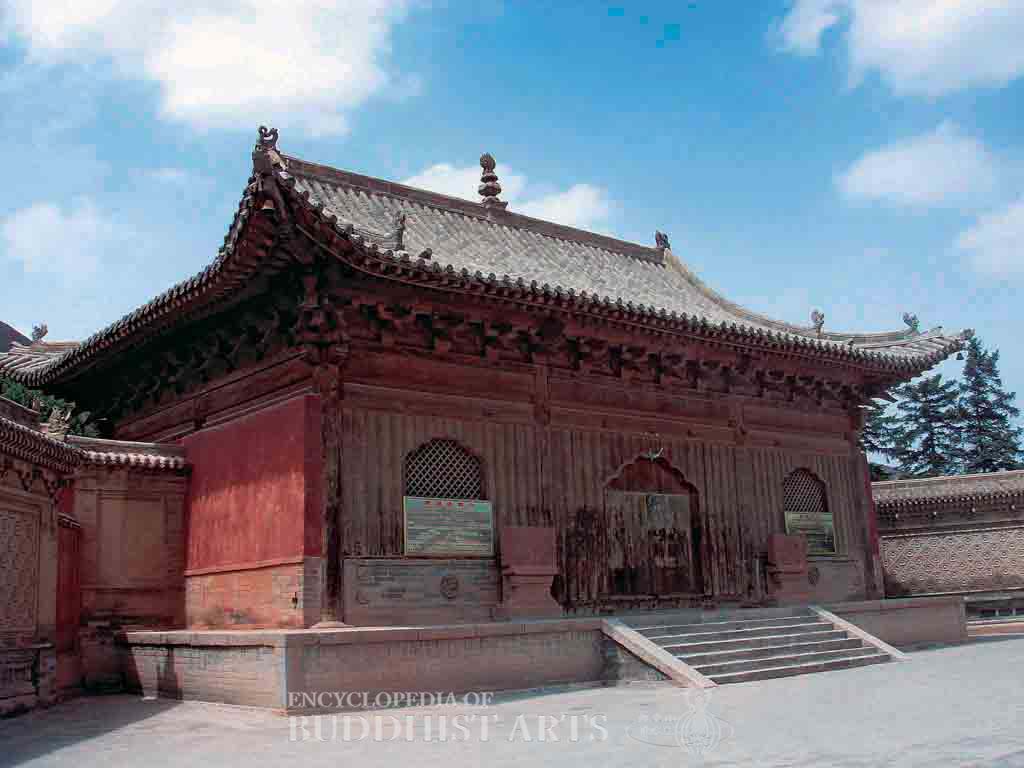
The three-by-two bay main temple gate has a hip-and-gable roof covered in gray tiles. In the center of the main ridge there is a miniature stupa. The central bay has double wooden doors, while the side bays have arched lattice windows. The walls on either side of the gate angle outwards.
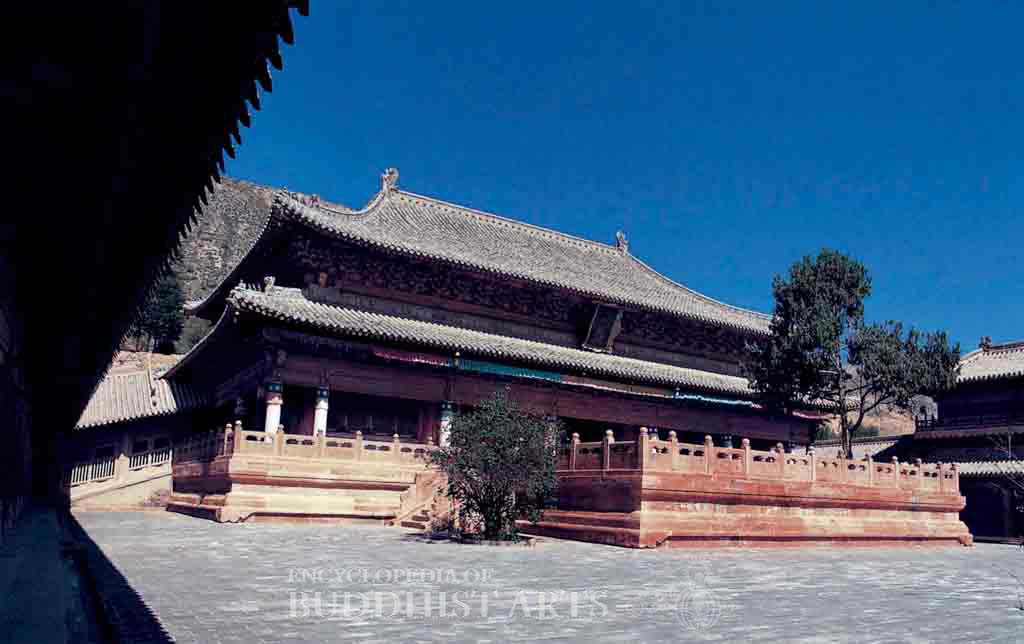
The three-by-four bay Vajradhara Hall has a double-eave hip-and-gable roof. At the front there is a three-bay portico, which was added in 1782 during the Qing dynasty. Built upon a high stone Sumeru base bordered by balustrades, the seven-by-five bay Prosperous Nation Hall has a double-eave hip roof. At the front of the hall, each bay is enclosed by four delicately crafted lattice doors. Prosperous Nation Hall is joined to the side halls by covered walkways.
Murals dating from the Ming and Qing dynasties cover more than 1,500 sq m. Most of the murals found in the Vajradhara Hall, Amitabha Hall, Prosperous Nation Hall and side halls depict Vajrayana images decorated with gold leaf. Murals along the covered walkways depict Buddhist stories of significant historical and artistic value. The temple houses artifacts, such as five imperial steles from the Ming dynasty with inscriptions both in Chinese and Tibetan, ten horizontal inscribed boards from the Ming and Qing dynasties, a Ming dynasty bronze bell cast in 1427, a stone statue of Milarepa, and gold seals bestowed by emperors from both the Ming and Qing dynasties.
For more details, go to the Encyclopedia of Buddhist Arts: Architecture A-F, page 256.
Cite this article:
author = Hsingyun and Youheng and Johnson, Peter and Mankuang and Lancaster, Lewis,
booktitle = {Encyclopedia of Buddhist Arts: Architecture A-F},
pages = 256,
title = {{Drotsang Monastery}},
volume = 1,
year = {2016}}