
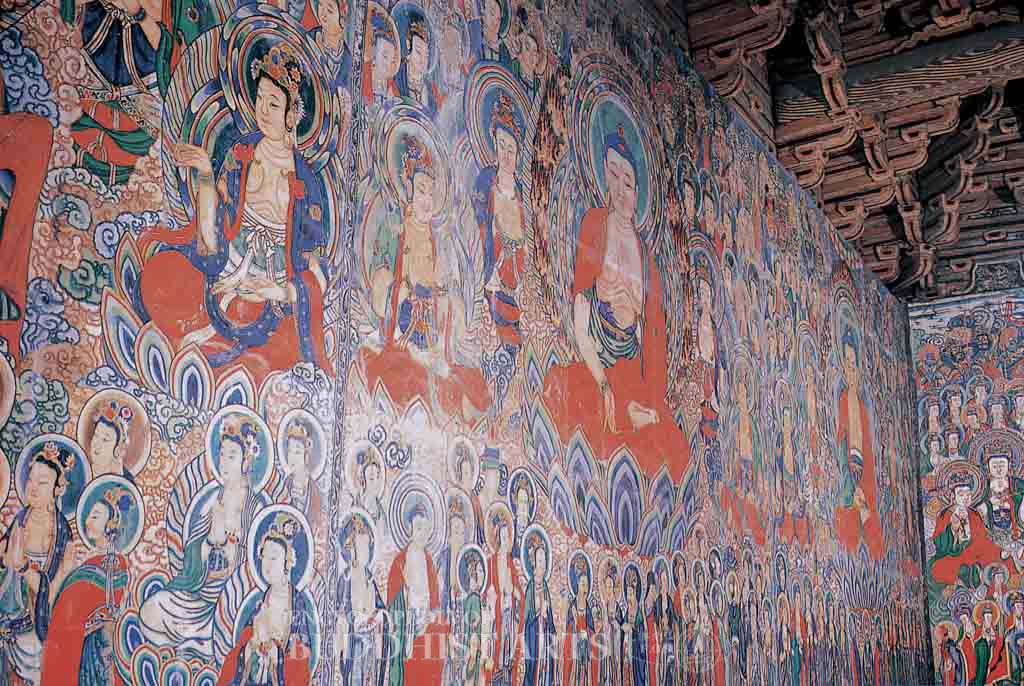
Huayan Upper Temple Great Hero Hall Murals: Sakyamuni Buddha Teaching the Dharma
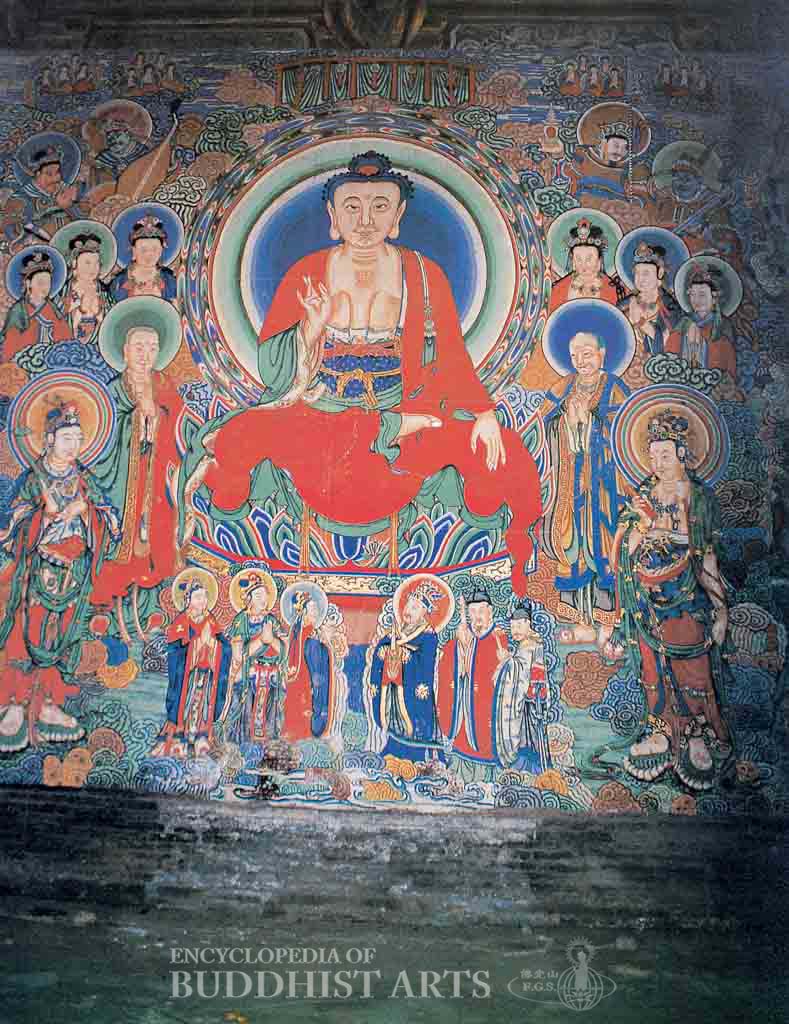
Huayan Upper Temple Great Hero Hall Murals: Sakyamuni Buddha Teaching the Dharma (detail)
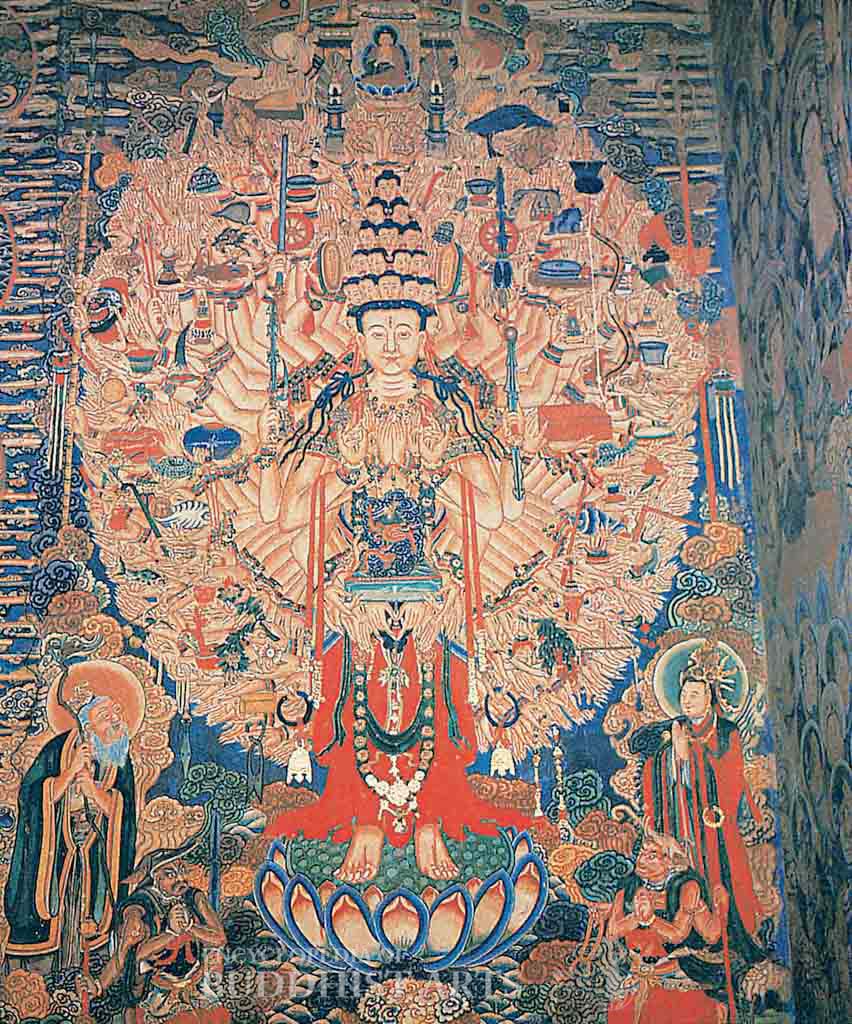
Huayan Upper Temple Great Hero Hall Murals: Thousand-Armed, Thousand-Eyed Avalokitesvara
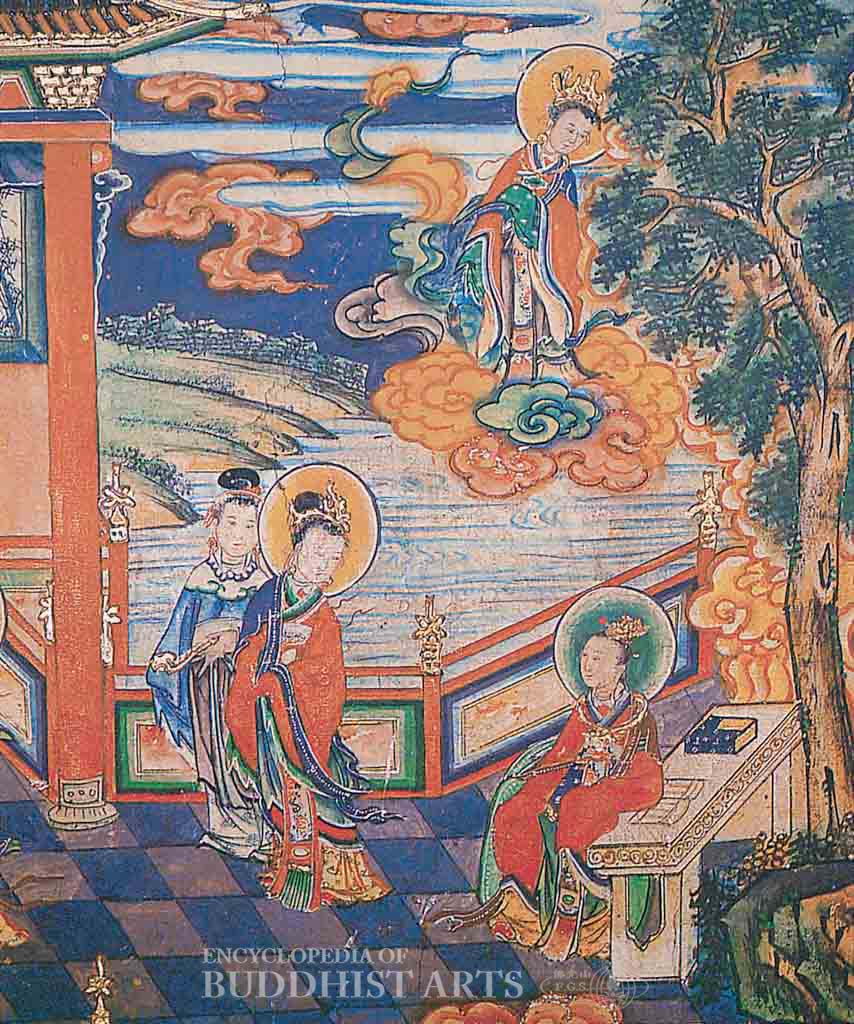
Huayan Upper Temple Great Hero Hall Murals: Life of the Buddha - Education of Prince Siddhartha
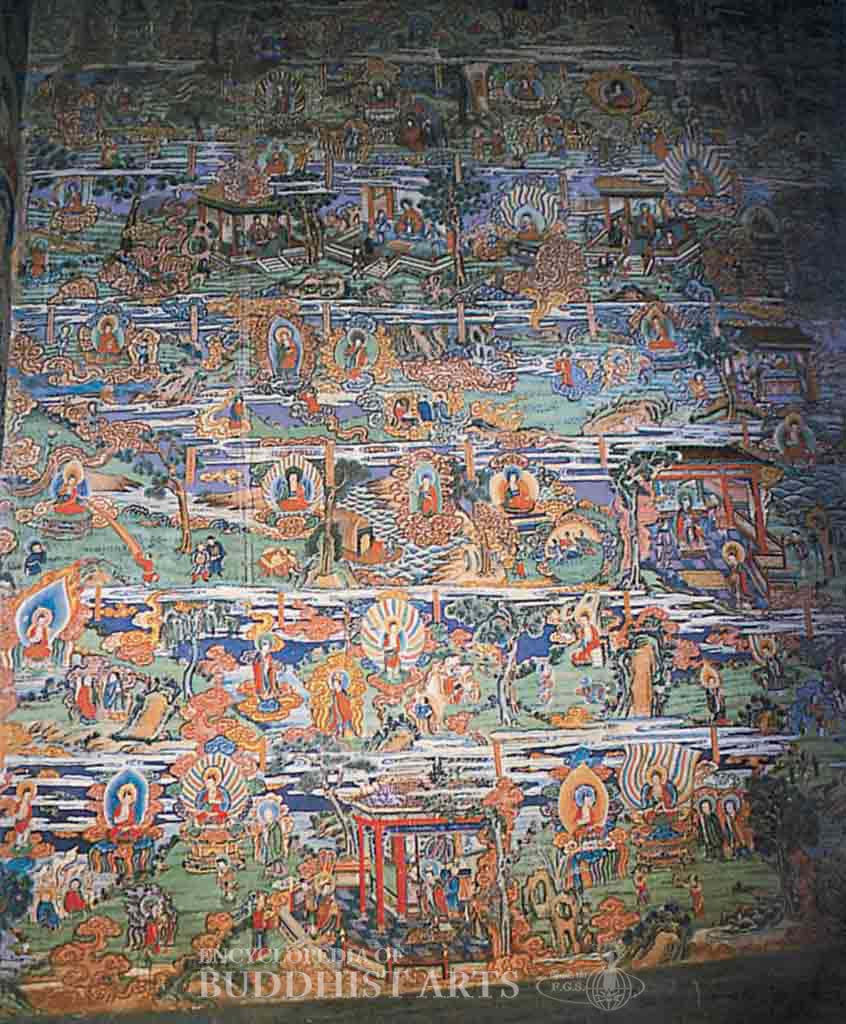
Huayan Upper Temple Great Hero Hall Murals: Fifty-Three Visits of Sudhana
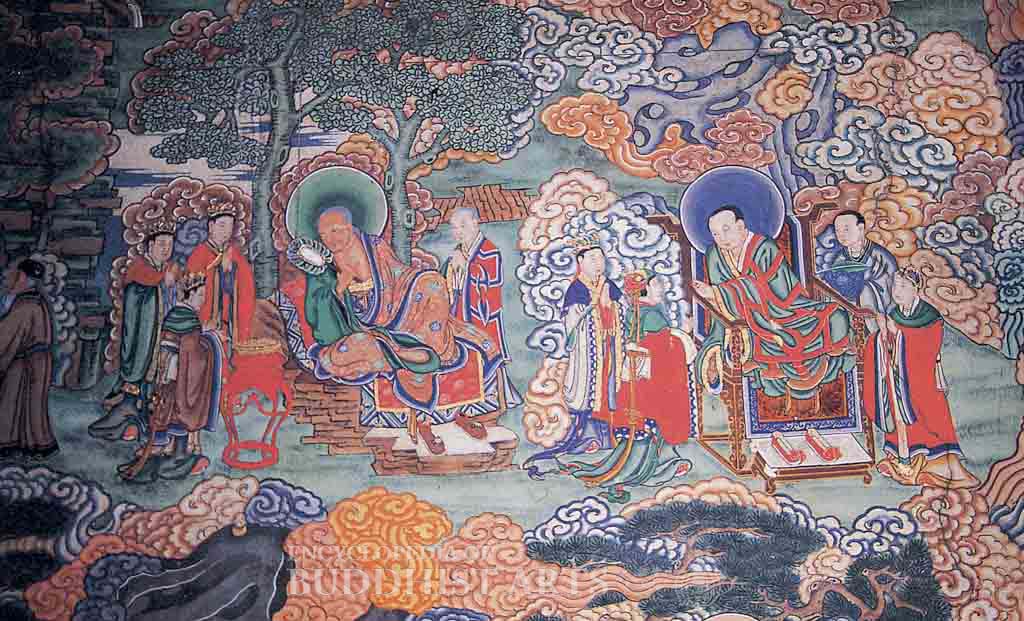
Huayan Upper Temple Great Hero Hall Murals: Chan Lineage (detail)
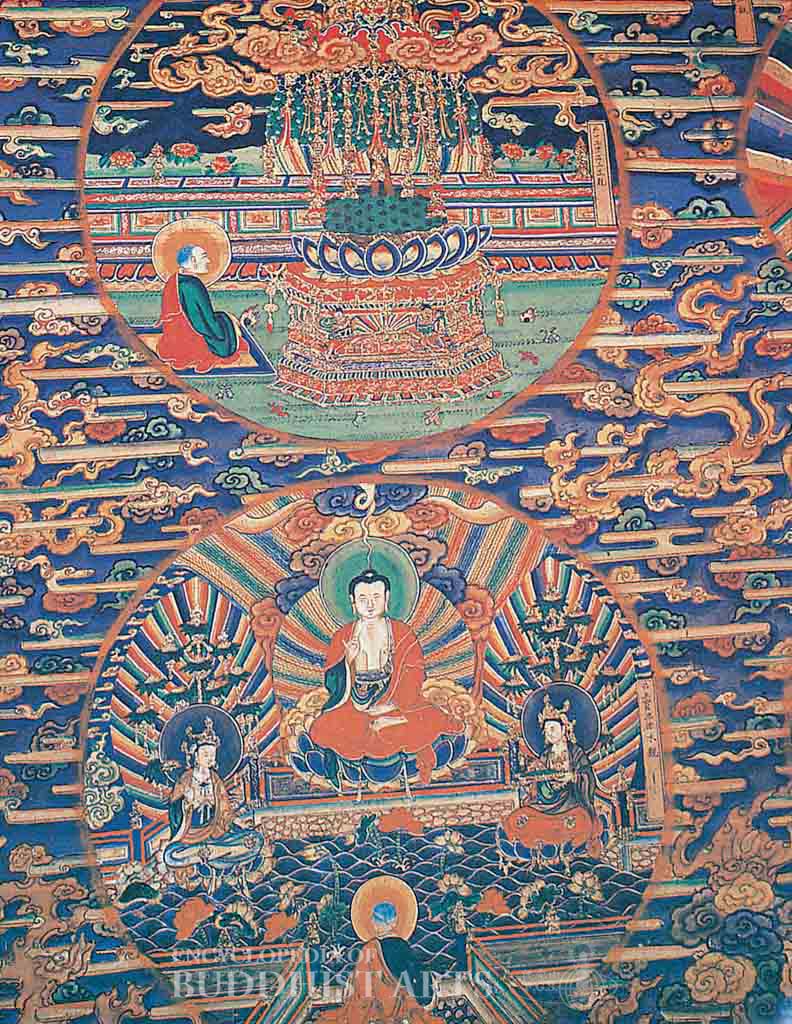
Huayan Upper Temple Great Hero Hall Murals: Sixteen Contemplations (detail)
Huayan Upper Temple Great Hero Hall Murals
CHINA, Shanxi, Datong; Ming dynasty
The Great Hero Hall of Huayan Upper Temple was rebuilt during the Jin dynasty (1115–1234). This spacious hall is nine bays wide and five bays deep. The walls are filled with illustrations that cover a total surface area of 886.97 sq m, the most space covered by murals in a single building among ancient temples in China. Based on the painting style and the characteristics of the visible figures, it is thought that they were first painted during the Ming dynasty (1368–1644). They were repainted in 1878 by the Datong artist Dong An and others. However, the themes, content, and compositions still reflect the characteristics of temple murals from the Yuan (1271–1368) and Ming (1368–1644) dynasties.
On the east wall of the hall there are illustrations of Cundi, the Western Pure Land, Thousand-Armed, Thousand-Eyed Avalokitesvara Bodhisattva, the Sixteen Contemplations, and scenes from the Life of the Buddha. The Life of the Buddha from birth and renunciation to Buddhahood and parinirvana is portrayed in 84 scenes separated by landscapes, greenery, and pavilions. The Thousand-Armed, Thousand-Eyed Avalokitesvara Bodhisattva has 18 faces and holds a sun disc, a moon disc, a bell, a bowl, a sword, a halberd, a sutra, a pavilion, a vase, and other objects. Mahadevi and Vasu stand below the Bodhisattva on the sides. The portrayal of the Bodhisattva, the objects carried in the hands, and the two attendants resemble the Jin dynasty mural of Thousand-Armed, Thousand-Eyed Avalokitesvara Bodhisattva painted in the Amitabha Hall of Chongfu Temple in Shuozhou, Shanxi.
On the north and south walls, there are illustrations of scenes from the Avatamsaka Sutra. In each mural, Sakyamuni Buddha is in the center, seated in full lotus position on a lotus throne teaching the Dharma. The Buddha is surrounded by disciples, Bodhisattvas, Heavenly Kings, and other heavenly beings, either seated or standing, with heads looking upwards or to the side, all listening to the Dharma.
The illustrations on the south side of the west wall include Sudhana, the Eighteen Arhats, the First Turning of the Dharma Wheel, the Medicine Buddha Assembly, the Chan Lineage, and Buddha Teaching the Dharma. The illustration of the Chan Lineage depicts the passing down of the Dharma from Bodhidharma, First Patriarch of the Chan school, through generations of patriarchs to Huineng, the Sixth Patriarch. This unique illustration is presented in a series of linked narrative images. Clouds, landscapes, and pavilions help to distinguish each individual scene. This illustration and the mural of the Life of the Buddha on the east wall both display elements of Song, Jin, and mid-Ming dynasty murals.
The murals are brightly colored in red, blue, and green, and highlighted with ocher red, yellow, and other warm colors. The decorations on the buildings, the backgrounds, and the headdresses and ornaments of the Bodhisattvas are embossed with plaster, which adds to the splendor of the images.
For more details, go to the Encyclopedia of Buddhist Arts: Painting A-H, page 345.
Cite this article:
author = Hsingyun and Youheng and Youlu and Wilson, Graham and Manho and Mankuang and Huntington, Susan,
booktitle = {Encyclopedia of Buddhist Arts: Painting A-H},
pages = 345,
title = {{Huayan Upper Temple Great Hero Hall Murals}},
volume = 14,
year = {2016}}