
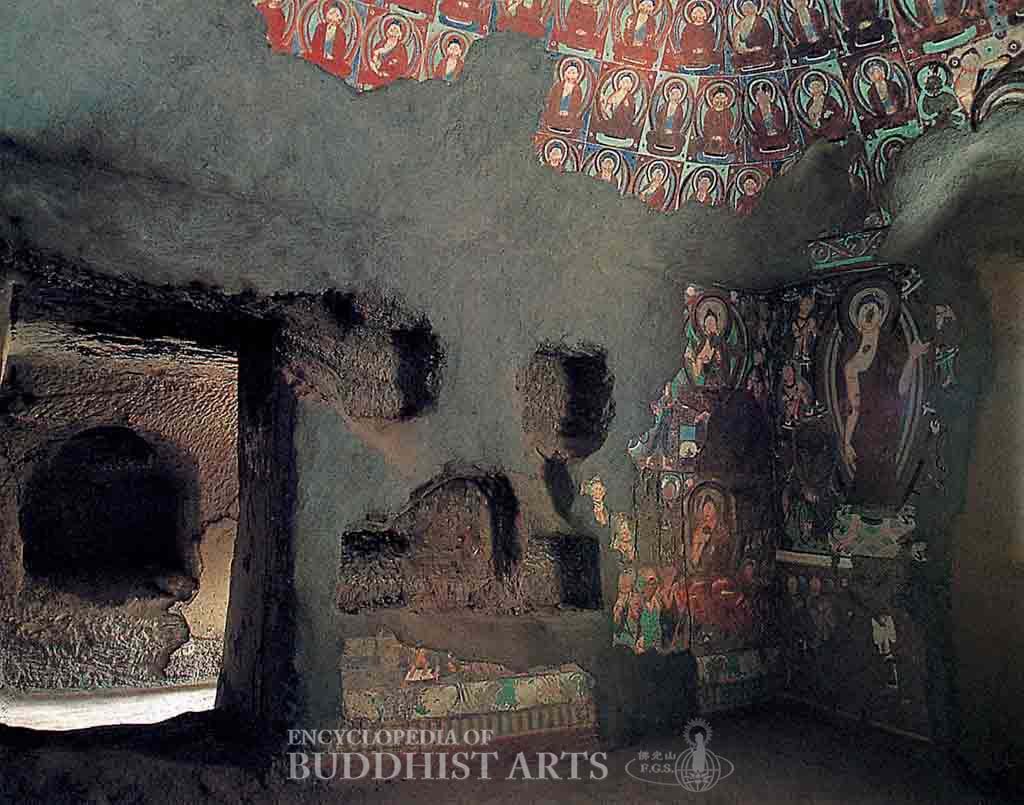
Kizil Cave 189: Main Chamber - Right Wall
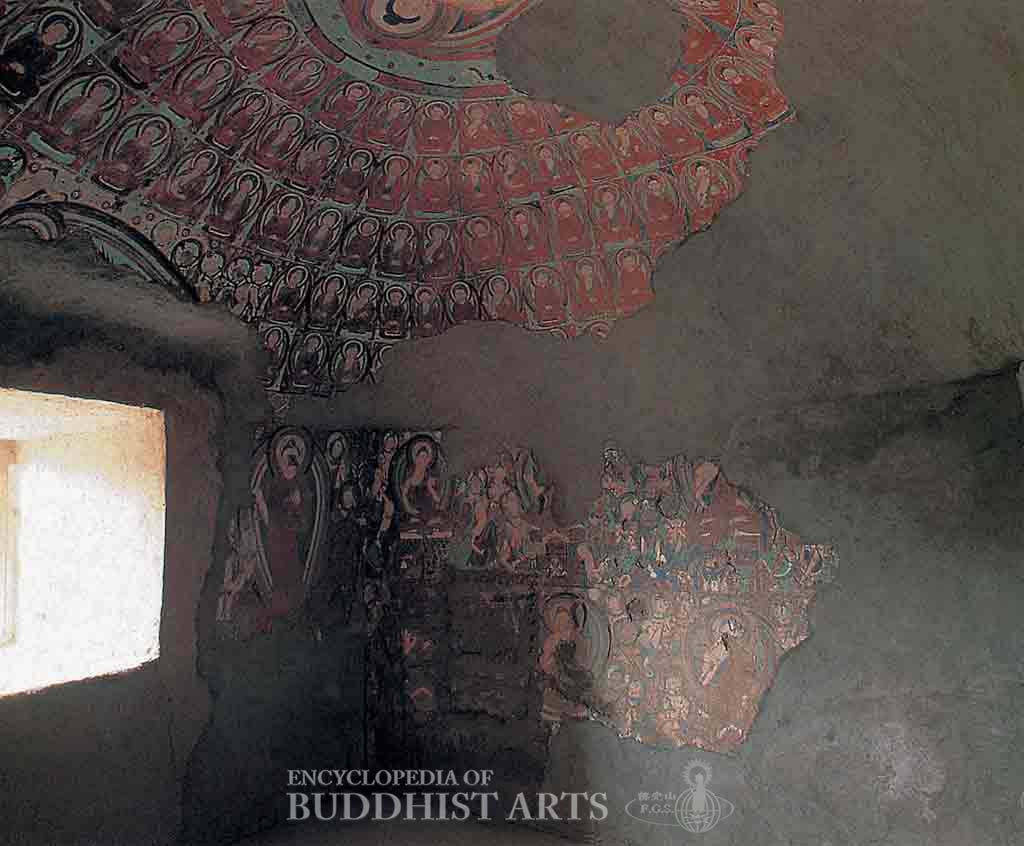
Kizil Cave 189: Main Chamber - Ceiling and Left Wall
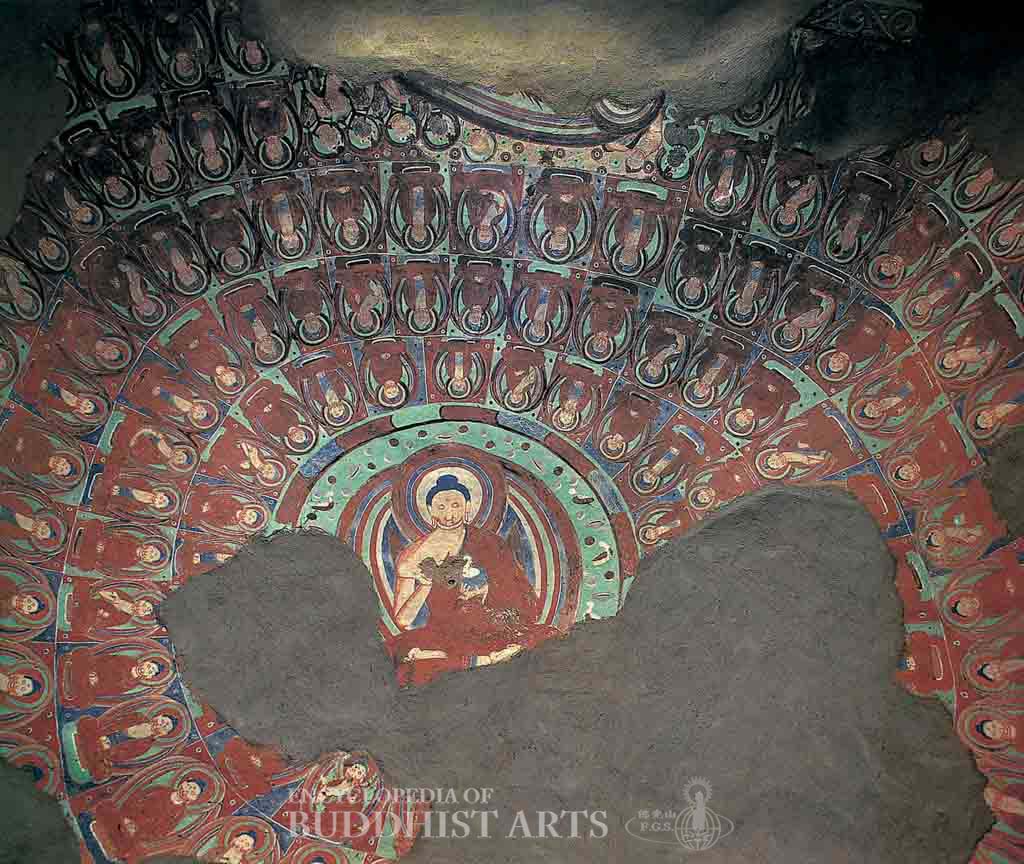
Kizil Cave 189: Main Chamber - Ceiling

Kizil Cave 189: Main Chamber - Ceiling
Kizil Cave 189
CHINA, Xinjiang, Aksu
Located in the center of the east valley, this rectangular cave was excavated during the 6th to 7th century. It has an antechamber and a main chamber. Reconstructed from a vihara cave, the traces of a fireplace can still be seen today. There was once a window in the center of the front wall in the main chamber, which was converted to a doorway leading to the antechamber during reconstruction. There was also a long corridor on the right of the main chamber, which was later reconstructed into the narrow Cave 190.
The antechamber has a rectangular layout with a depth of 1.33 m. Large portions of its walls have collapsed. The main chamber has a dome-shaped ceiling and measures 3.47 m in width, 3.22 m in height, and 3.24 m in depth. The murals in the main chamber are themed around the Life of the Buddha. Two illustrations remain on the front wall, including a scene of the Buddha’s Enlightenment. Much of this mural surface has been removed or destroyed. There is a procession of male donors at the bottom, of which four remain. Rows of illustrations from the Life of the Buddha are depicted on both side walls of the main chamber. Eight illustrations are found on the left wall, though the only discernible one is the Turning of the Dharma Wheel at Deer Park. There are also images of Amrapali, heavenly musicians, and Dharma protectors. The illustrations on the right wall are also heavily damaged. The only remaining paintings consist of two illustrations of the Buddha Teaching the Dharma; the top illustration contains the Buddha and three heavenly beings, while the bottom one shows the Buddha and two donors with palms joined.
An illustration of the Buddha’s Parinirvana is portrayed at the top of the front wall. A heavenly being and a monk can be seen before the reclining Buddha, and Brahma and Four Heavenly Kings are painted behind him. In the center of the domed ceiling is an illustration of the Conversion of the Three Kasyapa Brothers by Defeating a Naga, with the Buddha seated in full lotus position in the center. Surrounding this are five rings of the Thousand Buddha motif. The small Buddhas are clad in four different kinds of robes. This is the only cave at Kizil with a rectangular layout and a domed ceiling decorated with the Thousand Buddha motif.
For more details, go to the Encyclopedia of Buddhist Arts: Caves R-L, page 577.
Cite this article:
author = Hsingyun and Youheng and Johnson, Peter and Mankuang and Huntington, Susan and Edson, Gary and Neather, Robert,
booktitle = {Encyclopedia of Buddhist Arts: Caves R-L},
pages = 577,
title = {{Kizil Cave 189}},
volume = 6,
year = {2016}}