
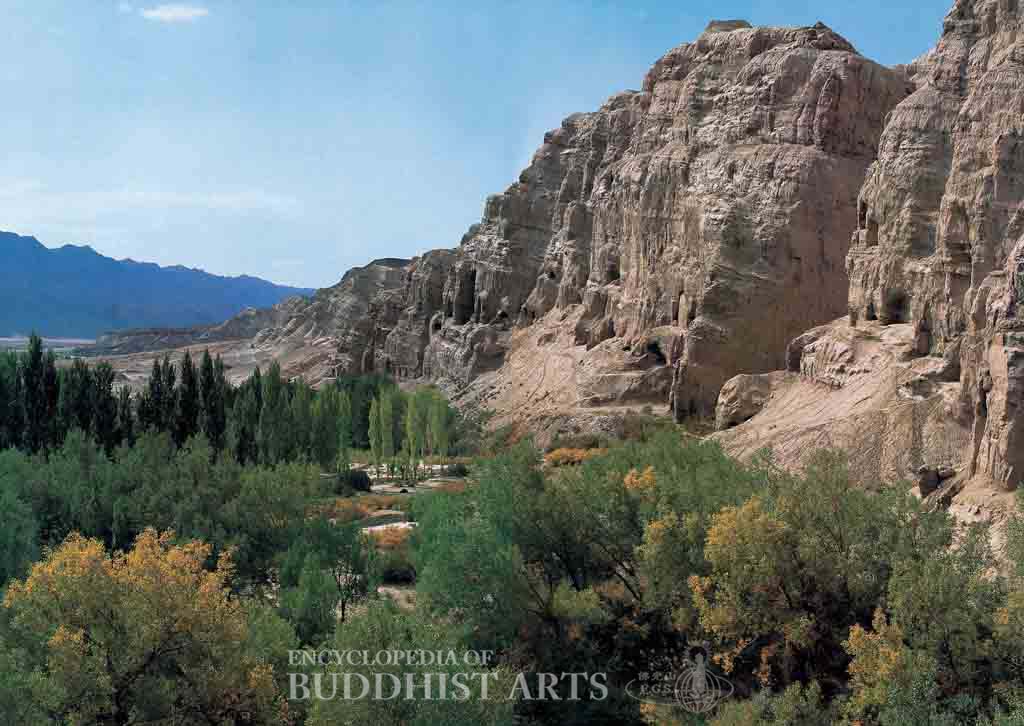
Kizil Caves
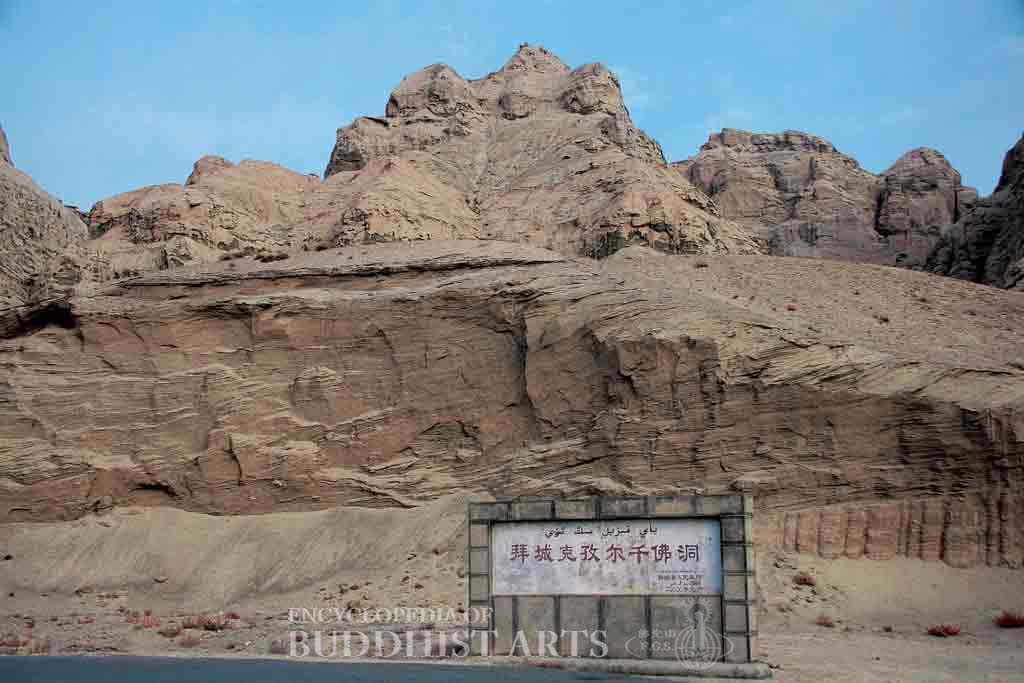
Kizil Caves
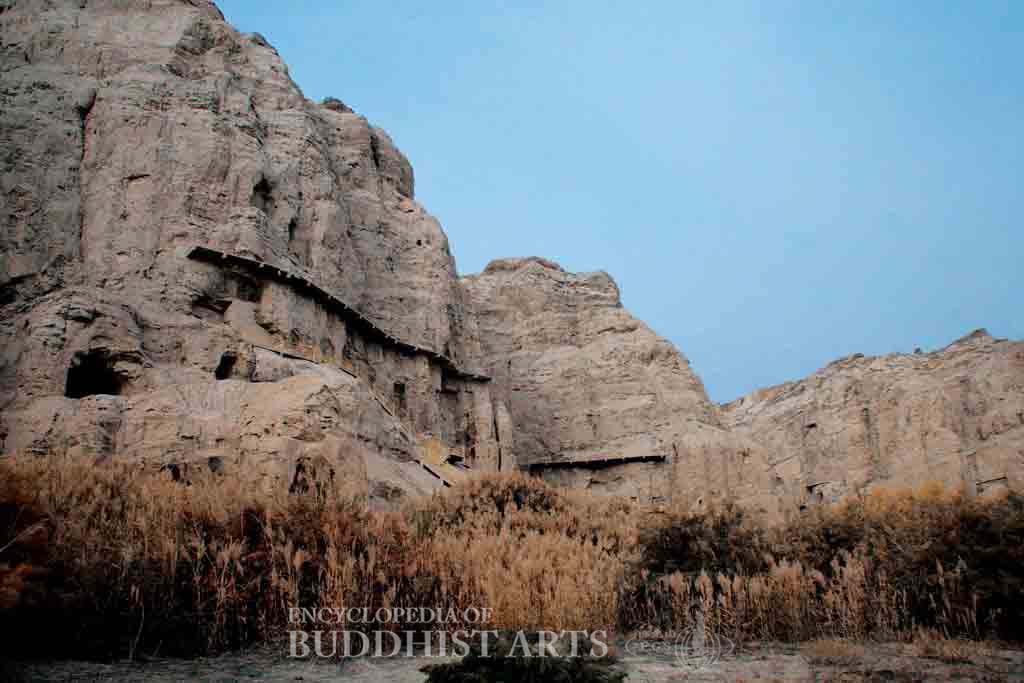
Kizil Caves: West Valley
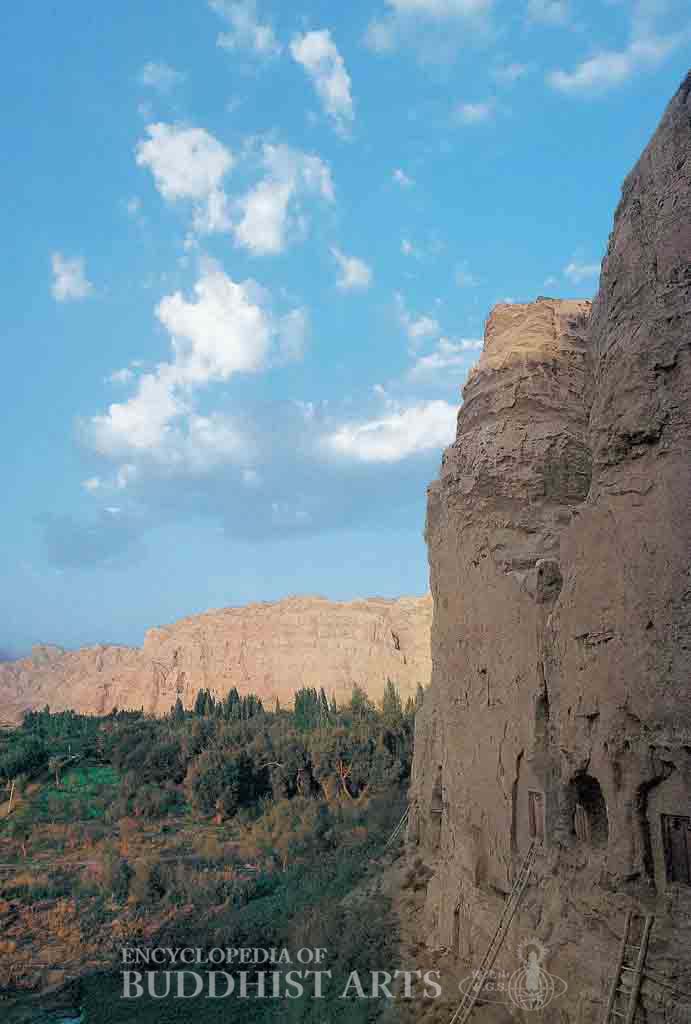
Kizil Caves : East Valley
Kizil Caves
CHINA, Xinjiang, Aksu
Also known as Qizil Caves, the caves are located on the Kobi Cliffs, which border the northern bank of the Muzat River, 11 km southeast of Kizil village. They make up the largest part of what was a great outpouring of cave complexes in and around the ancient Kuchean Kingdom, located in the Tarim Basin along the northern branch of the Silk Road. There are 236 caves, 75 of which are well preserved. These caves are distributed throughout four areas: the west valley, east valley, inner valley, and rear mountains. The main features of the caves are the excellent Kuchean murals. Unfortunately, many of the murals have been lost or heavily damaged. Years of natural deterioration, removal of artworks by explorers, and defacement by iconoclasts have resulted in extensive degradation. Despite this, the caves still retain numerous artworks, and were listed as a National Cultural Heritage Site in 1961.
Documents regarding the history of the caves are scarce. German studies, based on assessment of the style of composition and the scriptures found in the caves, estimated that they date to between the 5th and early 8th centuries. Chinese carbon-dating studies reached similar conclusions, but expanded the range to the start of the 3rd century. The development of the caves is divided into an early, middle, and late periods, each comprising about one third of the total development effort. The caves were abandoned after the 8th century.
Kizil murals focus on Sakyamuni Buddha and his past lives, with more than 100 recognizable themes derived from the Jatakas and the Life of the Buddha. The murals express two different styles, the Kuchean and Gandharan. The Kuchean style is exemplified in Caves 17, 38, and 80, while examples of the Gandharan style can be seen in Caves 76 and 212.
The first and most distinctive type of cave is the central pillar cave, of which there are 59. Most have a square main chamber with a barrel-vaulted ceiling and corridors for circumambulation. These corridors form the central pillar for which the caves are named. Cave walls display murals from the Life of the Buddha, with murals of astrological symbols on the ceilings, and scenes of the Buddha’s Parinirvana in the rear corridors. Examples of these works can be seen in Caves 13, 17, 38, 80, 104, 118, and 171.
The second type of cave is the Great Buddha cave. These display a large standing Buddha in the main chamber, but are otherwise similar to the central pillar cave. Examples of the Great Buddha caves include Caves 47, 48, 77, 139, and 154. The most famous of these is Cave 47, which has a main chamber that measures 7.6 m wide, 16.5 m high, and 7.8 m deep. These caves are significant in that they were constructed in the 4th century, earlier than the Bamiyan Buddhas.
The third type of cave is the square cave, which vary considerably in layout and ceiling shape. Many of the square caves have antechambers, while others have altars at the center with statues. The themes of these caves are similar to the first two types, though some of them feature murals of famous monks and Bodhisattvas rather than Jataka tales. Caves 14, 49, and 76 are examples of square caves.
The fourth type is the vihara cave, which served as a living accommodation for monks. These caves generally have corridors leading to the main chamber and contain hearths. Some were later converted to another type of cave. The vihara caves make up approximately a quarter of those at Kizil. Many of them connect to other caves which served different functions, and only a few contained statues or murals.
For more details, go to the Encyclopedia of Buddhist Arts: Caves R-L, page 465.
Cite this article:
author = Hsingyun and Youheng and Johnson, Peter and Mankuang and Huntington, Susan and Edson, Gary and Neather, Robert,
booktitle = {Encyclopedia of Buddhist Arts: Caves R-L},
pages = 465,
title = {{Kizil Caves}},
volume = 6,
year = {2016}}