
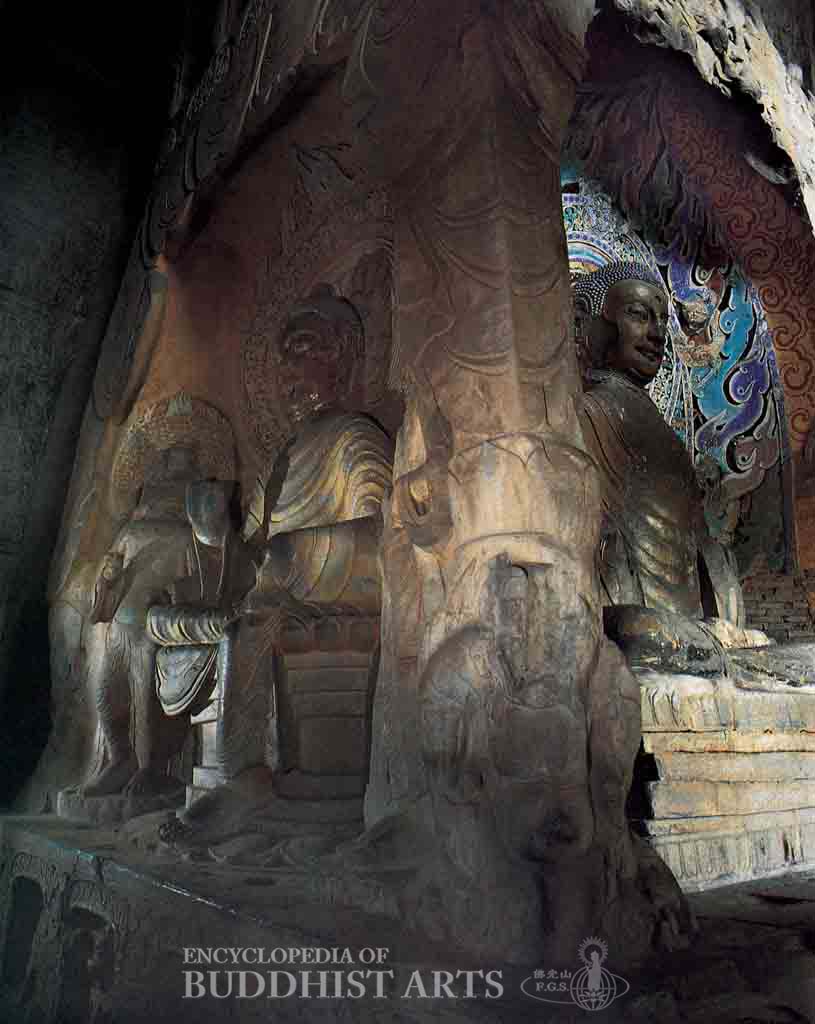
North Xiangtangshan Grotto 9: Central Pillar (west and north sides)
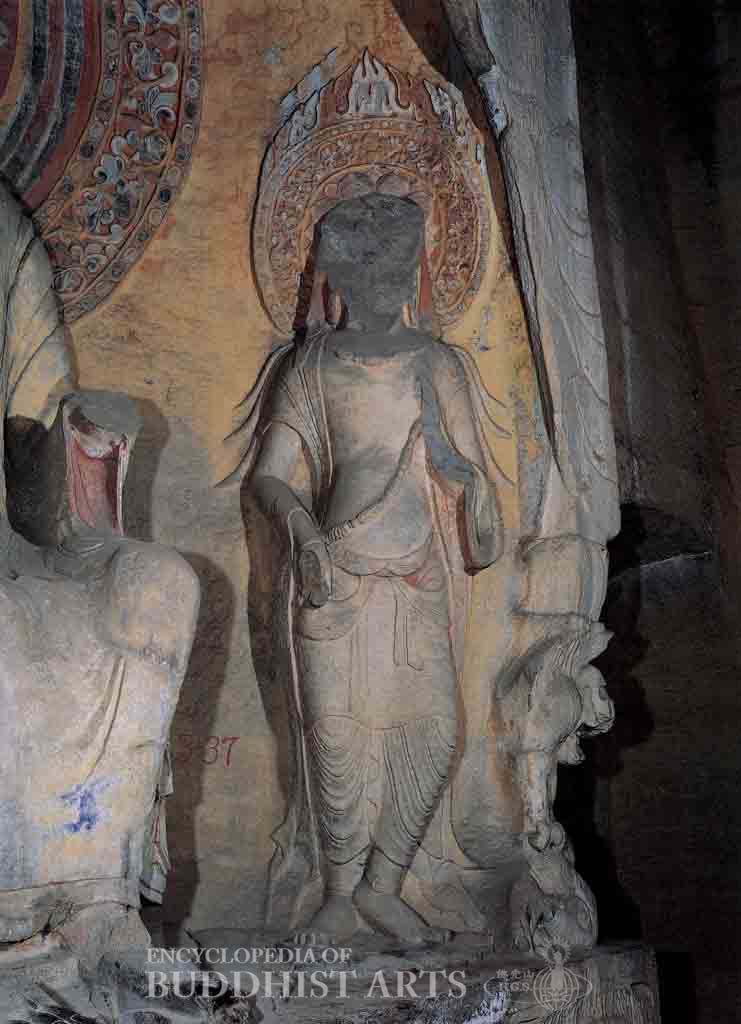
North Xiangtangshan Grotto 9: Attendant Bodhisattva (central pillar, south side niche)
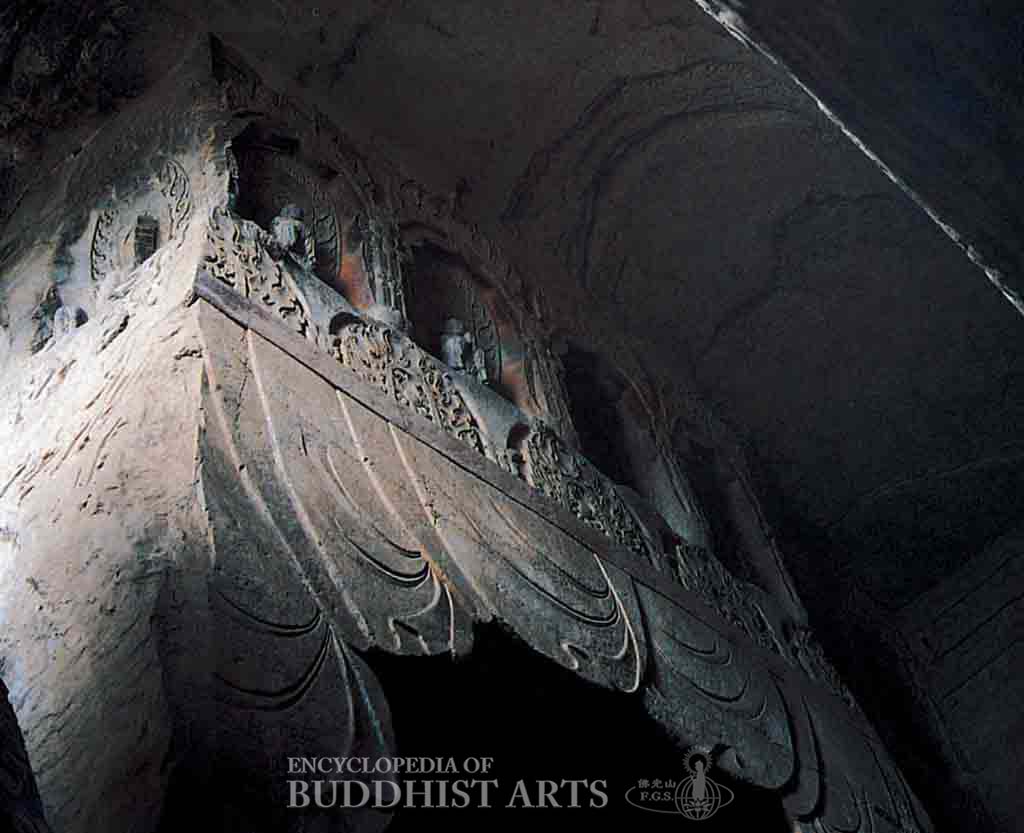
North Xiangtangshan Grotto 9: Small Buddha Niches (central pillar, south side, upper section)
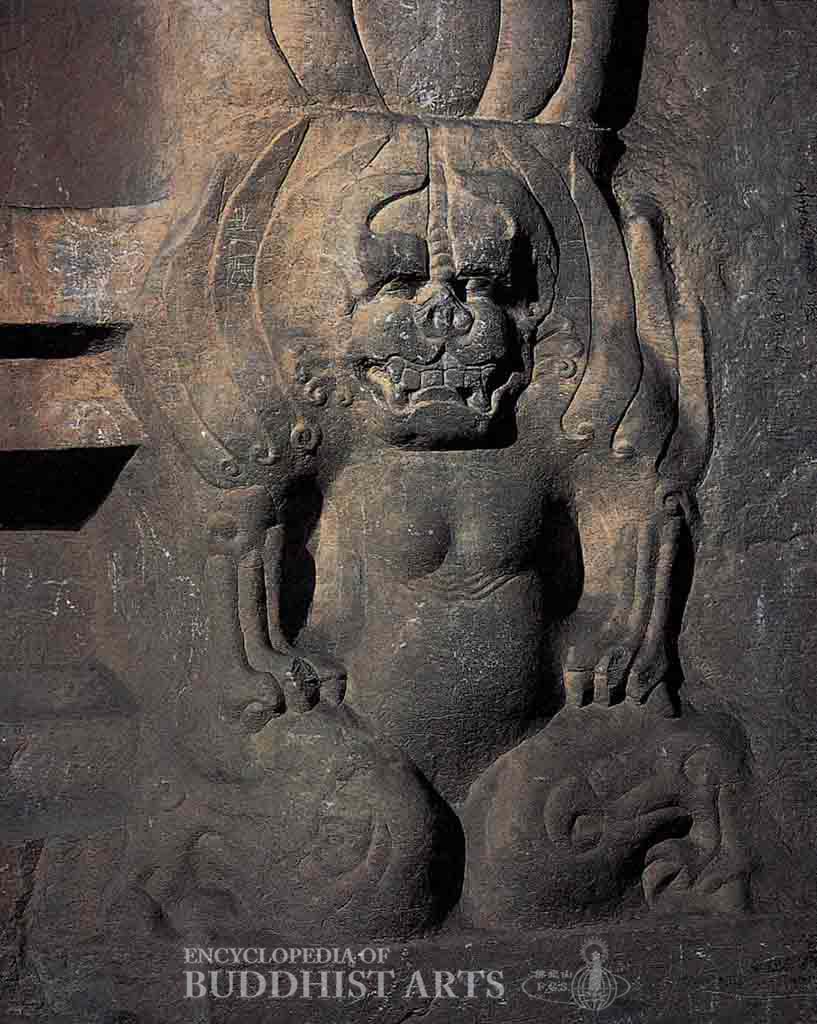
North Xiangtangshan Grotto 9: Mythical Creature (east wall)
North Xiangtangshan Grotto 9
CHINA, Hebei, Handan
This central pillar grotto is also known as the Great Buddha Grotto, North Grotto, or Gao Huan Tomb Grotto. It was constructed during the Northern Qi dynasty (550–577) and measures 13 m in width, 11.4 m in height, and 13.3 m in depth. This grotto is the largest and the earliest among the North Xiangtangshan Grottoes, and also contains the most exquisite carvings.
The base of the central pillar is rectangular, measuring around 6 m to 7 m in length. Three sides of the central pillar contain niches, inside of which are a Buddha and two Bodhisattvas. A corridor has been dug out behind the central pillar for circumambulation. The seated Buddha in the west side niche is the largest statue within the Xiangtangshan Grottoes and is approximately 5 m in height. The flanking Bodhisattvas are adorned with ornaments and stoles on their upper bodies, and double-layered lower garments. One of the Bodhisattvas’ knees is slightly bent, mimicking the act of walking. A row of small Buddha niches is found above the large niches. Another level of small niches carved with mountain censers, mythical creatures, and Heavenly Kings can be seen beneath the Buddha niches. The interior walls contain a number of arched niches with drapery. Small mythical creatures are found on the bases of the columns on either side of these niches.
Texts, including the Expanded Edition of Biographies of Eminent Monks written by Master Daoxuan in the Tang dynasty, tell of the hidden grave behind the Buddha statue. The rectangular chamber found on the upper section of the central pillar’s south face is believed to contain the remains of Gao Huan, a general of the Eastern Wei dynasty (534–550).
For more details, go to the Encyclopedia of Buddhist Arts: Caves Mo-S, page 1285.
Cite this article:
author = Hsingyun and Youheng and Johnson, Peter and Mankuang and Huntington, Susan and Edson, Gary and Neather, Robert,
booktitle = {Encyclopedia of Buddhist Arts: Caves Mo-S},
pages = 1285,
title = {{North Xiangtangshan Grotto 9}},
volume = 8,
year = {2016}}