
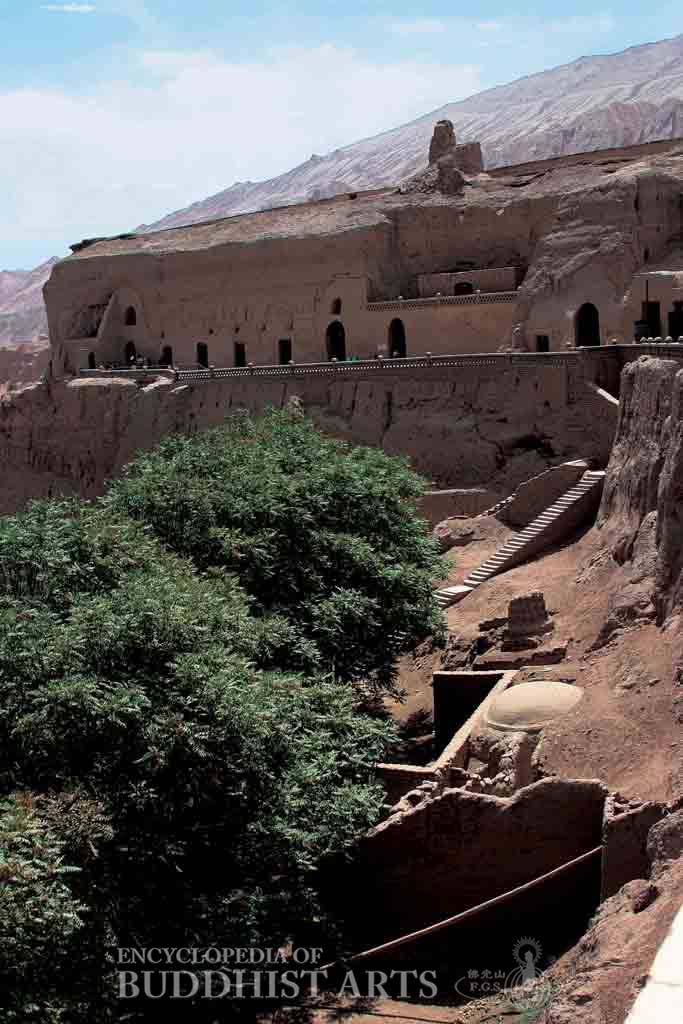
Bezeklik Caves
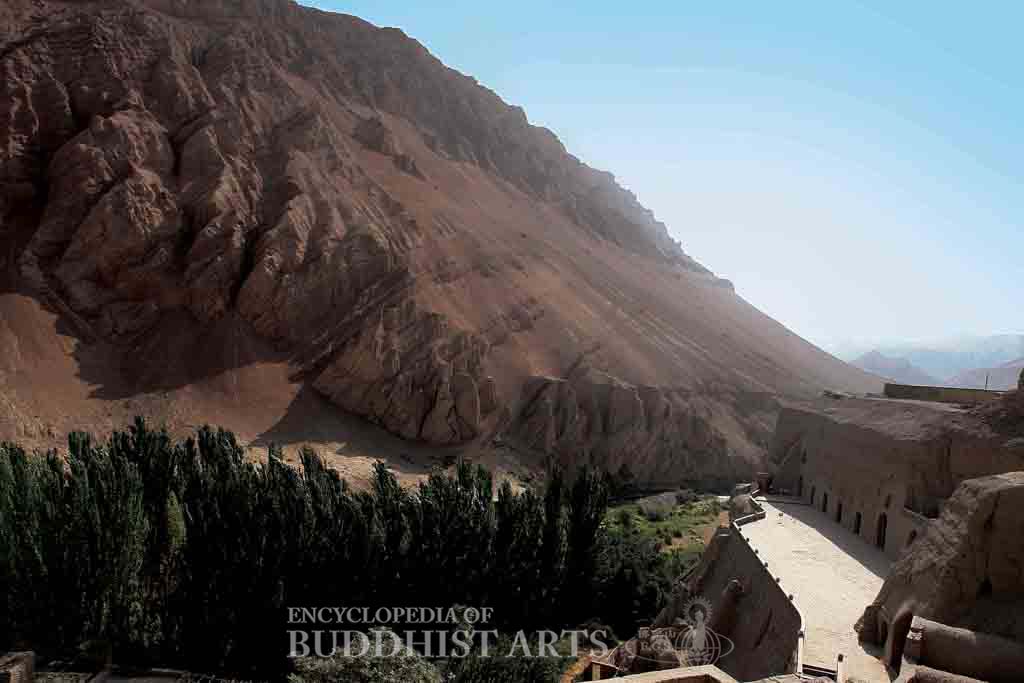
Bezeklik Caves
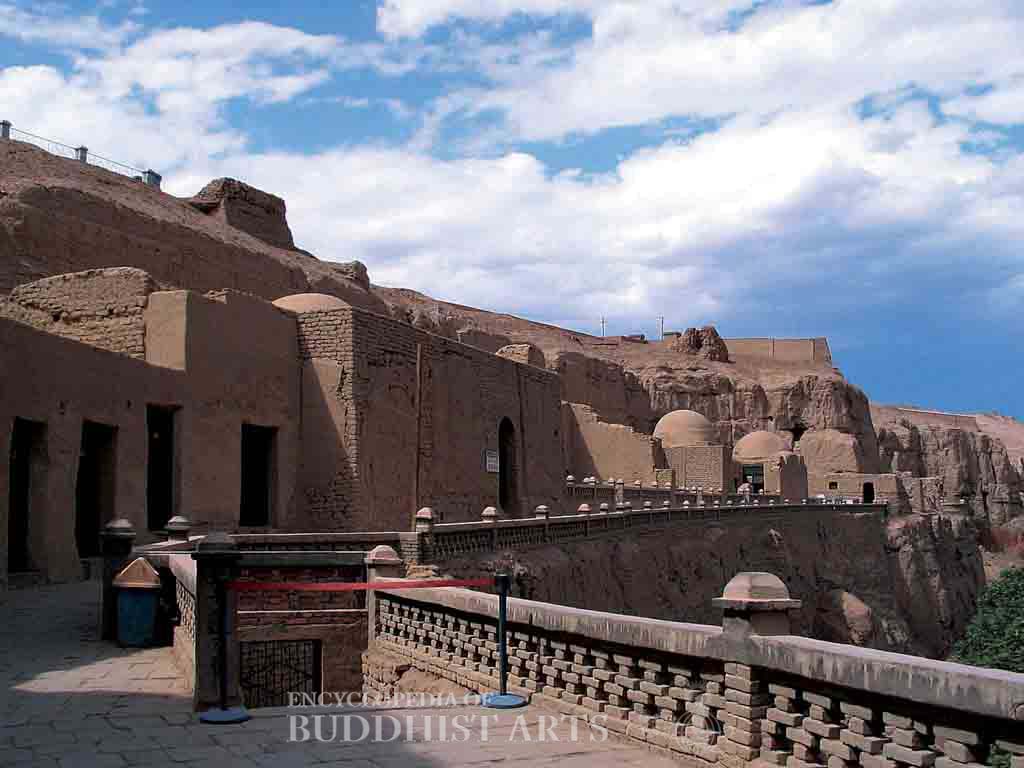
Bezeklik Caves
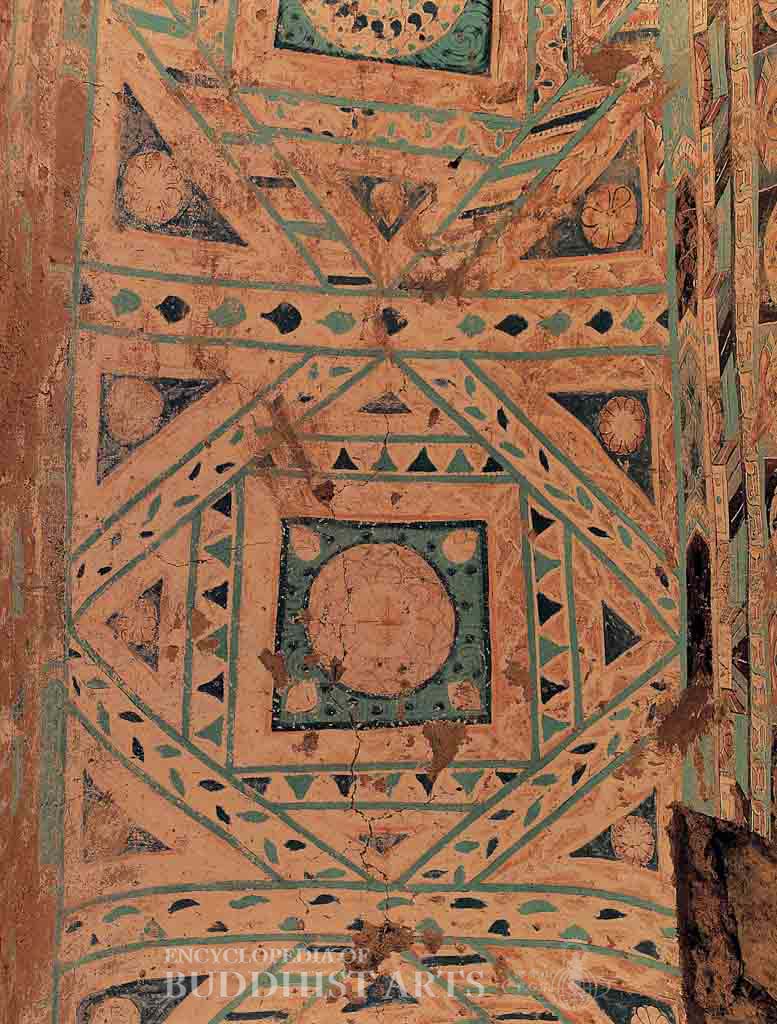
Bezeklik Caves: Cave 18 - Ceiling (detail)
Bezeklik Caves
CHINA, Xinjiang, Turpan
Construction of the Bezeklik Caves took place between the 5th and 13th centuries. They were originally known as Ningrong Cave Monastery, as evidenced on the maps in Illustrated Records of Xizhou. The most significant caves at the site are situated on the cliff on the west bank of the Murtuk River, approximately 40 km northeast of Turpan. The Bezeklik Caves site contains the most caves, murals, and architectural styles in Gaochang. They also feature the best preserved murals from the period of the Uighur (mid-9th century–1209) ruling over Gaochang. Bezeklik currently has 83 numbered caves with a total surface area of approximately 1,200 sq m. Murals are preserved in around 40 caves. Not limited to Buddhist themes, the murals also include some Manichaean content. The Bezeklik Caves were listed as a National Cultural Heritage Site in 1982.
Although the earliest caves at Bezeklik were constructed during the 5th century, it was not until the Qu family (499–640) ruling over Gaochang that cave construction became popular. The oldest preserved cave is Cave 18, which is a large central pillar cave. The antechamber and the lower sections of the corridor were all renovated during the early years of the Uighur ruling over Gaochang. Of the original artwork, only the pattern on the vaulted ceiling and the Thousand Buddhas on the upper rear part of the corridor remain. Additionally, where the walls meet the ceiling there are realistically painted architectural details of support beams.
Caves 16, 17, and 69 are large rectangular caves with barrel-vaulted ceilings. Following popular trends in China during this period, the themes of the murals mainly depict grand sutra illustrations, such as those of the Amitayurdhyana Sutra and the Lotus Sutra. There are also mural and relief combinations, such as the illustration the Mahaparinirvana Sutra. The painting technique of iron-wire drawing as well as mural styles that were popular in China had entered the Gaochang area by this time, and they reached their zenith with the creation of the Bezeklik Caves.
From the 9th century onward, the Bezeklik Caves became royal monasteries of the Uighurs in Gaochang. The earlier religion of the Uighurs was Manichaeism. The Uighur king took refuge in Buddhism shortly after the conquest of Xizhou. Large-scale renovation of existing caves and the construction of new caves were subsequently undertaken under the patronage of the royal family. Representative caves from this period include Caves 14, 20, 31, 33, 34, 39, 41, and 82, as well as the repainted Caves 9 and 18. In terms of cave layouts, the Uighurs were able to build on the basis of existing central pillar caves and the rectangular caves with barrel-vaulted ceilings. They combined the cave construction skills of China with traditional local techniques, thus developing a new architectural form that integrated carving in rock and building with mud; the result was the central pillar shrine caves. Despite the development of this new layout, they preserved the corridors created by the central pillar technique due to their importance for worship. The central pillar shrine cave is the most typical cave layout in Uighur Buddhist architecture.
During the Uighur ruling over Gaochang period, the themes of the murals became more varied compared to previous periods. Figures and images include: Buddhas, Bodhisattvas, the Buddha teaching the Dharma, figures making offerings, Eight Classes of Dharma Protectors, the Four Heavenly Kings, Thousand Buddhas, and other decorative patterns. Typical themes include karma stories, Jataka tales, and the Life of the Buddha. The composition of these murals usually consists of a central, 2 m high standing Buddha with figures down each side. In most cases, these figures are in descending order: Vajradharas, Bodhisattvas, monks, brahmins, kings, and merchants. Depending on the story, various castles, palaces, temples, and stupas may be added in the background. Other outstanding traits of these murals include: the coexistence of Mahayana and Vajrayana Buddhist images in the same cave; combinations of Manichaean and Buddhist themes; and the interplay of elements from Chinese mythological stories and funeral traditions. This site is therefore a good reflection of the multicultural interaction in Gaochang at the time.
Stylistically, the murals from the Uighur period are highly uniform. The predominant use of iron-wire strokes created images that are fluid, powerful, and cleanly executed. The murals are very colorful and the delicate workmanship demonstrates a high level of artistic skill. Figures are usually portrayed in a standing position, and their features reflect the strong physique of the Uighur people. The liveliness and rarity of the portraits make these murals precious and unique.
Bezeklik’s golden age ended as the royal family of the Uighur moved eastward to Yongchang in Gansu at the end of the 13th century. At that time, the royal monasteries became public. With the rise of Islam in the region in the 15th century, many Buddhist temples were destroyed, and many of the statues and sculptures were taken down or defaced. Early in the 20th century, much of the Buddhist art in the region was removed by European and Japanese explorers. It is mostly the caves and murals from the Tang dynasty and the Uighur ruling over Gaochang period that have been preserved at Bezeklik.
For more details, go to the Encyclopedia of Buddhist Arts: Caves A-E, page 130.
Cite this article:
author = Hsingyun and Youheng and Johnson, Peter and Mankuang and Huntington, Susan and Edson, Gary and Neather, Robert,
booktitle = {Encyclopedia of Buddhist Arts: Caves A-E},
pages = 130,
title = {{Bezeklik Caves}},
volume = 5,
year = {2016}}