
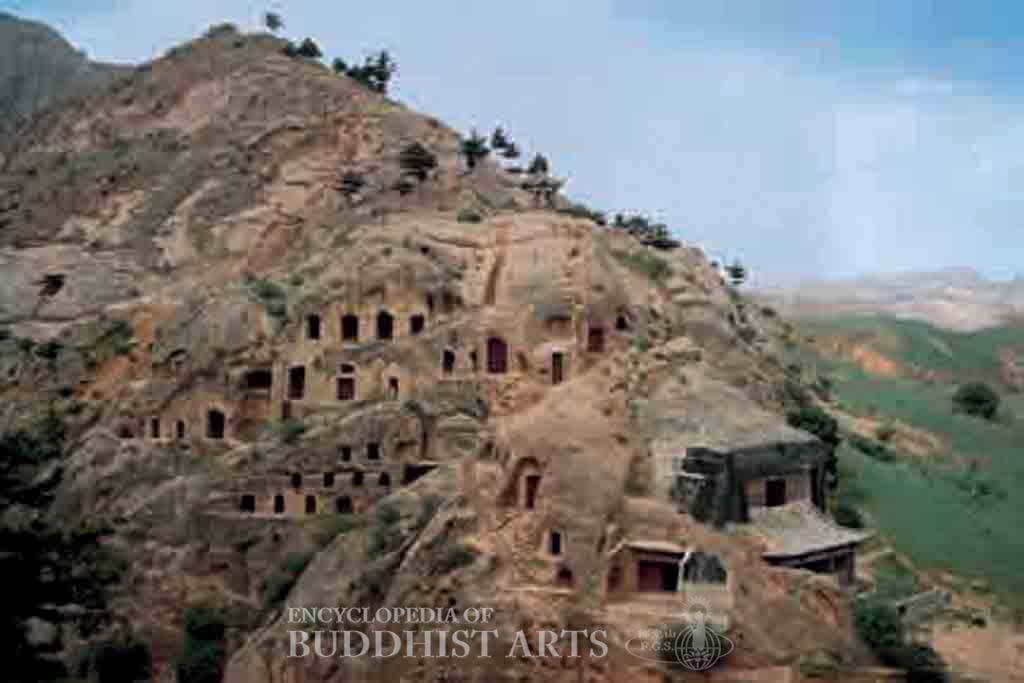
Xumishan Grottoes
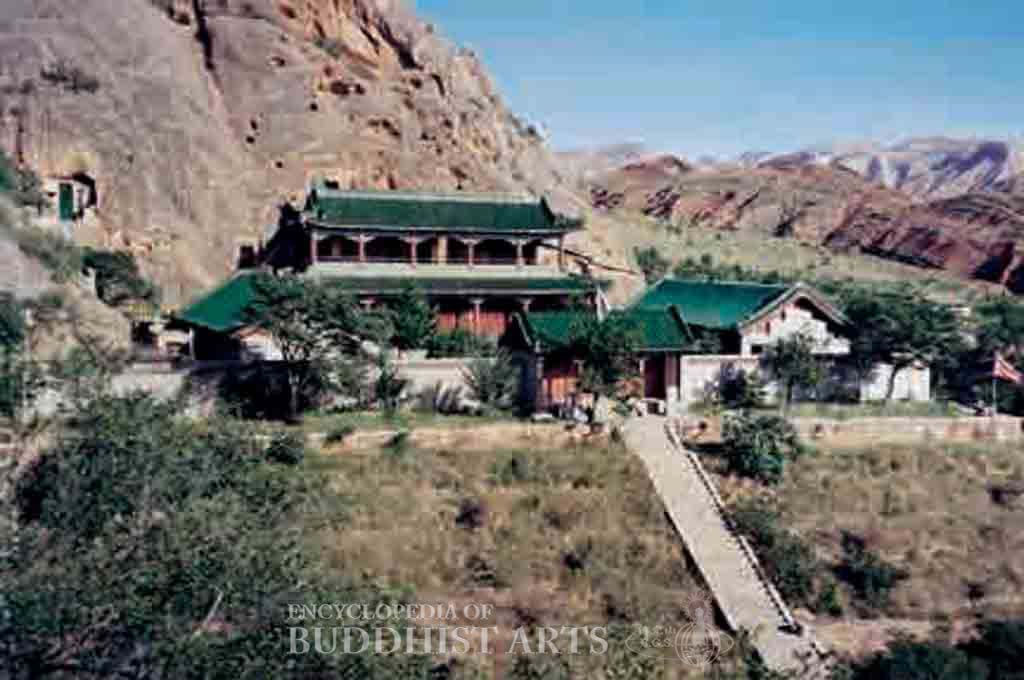
Xumishan Grottoes: Yuanguang Temple
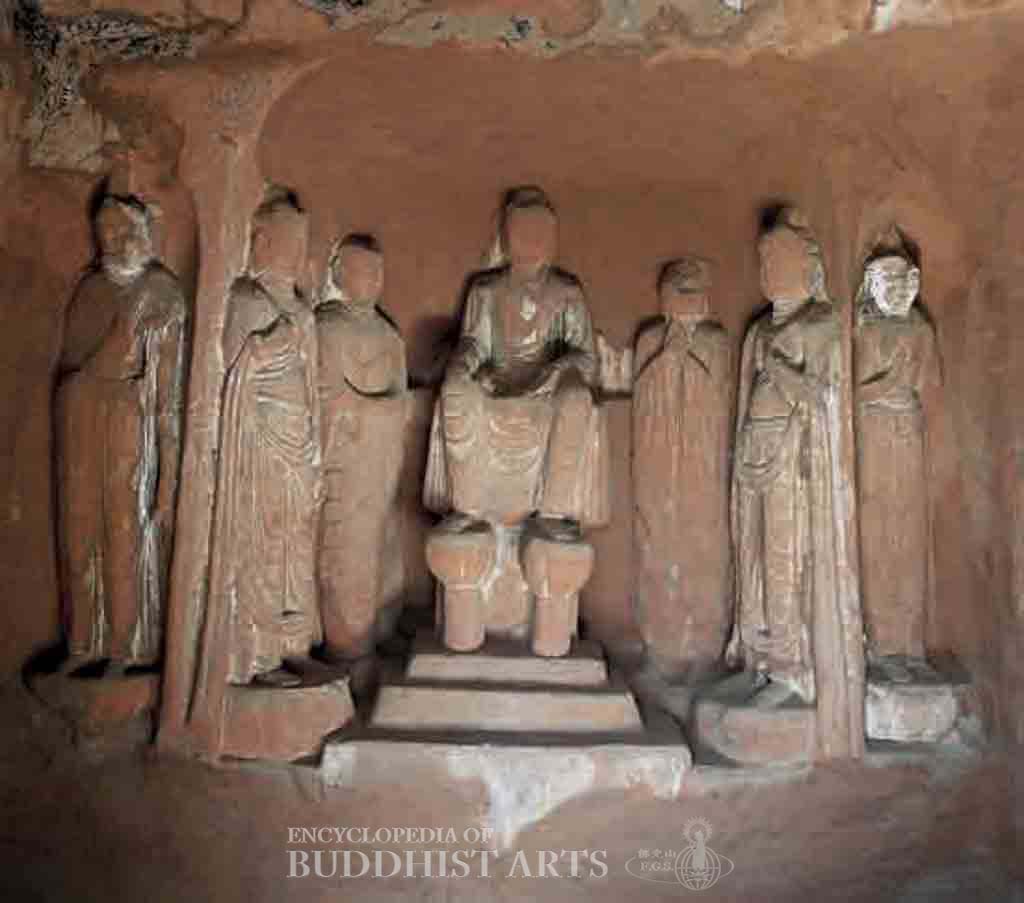
Xumishan Grottoes: Grotto 62 - Back Wall
Xumishan Grottoes
CHINA, Ningxia, Guyuan
Development of the Xumishan Grottoes began during the Northern Wei dynasty (386–534) and continued through the Western Wei (535–556), Northern Zhou (557–581), Sui (581–618), and Tang (618–907) dynasties. They were restored during the Ming (1368–1644) and Qing (1644–1911) dynasties. With a total of 132 grottoes, this is the largest grotto site in Ningxia. The grottoes all face southeast and have been grouped into eight different areas. From north to south, these areas are: Dafolou (Big Buddha Building) Grottoes 1 to 5, Zisungong (Descendent Palace) Grottoes 6 to 39, Yuanguang (Perfect Light) Temple Grottoes 40 to 50, Xiangguo (Minister) Temple Grottoes 51 to 103, Taohuadong (Peach Blossom Hole) Grottoes 104 to 108, Songshuwa (Pine Tree Pit) Grottoes 109 to 118, Sangeyao (Three Kiln) Grottoes 119 to 125, and Heishigou (Black Stone Valley) Grottoes 126 to 132. Of the 132, only 13 of the grottoes are considered well preserved. The site was listed as a National Cultural Heritage Site in 1982.
The construction of the Xumishan Grottoes began mainly in the Zisungong area. Grottoes 14, 24, and 32 have well-preserved statues from the Northern Wei dynasty. These three grottoes have truncated pyramidal or vaulted ceilings above square central pillars. A window is found above the doorway of each grotto. The four walls do not contain niches, but the four sides of the central pillar have multiple niches containing statues. The niches mainly have sets consisting of a Buddha and two Bodhisattvas, but there is also a seated Buddha, standing Buddha, and a cross-legged Maitreya Buddha. There are also statues of Sakyamuni and Prabhutaratna Buddha sitting together in addition to a Maitreya Bodhisattva in contemplation. The numerous folds of the figures’ clothing create complex shadows, indicating influence from the Southern Dynasties (420–589) on these Northern Wei dynasty statues.
Construction during the Western Wei dynasty followed the same basic layout as the Northern Wei dynasty. However, the central pillars of the grottoes built during this period have no bases or horizontal beams, and the front walls do not have windows. During this period, there were a total of 25 grottoes built, mainly in the Zisungong area. The statues continued to consist mainly of sets of one Buddha with two Bodhisattvas, and the shapes of these Buddha statues follow the style from the Northern Wei dynasty.
The Northern Zhou dynasty was the first period that saw rapid development of the Xumishan Grottoes. The grottoes from this period are located in the popular Yuanguang Temple and Xiangguo Temple areas. Among these grottoes, the decorations of Grottoes 45 and 46 are the richest and most exquisite. The layout of these two grottoes follows the same square design with a central pillar, but on a much larger scale. Each grotto has a truncated pyramidal ceiling designed to look like a wooden structure. The four sides of the central pillars do not contain small niches but have taller and larger niches on each side. The three walls inside these grottoes each contain three niches. In addition, each side of the doorway on the front wall contain a niche. The rich decorations inside the grotto exhibit unique characteristics of grottoes from the Northern Zhou dynasty. In addition to the basic set of statues, there are statues of the Buddhas of the Past, Present, and Future; the Buddhas of the Four Directions; and the Seven Buddhas. The style of these statues shows clear differences from previous ones, overall being larger and more robust. The Bodhisattvas wear crowns and are adorned with ornaments. The ceilings of the grottoes display apsaras.
The grottoes dating from the Sui dynasty follow the style of the Northern Zhou dynasty, but on a smaller scale. The statue carving is also simpler. The Buddhas have slightly larger heads, narrower shoulders, and well-defined abdomens. The elegant posture of these statues resembles the Bodhisattvas of the Early Tang period (618–712).
The number of grottoes constructed peaked in the Tang dynasty, during which 95 grottoes and niches were built, all on a much larger scale than previous periods. The main grottoes built during the Tang dynasty were in the Dafolou, Xiangguo Temple, and Taohuadong areas, and today are best represented by Grottoes 5 and 105. These grottoes contain various layouts, although typically they are square or rectangular, with either a flat or truncated pyramidal ceiling. The grottoes, influenced by the large statues in the grottoes of the Central Plains, are exemplified by Grotto 5 which contains a 20.6 m high Maitreya Buddha. The subjects of the main statues include Sakyamuni Buddha, Maitreya Buddha, Amitabha Buddha, Medicine Buddha, Avalokitesvara Bodhisattva, and Ksitigarbha Bodhisattva. Inside most grottoes there are a Buddha and two Bodhisattvas, along with the Four Heavenly Kings and warriors on both sides. The Heavenly Kings and warriors have well-built physiques and appear valiant, expressing an entirely different spirit and artistic style from that of the Northern Dynasties (386–581).
For more details, go to the Encyclopedia of Buddhist Arts: Caves T-Z, page 1528.
Cite this article:
author = Hsingyun and Youheng and Johnson, Peter and Mankuang and Huntington, Susan and Edson, Gary and Neather, Robert,
booktitle = {Encyclopedia of Buddhist Arts: Caves T-Z},
pages = 1528,
title = {{Xumishan Grottoes}},
volume = 9,
year = {2016}}