
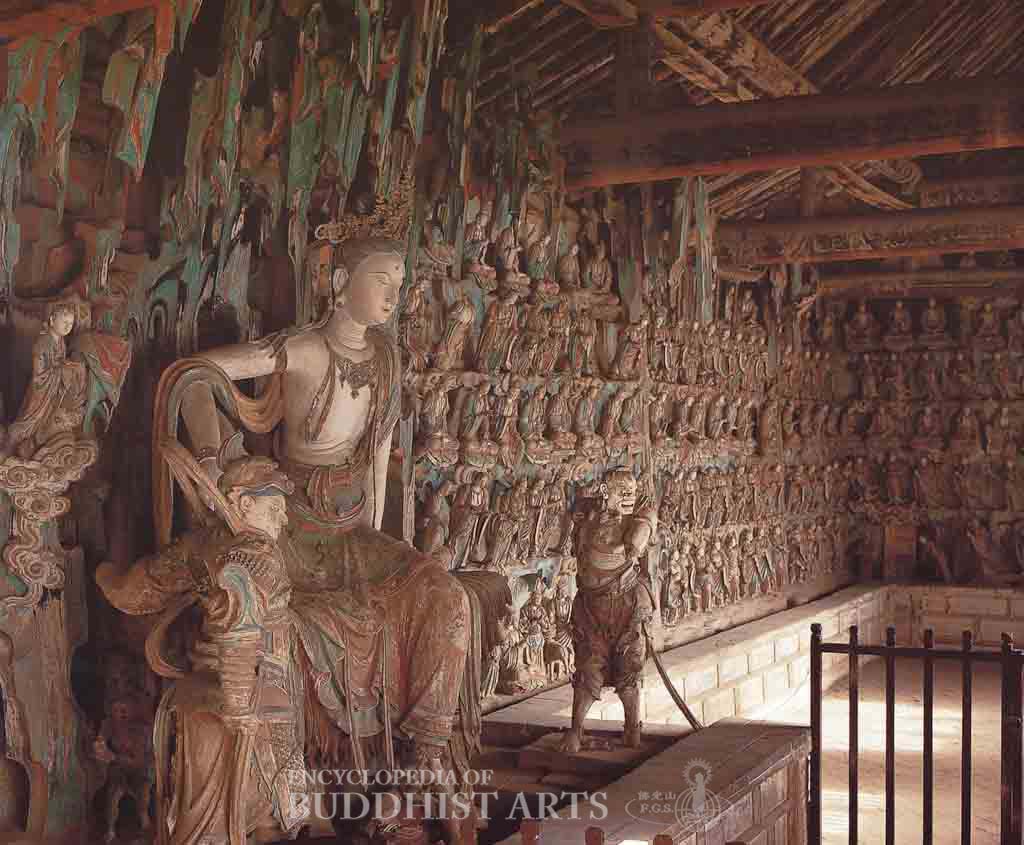
Shuanglin Temple Sculptures
Clay
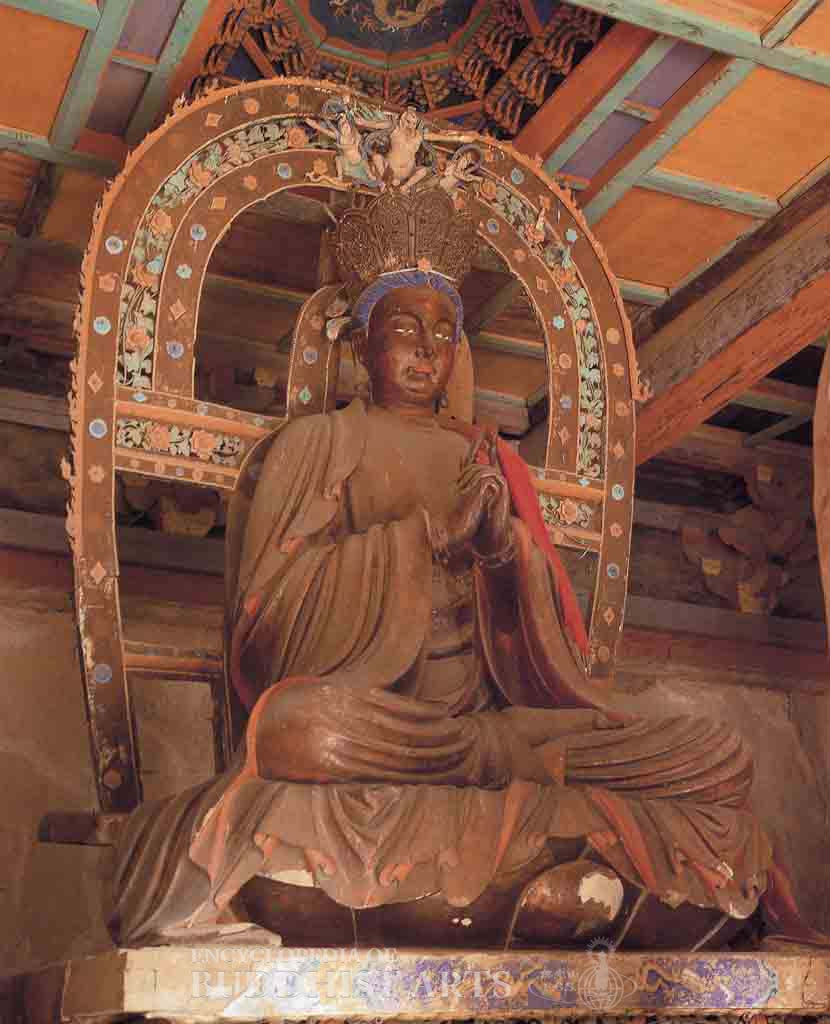
Shuanglin Temple Sculptures: Great Hero Hall - Dharmakaya Buddha

Shuanglin Temple Sculptures: Thousand Buddha Hall - Donor
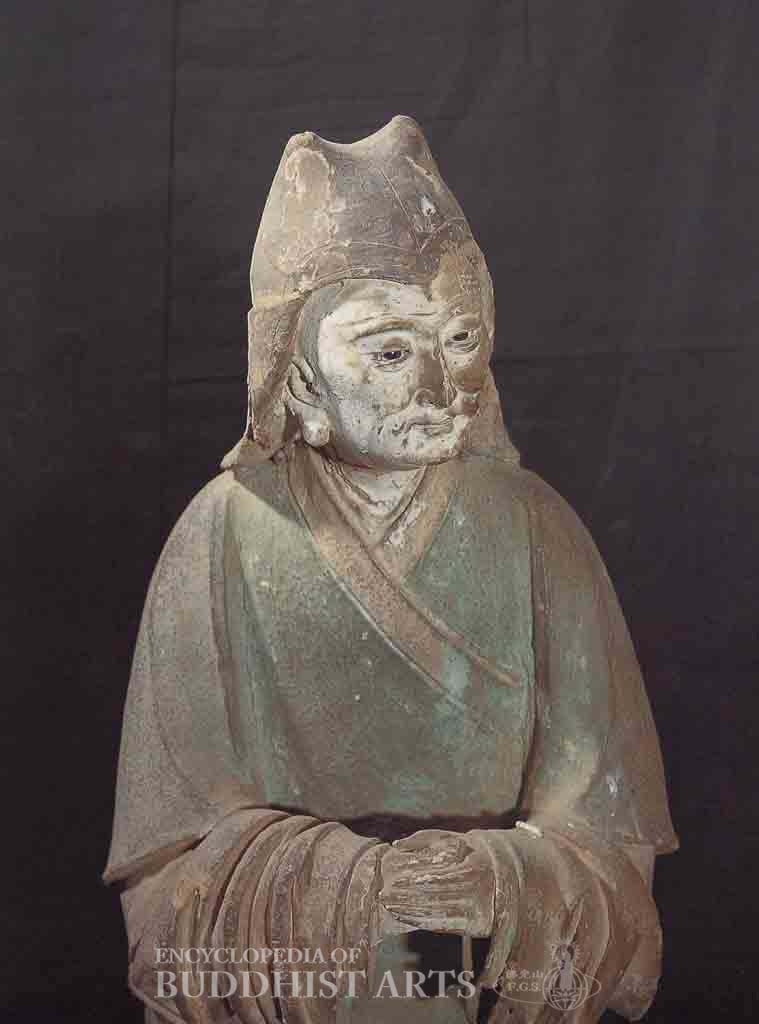
Shuanglin Temple Sculptures: Thousand Buddha Hall - Donor (detail)
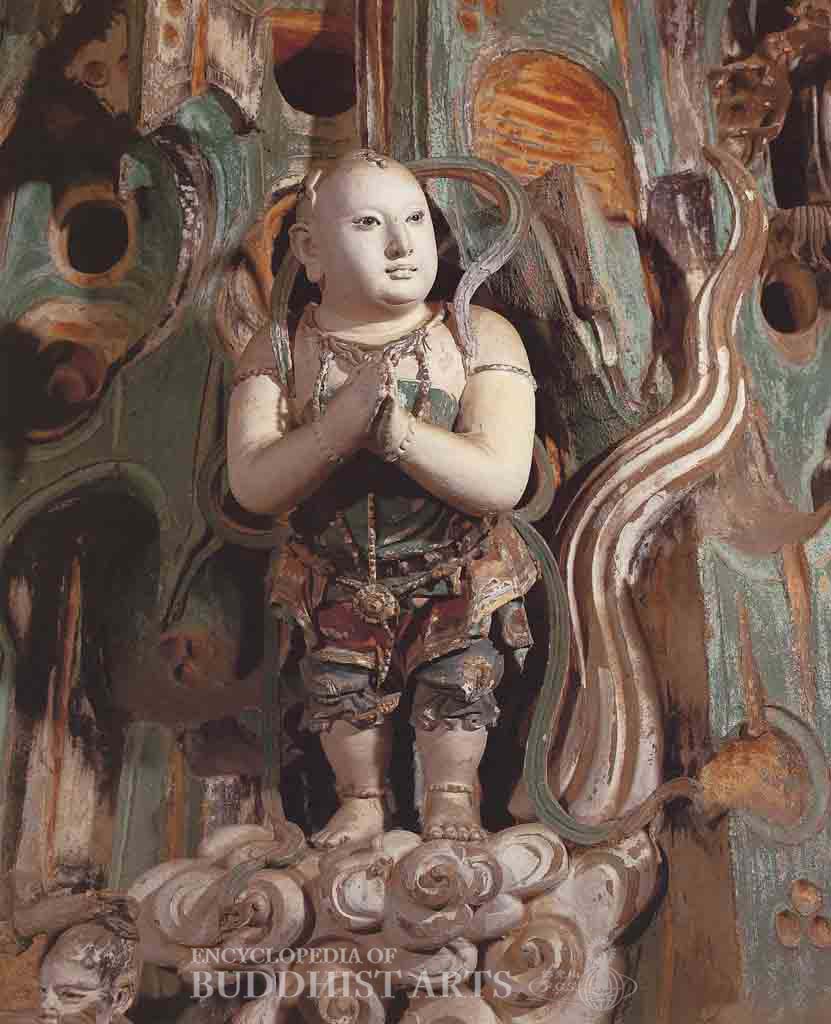
Shuanglin Temple Sculptures: Thousand Buddha Hall - Sudhana
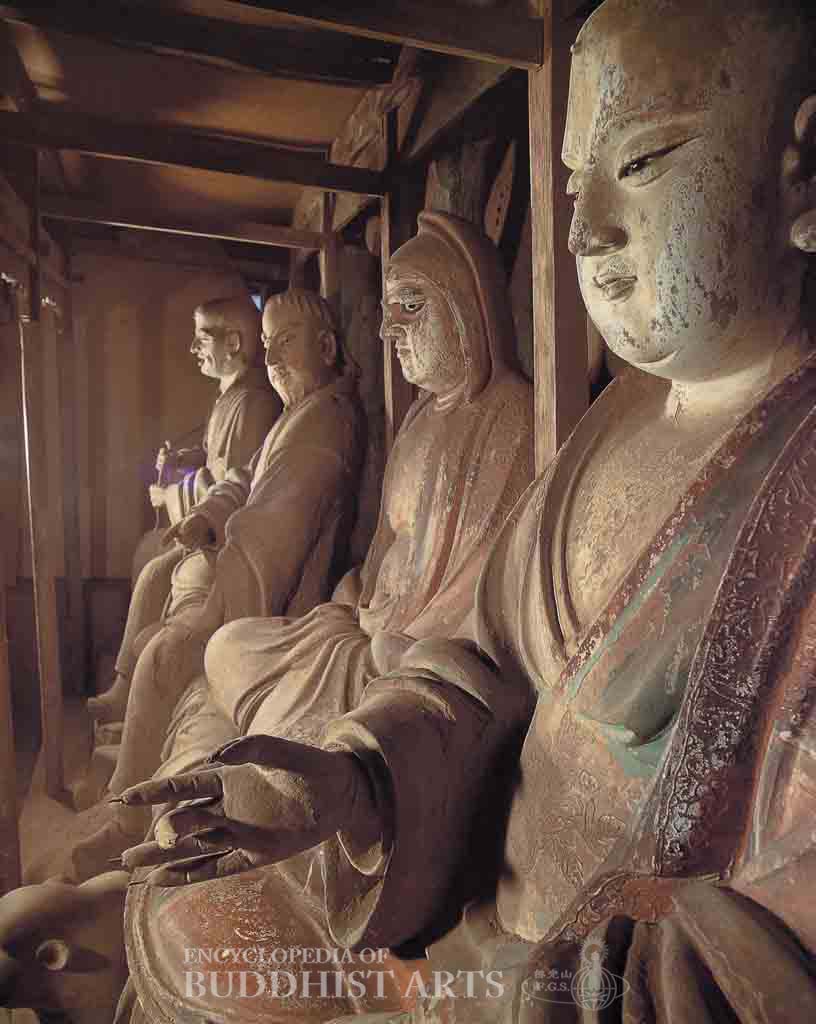
Shuanglin Temple Sculptures: Arhat Hall - Arhats
Shuanglin Temple Sculptures
CHINA, Shanxi, Jinzhong; Ming dynasty
Most of the sculptures found in the temple date to the Ming dynasty (1368–1644). Among the 2,052 sculptures and reliefs, 1,566 are undamaged.
Four statues of Dharma protectors guard the entrance of the Heavenly King Hall with Maitreya Bodhisattva as the main statue. Brahma and Sakra flank Maitreya. The doorway on the south wall is guarded by the Four Heavenly Kings, while the rest of the walls are occupied by the eight Bodhisattvas.
A statue of Sakyamuni, flanked by Manjusri and Samantabhadra, is in the Sakyamuni Hall that is named after him. Directly behind these statues is a sculpture of Avalokitesvara standing on a lotus leaf. The rest of the walls in the hall are covered with sculptures illustrating the Life of the Buddha.
The Great Hero Hall enshrines the Trikaya Buddhas, consisting of the Dharmakaya Buddha, Sambhogakaya Buddha, and Nirmanakaya Buddha with Manjusri and Samantabhadra located on either side of the far ends.
The Thousand Buddha Hall includes a Water-Moon Avalokitesvara, who is flanked by Skanda and Yaksa, and attended by Sudhana. The rest of the walls illustrate how Avalokitesvara saves lives. Over 30 statues of donors are on the windowsills and on either side of the door.
The Bodhisattva Hall enshrines the statue of a Twenty-Six-Armed Avalokitesvara, who is surrounded by more than 400 images of other Bodhisattvas. Avalokitesvara is the main statue in the Arhat Hall, while the remaining walls display the Sixteen Arhats in individual wooden niches. The Ksitigarbha Hall contains a statue of Ksitigarbha Bodhisattva surrounded by the Ten Kings of Hell.
The statues within the temple vary in size, from the smallest, at 40 cm, to a 5 m high statue. Most have black glass pupils, adding to their realism.
For more details, go to the Encyclopedia of Buddhist Arts: Sculpture N-Sr, page 1070.
Cite this article:
author = Hsingyun and Youheng and Lovelock, Yann and Chou, Yuan and Huntington, Susan and Edson, Gary and Neather, Robert,
booktitle = {Encyclopedia of Buddhist Arts: Sculpture N-Sr},
pages = 1070,
title = {{Shuanglin Temple Sculptures}},
volume = 12,
year = {2016}}