
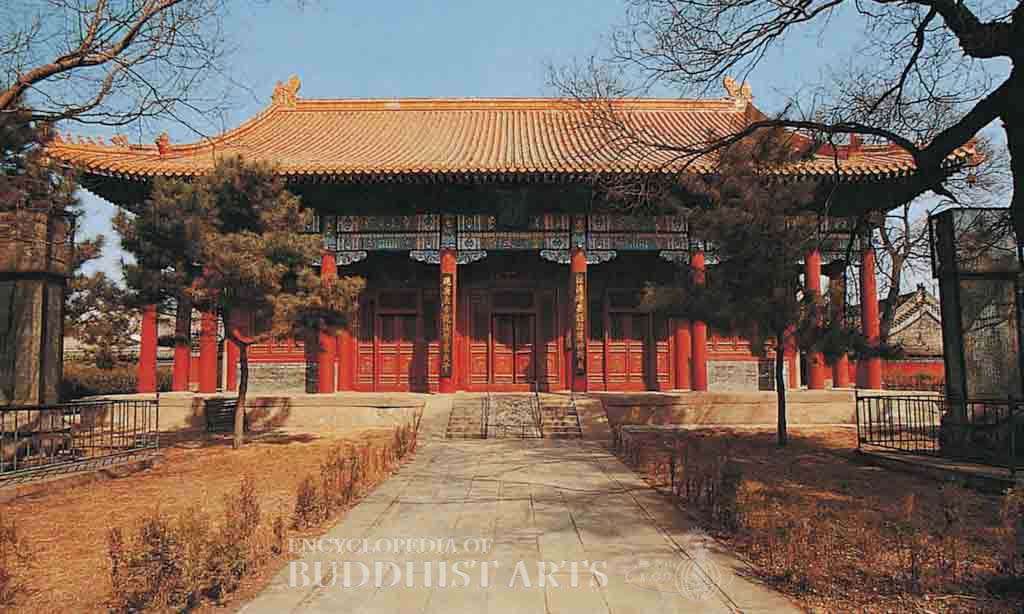
Chengde Puren Temple: Ciyun Puyin Hall
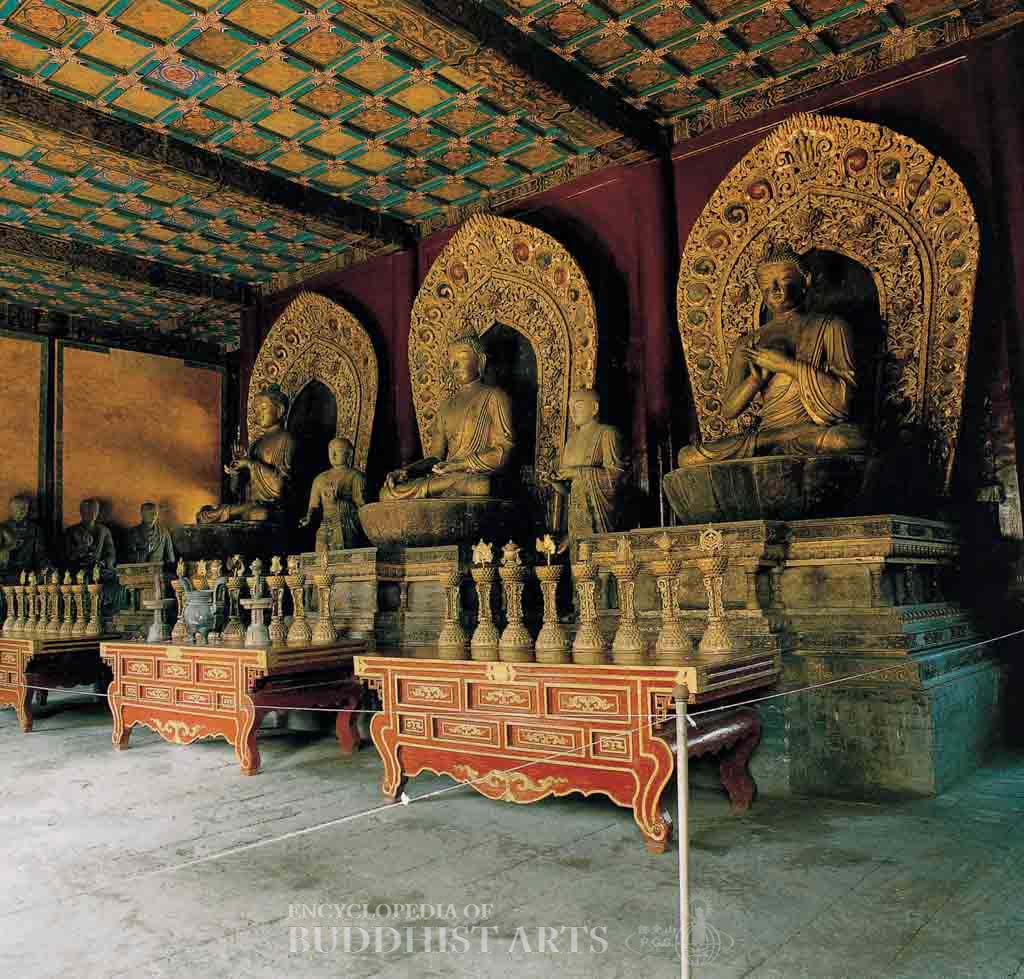
Chengde Puren Temple: Ciyun Puyin Hall - Buddhas of the Past, Present, and Future
Chengde Puren Temple
CHINA, Hebei, Chengde
The temple is located in the east of Chengde Mountain Resort. It was built in 1713 during the Qing dynasty, by Emperor Kangxi (reigned 1661–1722) at the suggestion of Mongolian nobles who attended the emperor’s 60th birthday celebration in Chengde. The emperor issued orders to construct Puren Temple and Pushan Temple. They were the first of the Chengde Eight Outlying Temples, but Pushan Temple no longer exists. Part of Puren Temple was destroyed in wartime and it underwent renovation after 1949. It was listed as a National Cultural Heritage Site in 2001.
The temple faces south and occupies 4,357 sq m. The layout and architectural style are Chinese. The buildings from south to north are the main temple gate, Heavenly King Hall, Ciyun Puyin Hall, and the Baoxiang Changxin Hall. Along the sides there are pillars, stone steles, bell and drum towers, and side halls. The whole complex is surrounded by a wall. The seven-by-five bay Ciyun Puyin Hall has a single-eave hip-and-gable roof covered with yellow glazed tiles. Statues of the Buddhas of the Past, Present, and Future are enshrined within the hall, with statues of the Eighteen Arhats on the sides. The arhats were created by the dry lacquer technique and are considered to be some of the best examples of sculpture from the Qing dynasty (1644–1911). The ceiling is filled with the Six-Syllable Mantra, “om mani padme hum,” in a decorative style. The nine-by-three bay Baoxiang Changxin Hall houses nine statues of Amitayus Buddha. The ceiling is also decorated with the Six-Syllable Mantra.
For more details, go to the Encyclopedia of Buddhist Arts: Architecture A-F, page 133.
Cite this article:
author = Hsingyun and Youheng and Johnson, Peter and Mankuang and Lancaster, Lewis,
booktitle = {Encyclopedia of Buddhist Arts: Architecture A-F},
pages = 133,
title = {{Chengde Puren Temple}},
volume = 1,
year = {2016}}