
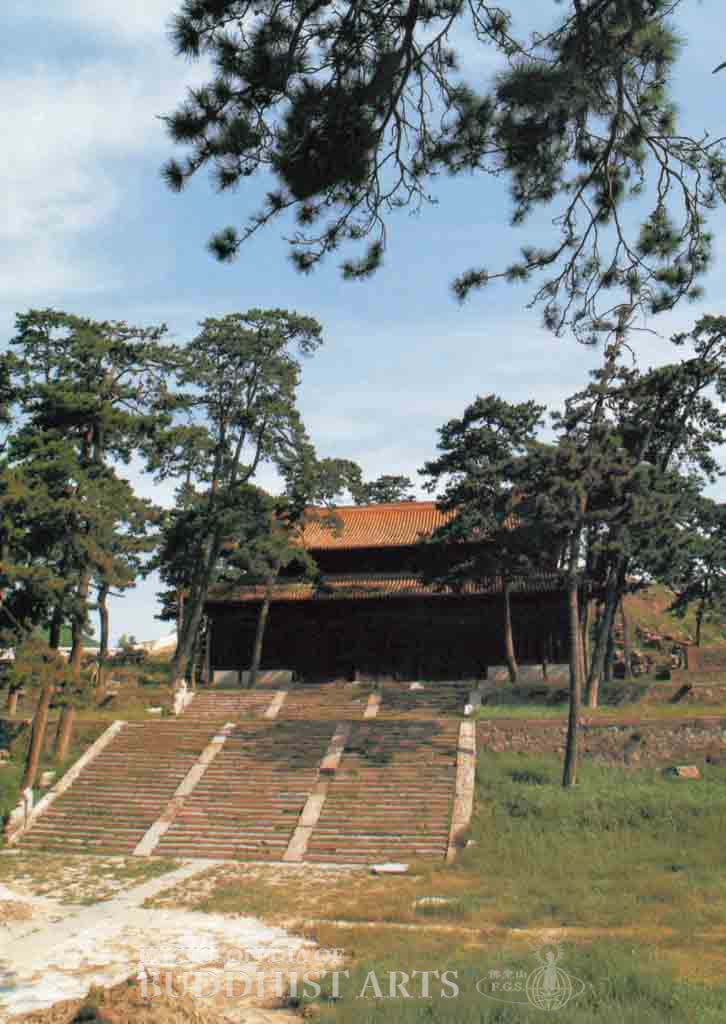
Chengde Shuxiang Temple: Huicheng Hall
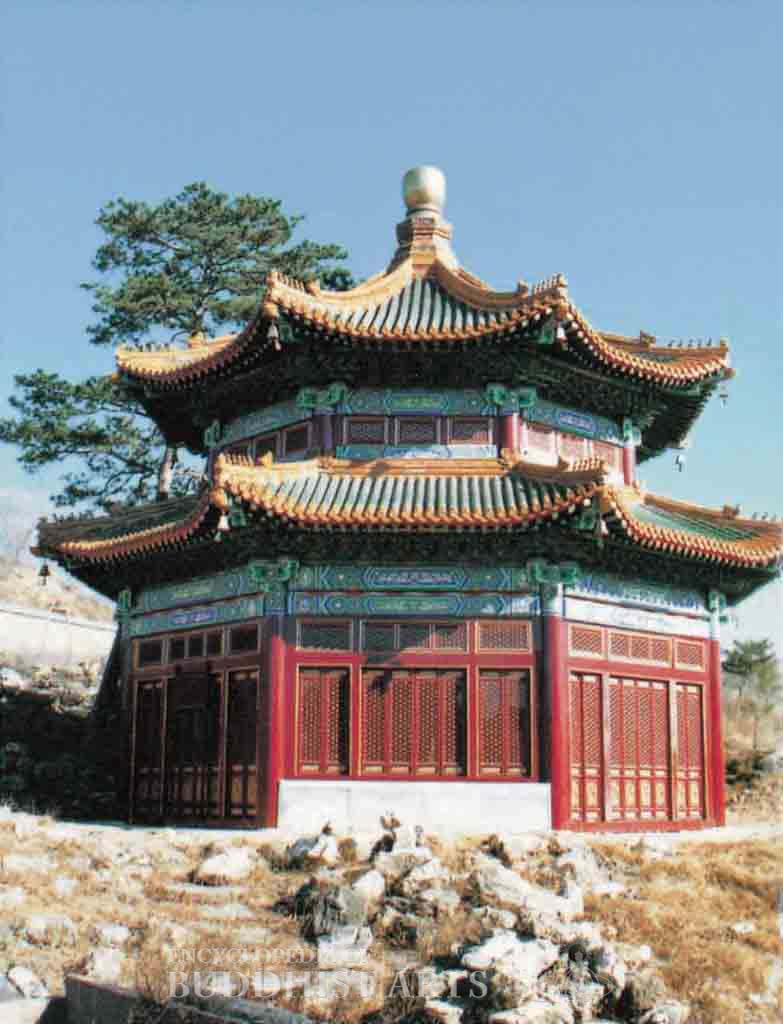
Chengde Shuxiang Temple: Pavilion of the Precious Image
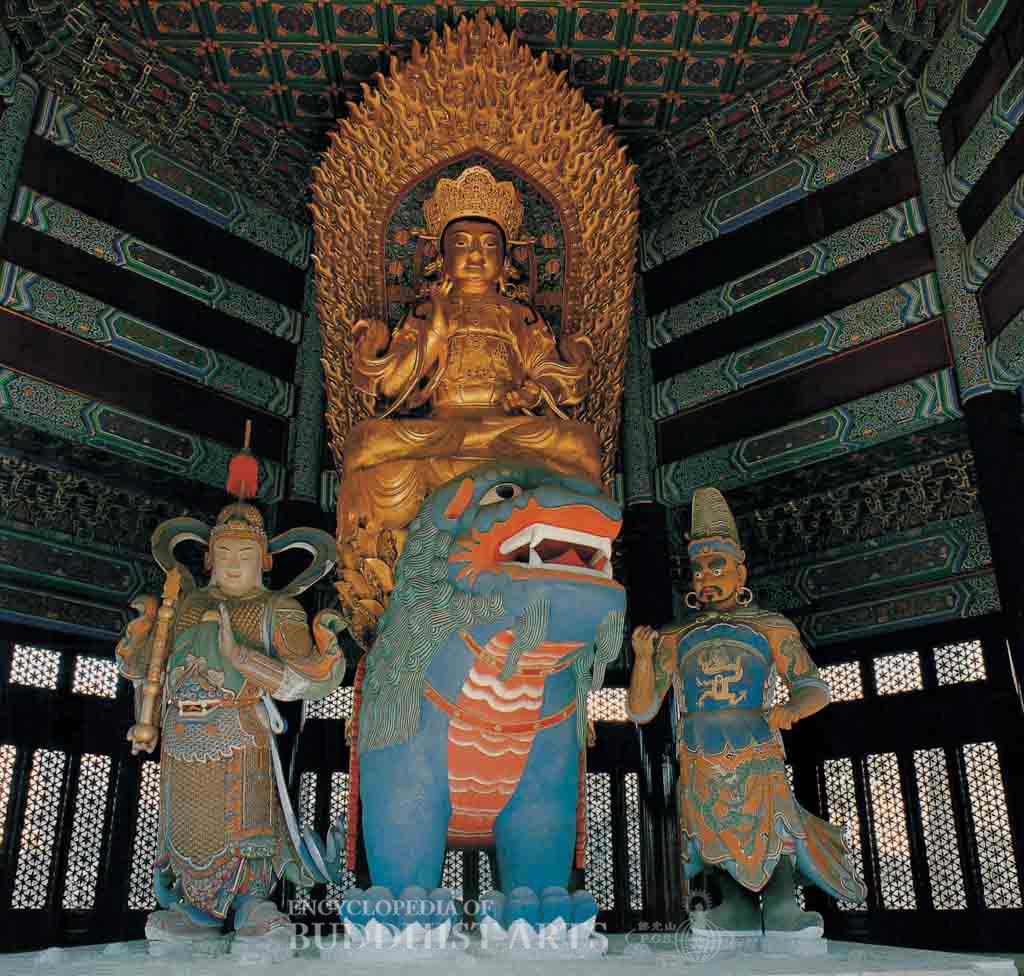
Chengde Shuxiang Temple: Pavilion of the Precious Image - Manjusri Bodhisattva
Chengde Shuxiang Temple
CHINA, Hebei, Chengde
The temple is located in the north of Chengde Mountain Resort. It was built following the pilgrimage of Emperor Qianlong (reigned 1736–1795) and the Empress Dowager to Wutaishan (Five Plateau Mountain) in 1761. They visited Shuxiang Temple and the empress was particularly impressed with the image of Manjusri there. In 1774 this version of Shuxiang Temple was built at Chengde. It was listed as a National Cultural Heritage Site in 1988.
Built in a traditional Chinese temple layout, the principal buildings along the central axis are the main temple gate, Heavenly King Hall, Huicheng Hall, Pavilion of the Precious Image, the bell and drum towers, together with side halls. The seven-by-five bay Huicheng Hall is the main hall and has a double-eave hip-and-gable roof covered in yellow glazed tiles. There are statues of Avalokitesvara, Manjusri, and Samantabhadra Bodhisattvas enshrined within the hall. A pathway behind the Huicheng Hall is constructed from natural rock winding upwards toward an artificial hill symbolizing Wutaishan. At the very top stands the octagonal Pavilion of the Precious Image. It has double eaves covered in green glazed tiles and edged with yellow. An 11.6 m high wooden statue of Manjusri riding a lion is enshrined within the hall. The main feature of the temple is the symmetrical layout of the buildings with the halls at the front and garden at the rear.
For more details, go to the Encyclopedia of Buddhist Arts: Architecture A-F, page 136.
Cite this article:
author = Hsingyun and Youheng and Johnson, Peter and Mankuang and Lancaster, Lewis,
booktitle = {Encyclopedia of Buddhist Arts: Architecture A-F},
pages = 136,
title = {{Chengde Shuxiang Temple}},
volume = 1,
year = {2016}}