
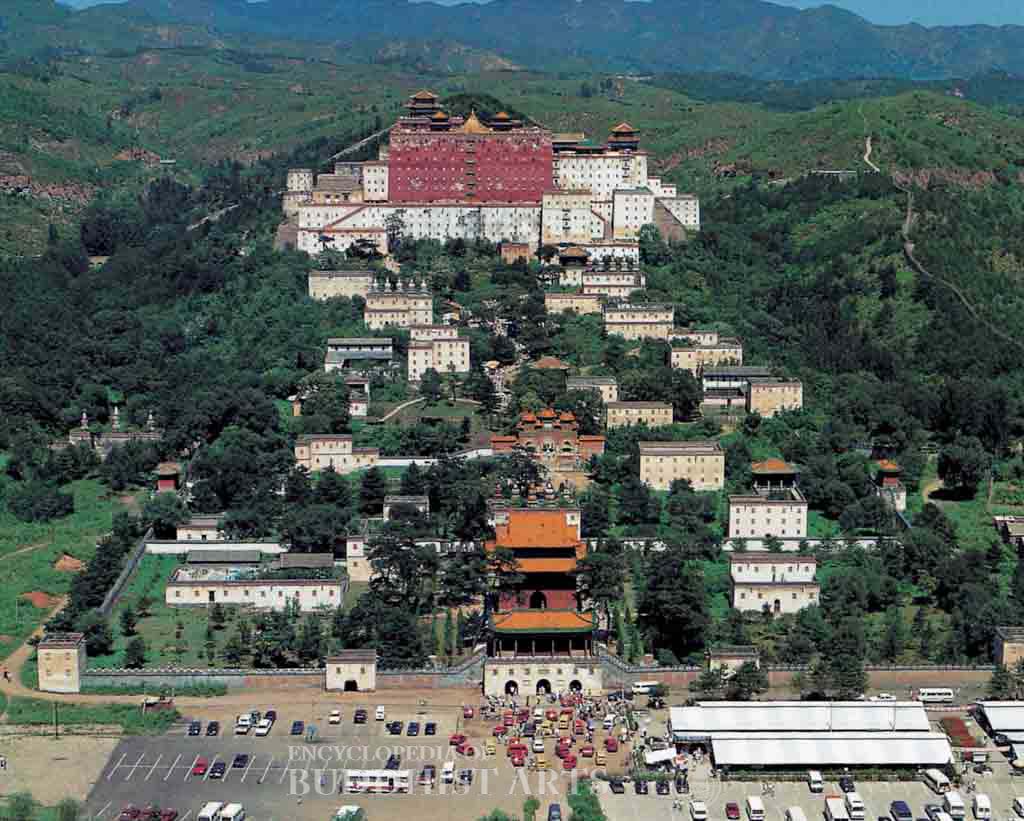
Chengde Putuo Zongcheng Temple
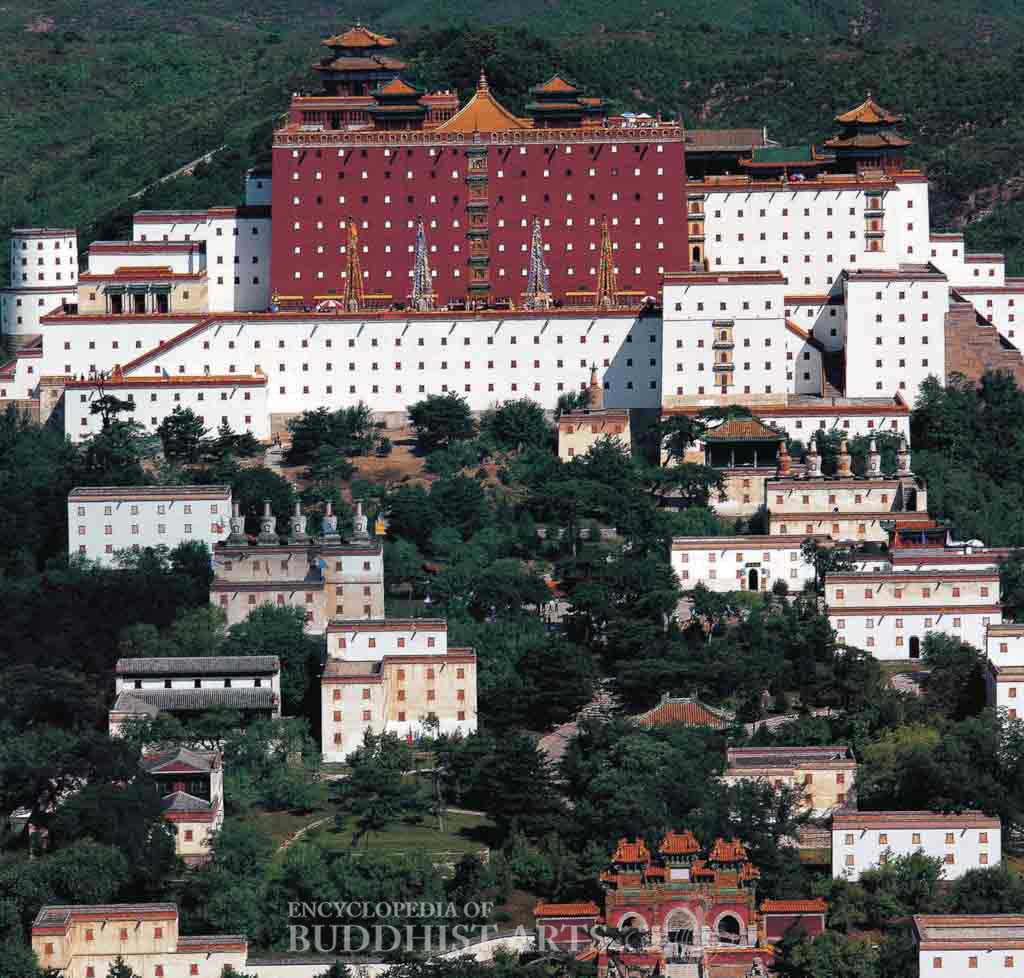
Chengde Putuo Zongcheng Temple: Great Red Temple
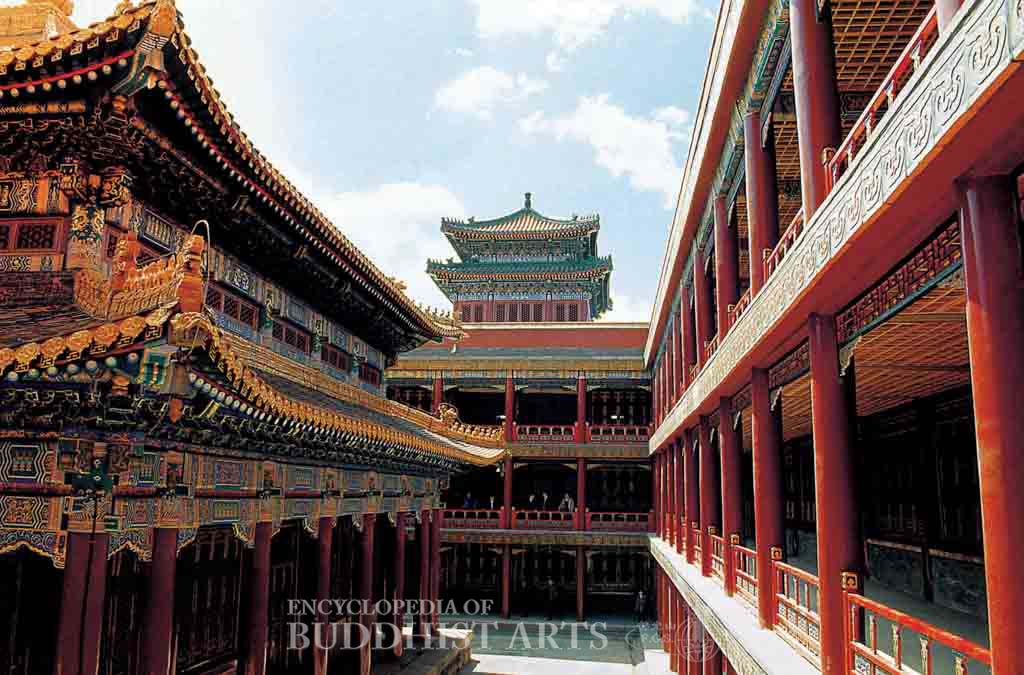
Chengde Putuo Zongcheng Temple: Great Red Temple - Red Compound
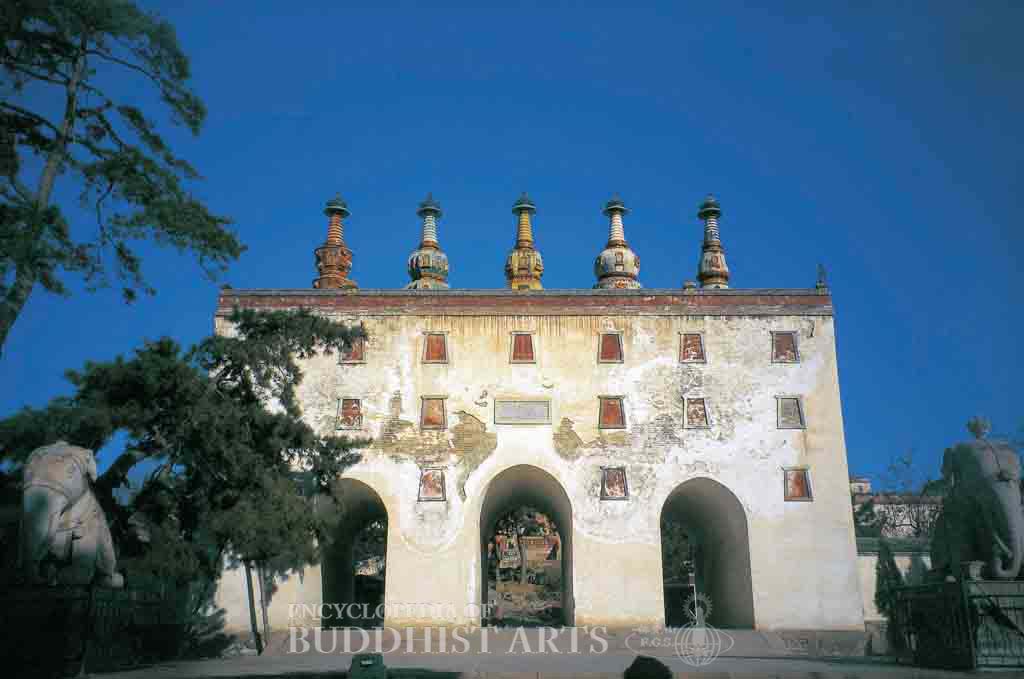
Chengde Putuo Zongcheng Temple: Five Stupa Gate
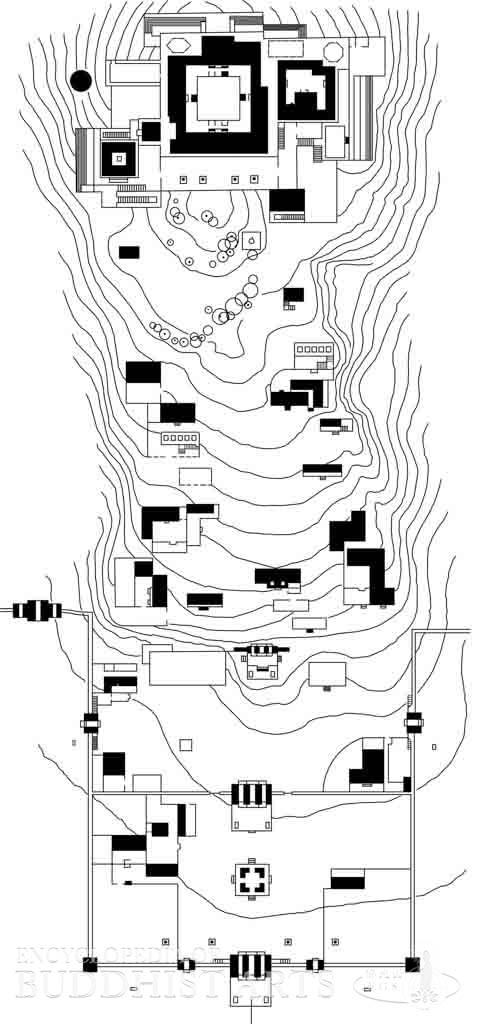
Chengde Putuo Zongcheng Temple (site layout)
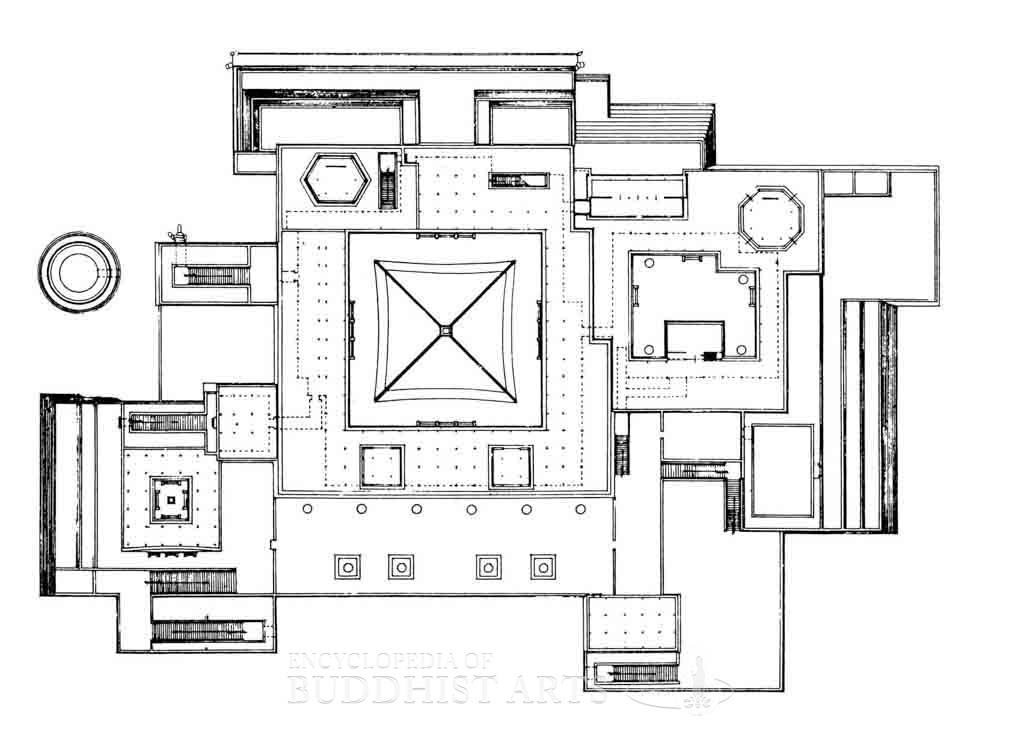
Chengde Putuo Zongcheng Temple: Great Red Temple (layout)
Chengde Putuo Zongcheng Temple
CHINA, Hebei, Chengde
The temple is located directly north of Chengde Mountain Resort and is the largest among the Chengde Eight Outlying Temples. The temple was built between 1767 and 1771 during the Qing dynasty, in celebration of the 60th birthday of Emperor Qianlong (reigned 1736–1795), as well as the 80th birthday of the Empress Dowager. It is named after the Potala Palace in Lhasa and its layout is also modeled on it, so it is also known as Little Potala. It was listed as a National Cultural Heritage Site in 1961. The temple occupies 22 ha and is divided into three sections. The front section follows the traditional Chinese architectural layout, with buildings along the central axis: the main temple gate, stele pavilion, five stupa gate, and the glazed gateway. The middle section has a less formal layout, which is typical of the Tibetan style. Scattered within the sloping middle section there are more than ten small white platforms as well as Tibetan stupas. The Great Red Temple at the rear is the main building complex of the temple. The main temple gate, stele pavilion and glazed gateway were constructed according to the architectural principles used during the Qing dynasty (1644–1911). The three-bay wide glazed gateway is seven stories high. The surface has been covered with a predominantly yellow-green glaze. The five stupa gate consists of a three-bay gateway, on which there are five glazed brick Tibetan stupas in different colors and styles. The Great Red Temple is 42.5 m high and 59.7 m wide. It consists of a red compound with white compounds on either side. The red compound is in the form of a square within a square, with a three-story building around the outside and the All Dharmas Are One Hall at the center. From the outside the three-story building appears to be seven stories high but it actually stands on a high base and has false windows. The seven-by-seven bay All Dharmas Are One Hall has a double-eave pyramidal roof covered in gilt bronze tiles. A stage is built in the eastern white compound, while the Thousand Buddha Pavilion is in the western white compound. Most of the buildings are Tibetan in style, but there are some architectural features which are clearly Chinese.
For more details, go to the Encyclopedia of Buddhist Arts: Architecture A-F, page 134.
Cite this article:
author = Hsingyun and Youheng and Johnson, Peter and Mankuang and Lancaster, Lewis,
booktitle = {Encyclopedia of Buddhist Arts: Architecture A-F},
pages = 134,
title = {{Chengde Putuo Zongcheng Temple}},
volume = 1,
year = {2016}}