
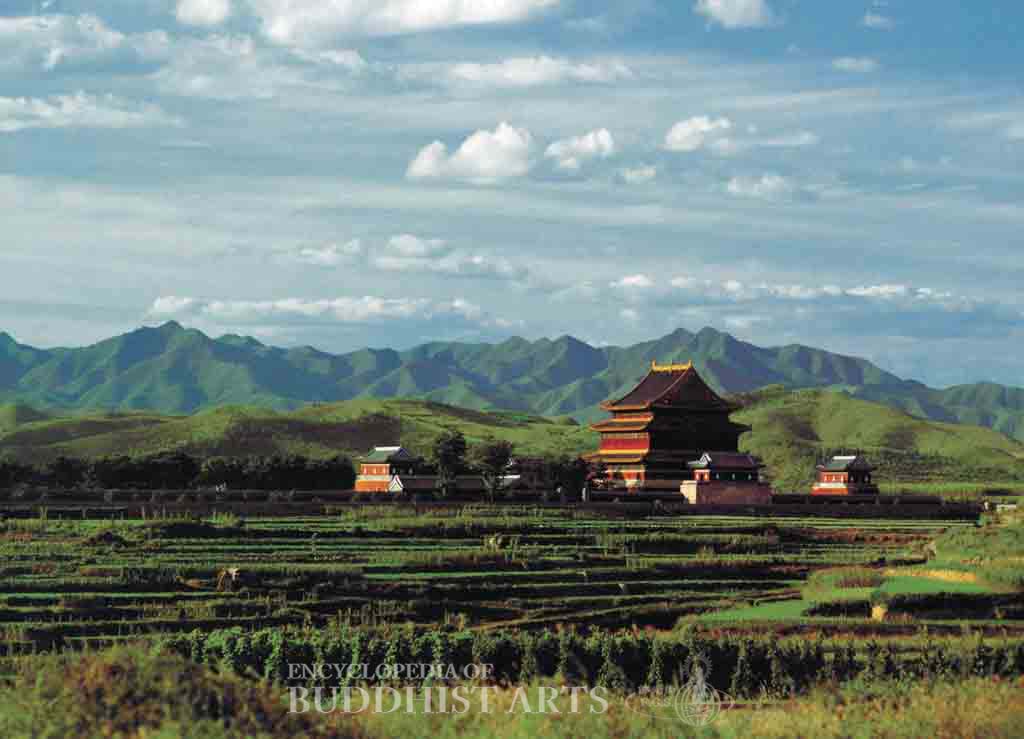
Chengde Anyuan Temple
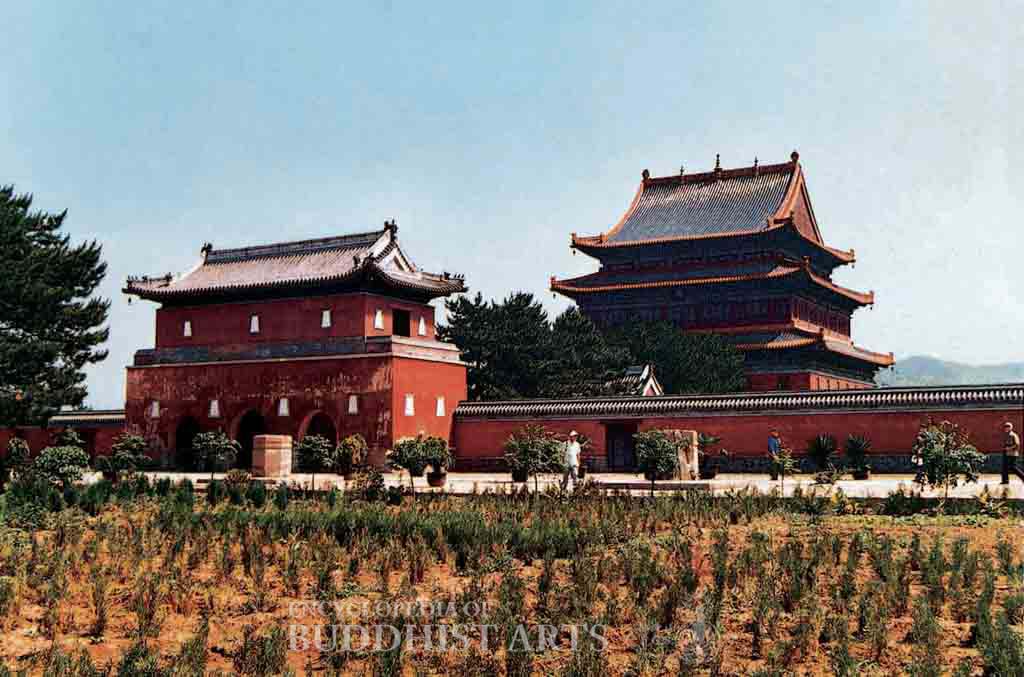
Chengde Anyuan Temple: Second Temple Gate and Universal Liberation Hall
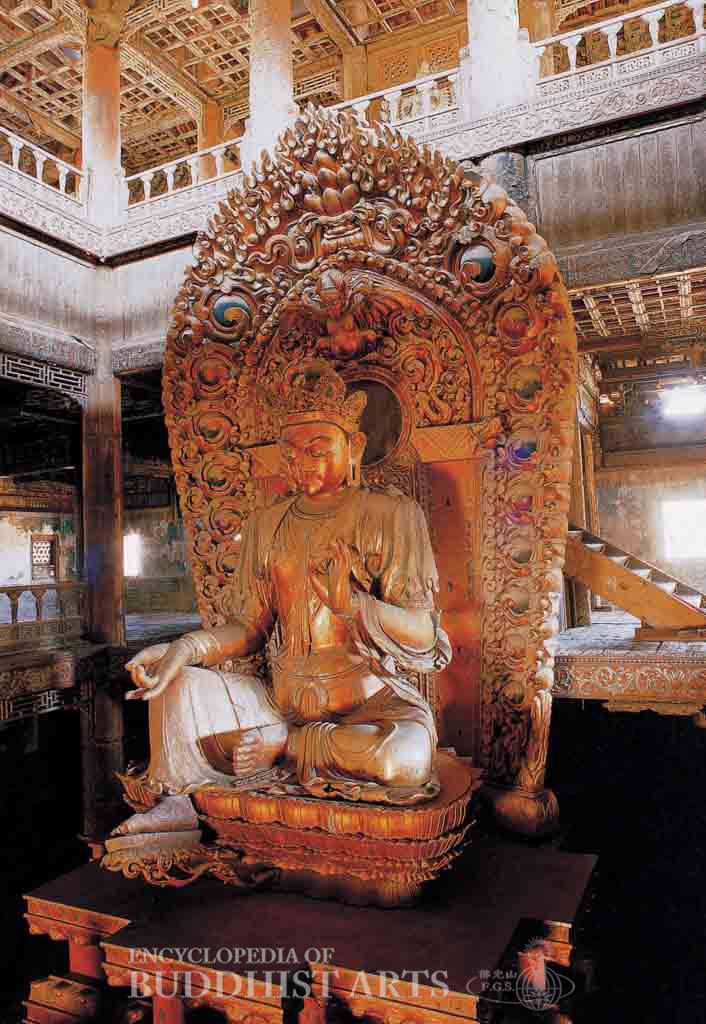
Chengde Anyuan Temple: Universal Liberation Hall - Green Tara
Chengde Anyuan Temple
CHINA, Hebei, Chengde
Anyuan means Distant Peace and the temple is located to the northeast of the Chengde Mountain Resort. It was built in 1764 during the Qing dynasty after the emperor successfully defeated the Dzungars. It was modeled on the Gurza Temple, which no longer exists, in Xinjiang. The temple was renovated in 1982. It was listed as a National Cultural Heritage Site in 1988.
The temple is rectangular and is enclosed with inner and outer walls. Numerous courtyards are formed within the inner walls. The main buildings are concentrated at the rear, while there is a large courtyard at the front. Along the central axis there are the main temple gate, second temple gate, and Universal Liberation Hall. The second temple gate is two stories tall and is in the form of a gate tower. There are three arched doorways and false windows at intervals along the wall.
The seven-by-seven bay, three-story Universal Liberation Hall is the main building of the temple and is 29 m high. It has a double-eave hip-and-gable roof, which at 8.8 m is distinctly high and takes up one third of the building. It is covered in black glazed tiles and bordered by yellow glazed tiles. Black tiles are rarely seen on temple roofs. The first story is built of stone bricks and it has arched doors and false windows. The second and third stories are modeled on the Chinese pavilion style. A lacquered wooden statue of the Green Tara, similar to the one in Gurza Temple, is enshrined on the first floor. With the absence of columns in the center, there is a great sense of space inside the hall. The Buddhas of the Past, Present, and Future are enshrined on the second floor, while the Yamantaka is on the third floor.
For more details, go to the Encyclopedia of Buddhist Arts: Architecture A-F, page 129.
Cite this article:
author = Hsingyun and Youheng and Johnson, Peter and Mankuang and Lancaster, Lewis,
booktitle = {Encyclopedia of Buddhist Arts: Architecture A-F},
pages = 129,
title = {{Chengde Anyuan Temple}},
volume = 1,
year = {2016}}