
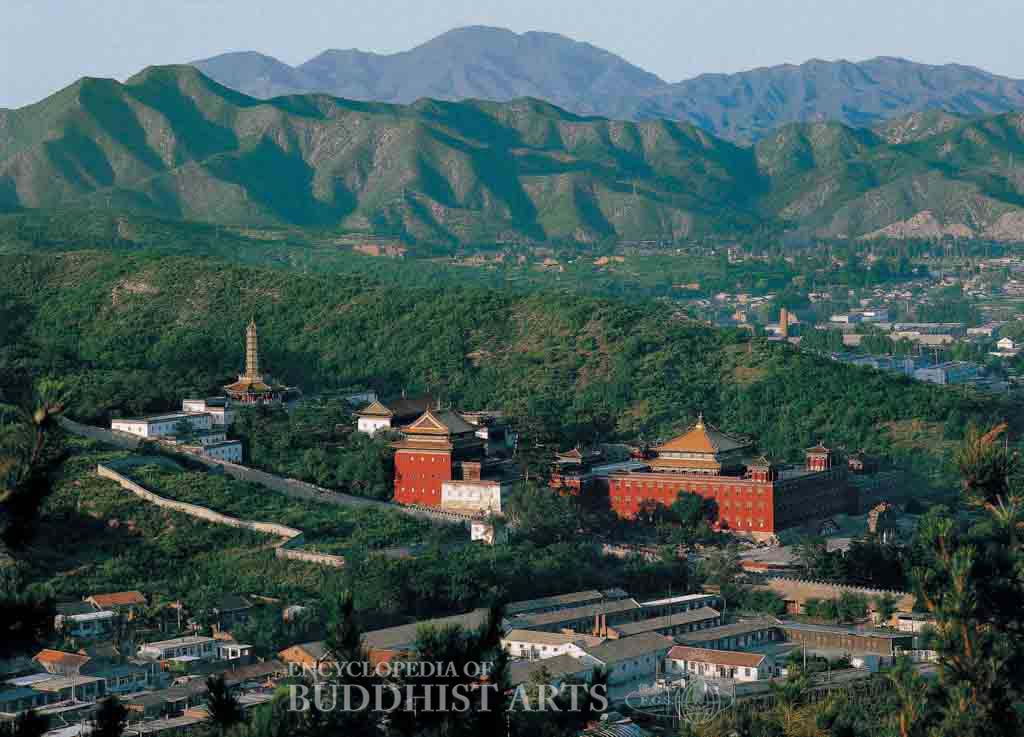
Chengde Xumi Fushou Temple
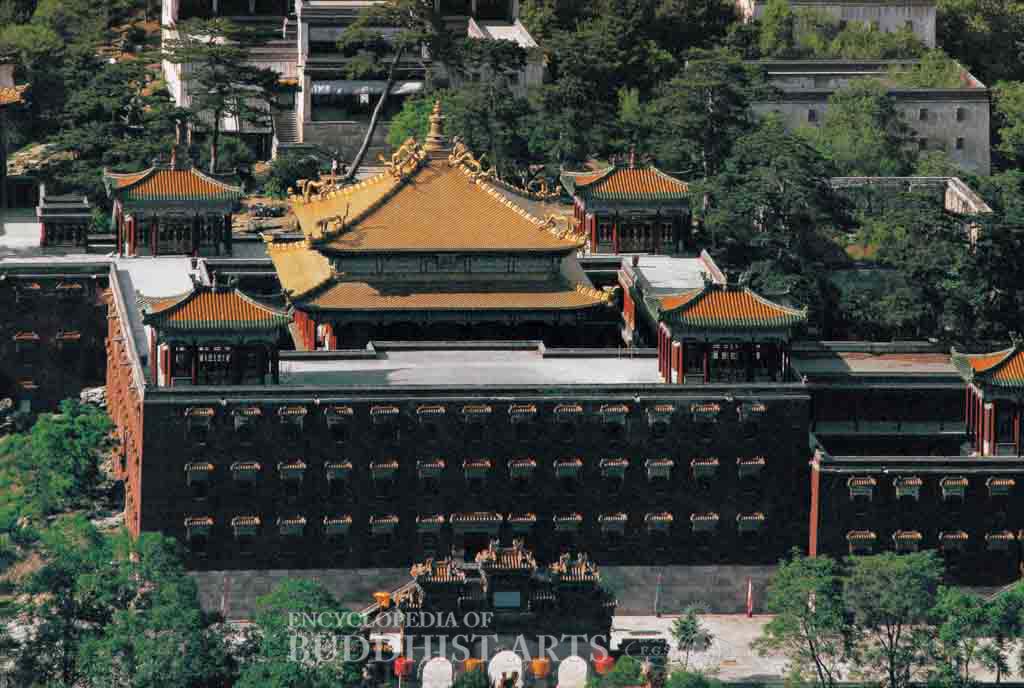
Chengde Xumi Fushou Temple: Great Red Temple
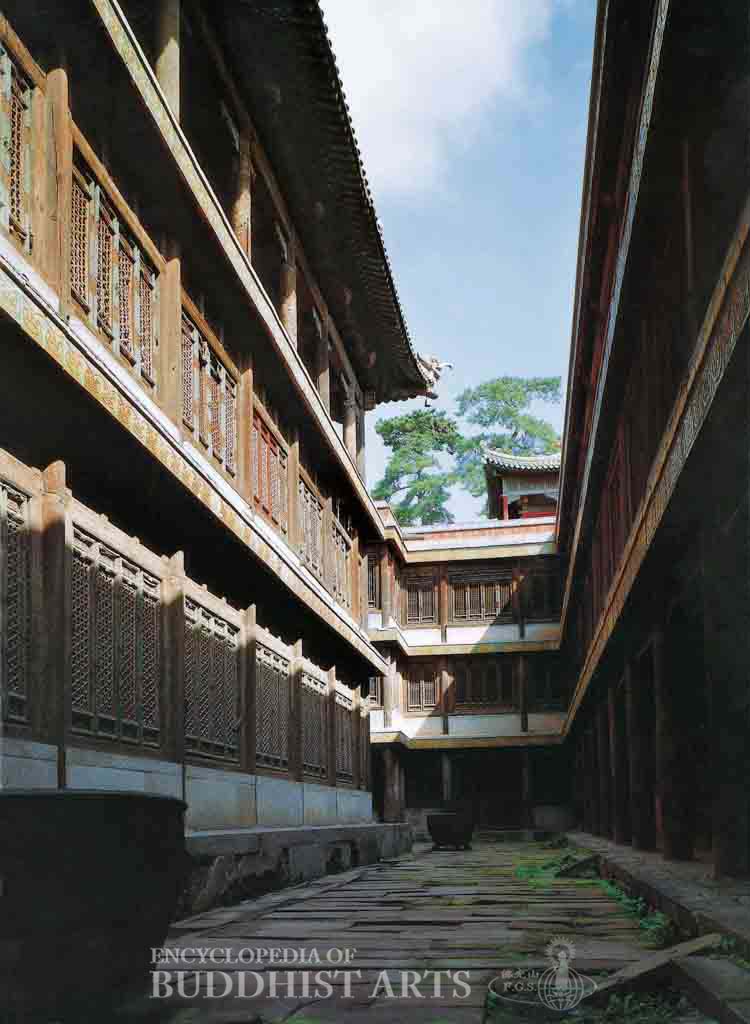
Chengde Xumi Fushou Temple: Great Red Temple - Courtyard
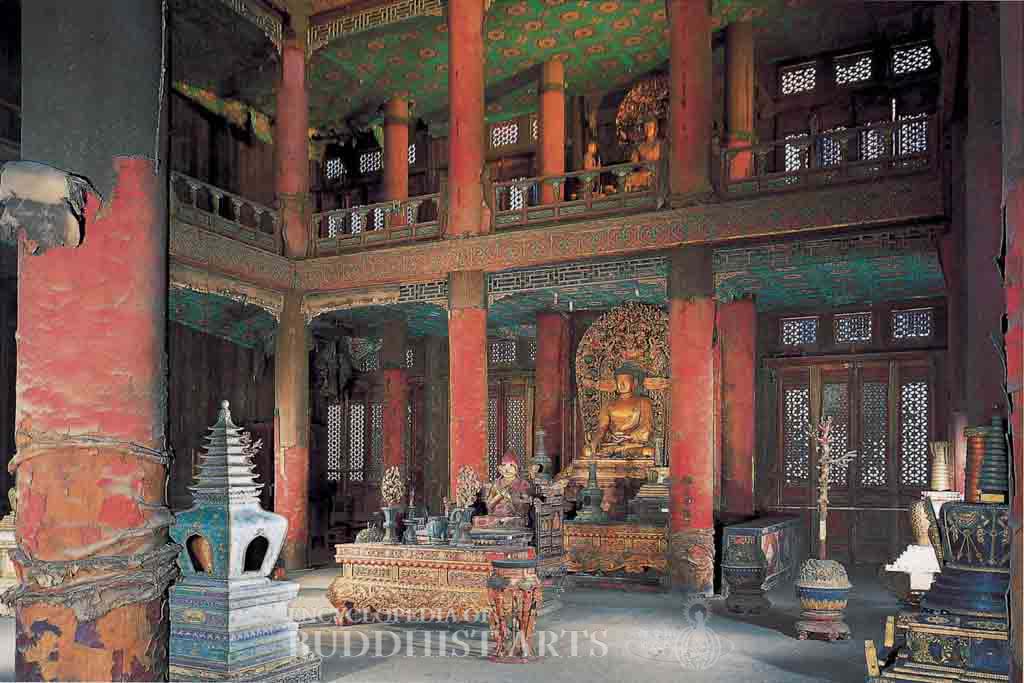
Chengde Xumi Fushou Temple: Great Red Temple - Lofty Solemn Hall
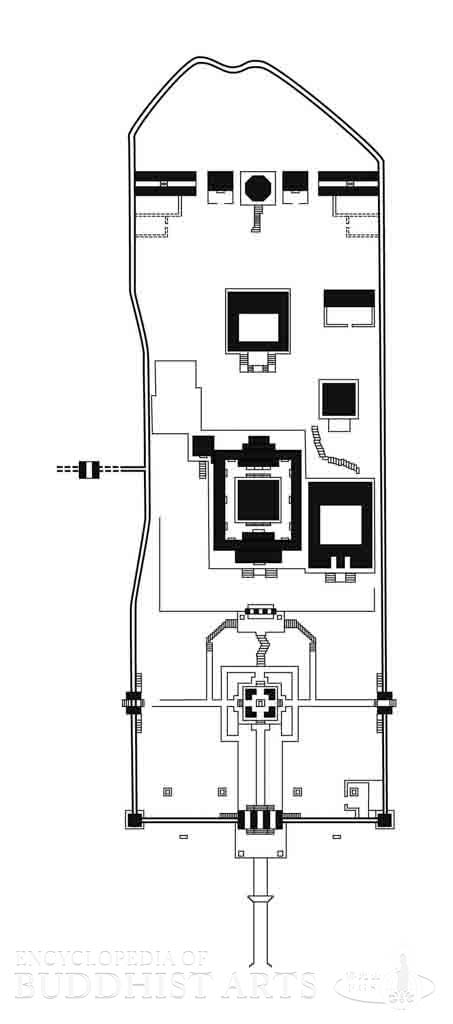
Chengde Xumi Fushou Temple (site layout)
Chengde Xumi Fushou Temple
CHINA, Hebei, Chengde
Xumi means Sumeru and Fushou means Blessings and Longevity. The temple is located to the north of Chengde Mountain Resort. It was built in 1780 during the Qing dynasty for the Sixth Panchen Lama, who came to Chengde to celebrate the 70th birthday of Emperor Qianlong (reigned 1736–1795). The structure was modeled after the Tashilhunpo Monastery in Shigatse, where the Sixth Panchen Lama resided, so it was also called the Panchen Temporary Palace. It was the last temple to be built among the Chengde Eight Outlying Temples. It was listed as a National Cultural Heritage Site in 1961.
Built on a slope, the temple faces south and occupies approximately 1.2 ha. Along the central axis there are the main temple gate, stele pavilion, glazed gateway, Great Red Temple, Lofty Solemn Hall, Jinhe Hall, Dharma Source Hall, and the glazed Wanshou Pagoda. Located to the southeast of the Great Red Temple is the Eastern Red Temple. To the northwest and connected to the Great Red Temple, there is the Auspicious Dharma Joy Hall, which was also the living quarters of the Panchen Lama. To the northeast there is the Joyful Mind Hall.
The Great Red Temple is the main building of the temple and it occupies 3,240 sq m. The Lofty Solemn Hall stands at the center of a courtyard enclosed by a red three-story building with a flat roof, on which there is a small pavilion in each corner. The seven-by-seven bay three-story Lofty Solemn Hall is where the Sixth Panchen Lama gave his Dharma talks. The building has a double-eave pyramidal roof covered with gilt bronze tiles. There is a golden dragon at each end of the roof hips, with a total of eight dragons, four being clustered at the center of the roof. The finial is in the form of a gilt bronze Tibetan stupa. The center of the building is open with statues including Sakyamuni Buddha and Tsongkhapa.
The octagonal glazed Wanshou Pagoda is seven stories high. The roofs are covered with yellow glazed tiles. The side of each story has green glazed bricks and is decorated with niches and Buddha images.
The front section of the temple is built in Chinese architectural style, while the rear section, the Great Red Temple, is predominately Tibetan. However, some aspects of the building, such as the decorations, are Chinese in style. This structure is a good example of a combination of Tibetan and Chinese architectural styles.
For more details, go to the Encyclopedia of Buddhist Arts: Architecture A-F, page 137.
Cite this article:
author = Hsingyun and Youheng and Johnson, Peter and Mankuang and Lancaster, Lewis,
booktitle = {Encyclopedia of Buddhist Arts: Architecture A-F},
pages = 137,
title = {{Chengde Xumi Fushou Temple}},
volume = 1,
year = {2016}}