
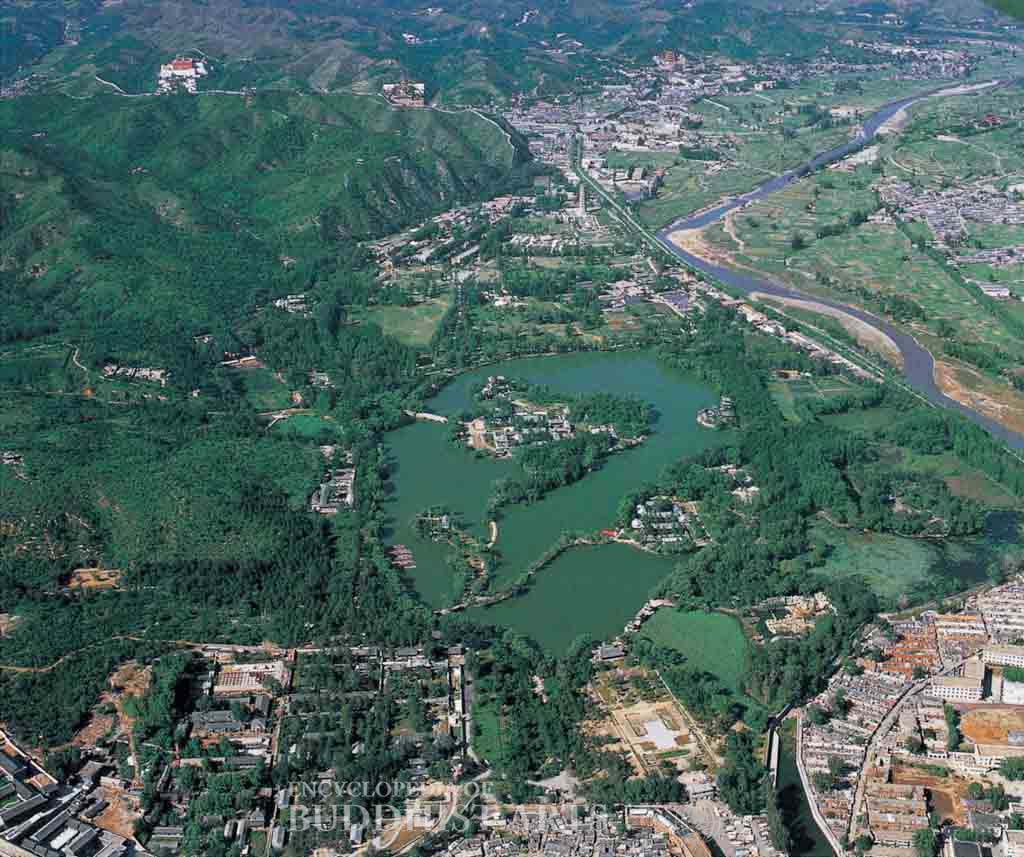
Chengde Mountain Resort and Eight Outlying Temples (aerial view)
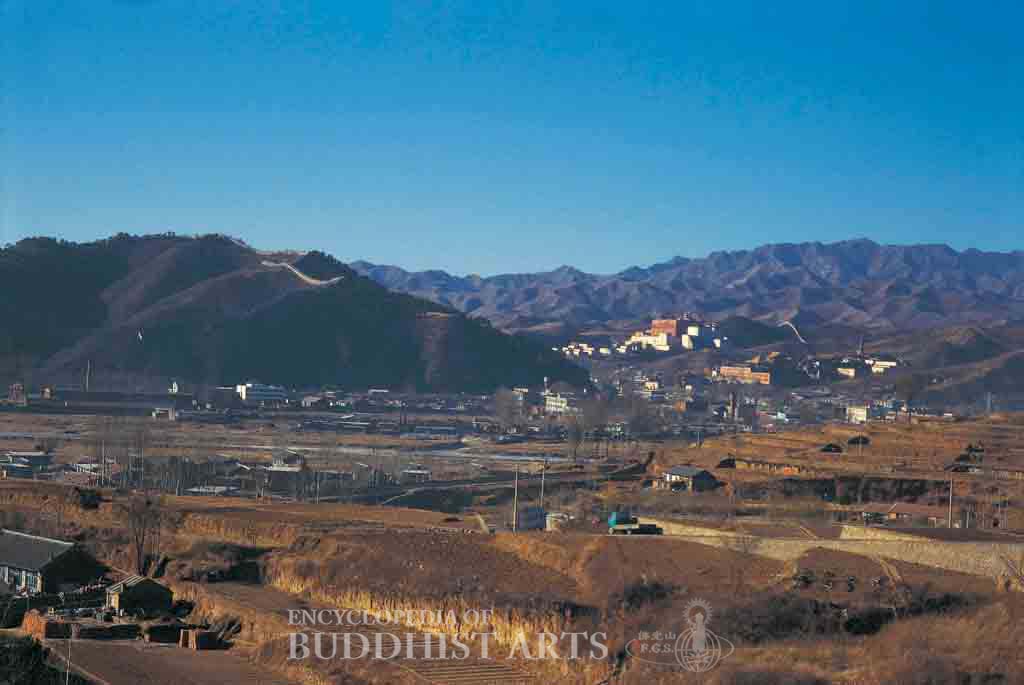
Chengde Eight Outlying Temples
Chengde Eight Outlying Temples
CHINA, Hebei, Chengde
The temples are located on the north and east sides of Chengde Mountain Resort. Between 1713 and 1780 during the Qing dynasty, twelve temples were built for the emperor to receive eminent monks as well as Mongolian and Tibetan noblemen. Eight of the temples had resident lamas appointed by the emperor. For this reason and the fact that they are located outside Beijing, they are called the Chengde Eight Outlying Temples. The Chengde Mountain Resort, along with the temples, was listed as a UNESCO World Heritage Site in 1994.
The locations of the temples, their layouts, and designs were decided by the emperors, and the horizontal inscribed boards, couplets, and steles were written by the emperors personally. Many of these inscriptions are written in Chinese, Manchu, Mongolian, and Tibetan.
In order to appease the ethnic minorities living in Mongolia, Xinjiang, and Tibet, these temples are designed to imitate famous local religious architecture. For example, Anyuan Temple was built in imitation of the Gurza temple in Xinjiang. Those modeled after temples in Tibet include Putuo Zongcheng Temple after the Potala Palace, Xumi Fushou Temple after Tashilhunpo Monastery, and Puning Temple after Sangye Monastery. Shuxiang Temple was modeled after a famous temple in Shanxi, while the Luohan Temple has its roots in the Jiangnan (region south of the Yangtze River).
For more details, go to the Encyclopedia of Buddhist Arts: Architecture A-F, page 128.
Cite this article:
author = Hsingyun and Youheng and Johnson, Peter and Mankuang and Lancaster, Lewis,
booktitle = {Encyclopedia of Buddhist Arts: Architecture A-F},
pages = 128,
title = {{Chengde Eight Outlying Temples}},
volume = 1,
year = {2016}}