
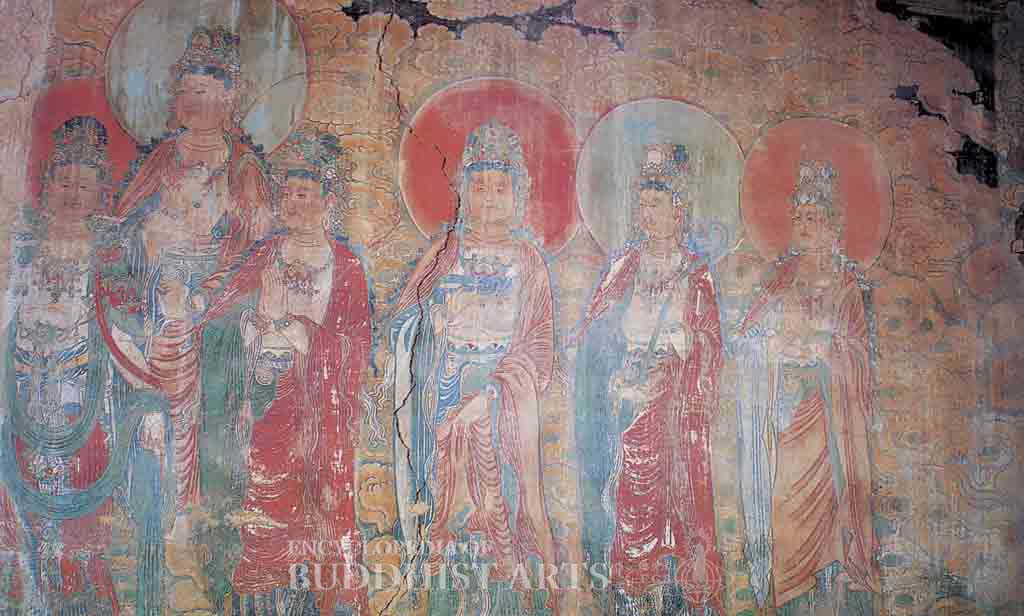
Guangsheng Upper Temple Murals: Vairocana Hall - Twelve Perfect Enlightenment Bodhisattvas (north wall, west side bay)
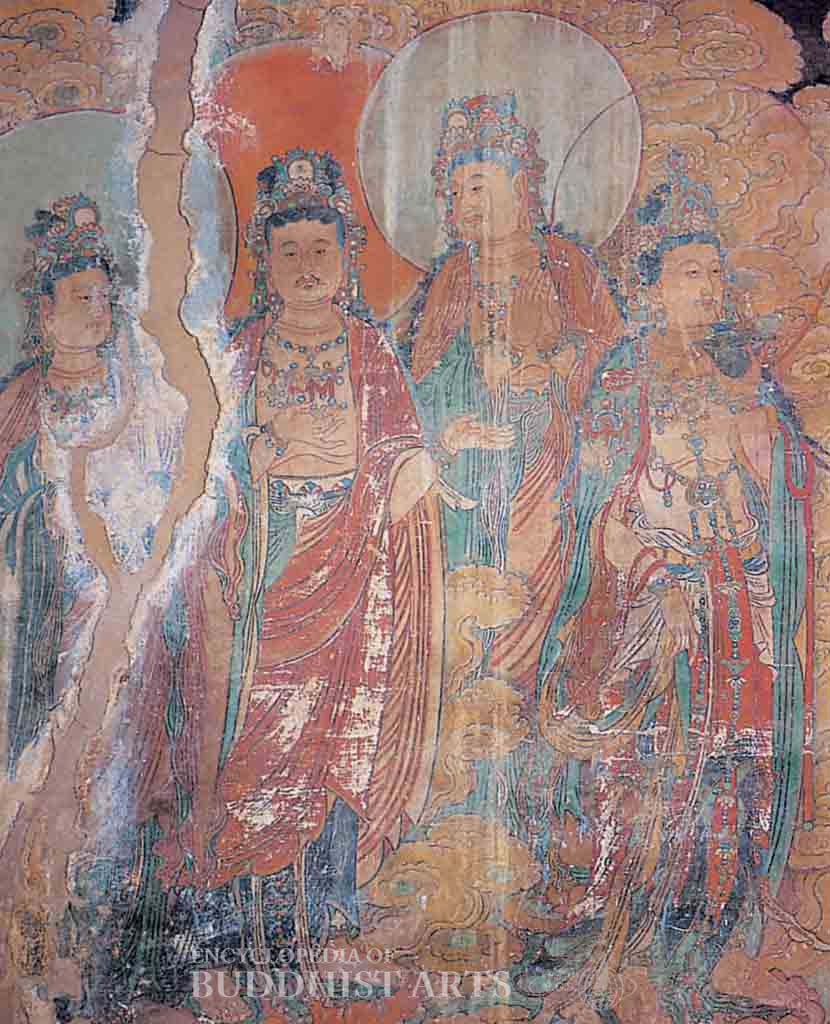
Guangsheng Upper Temple Murals: Vairocana Hall - Twelve Perfect Enlightenment Bodhisattvas (north wall, east side bay)
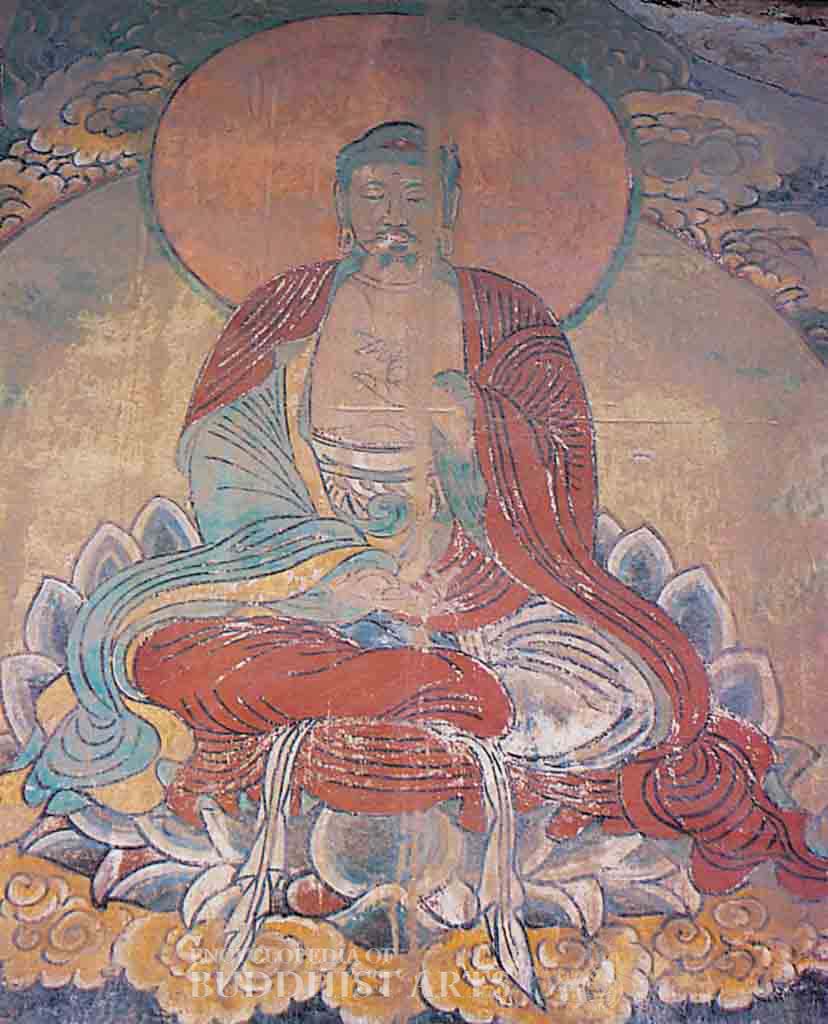
Guangsheng Upper Temple Murals: Amitabha Hall - Vairocana Buddha (back of screen wall)
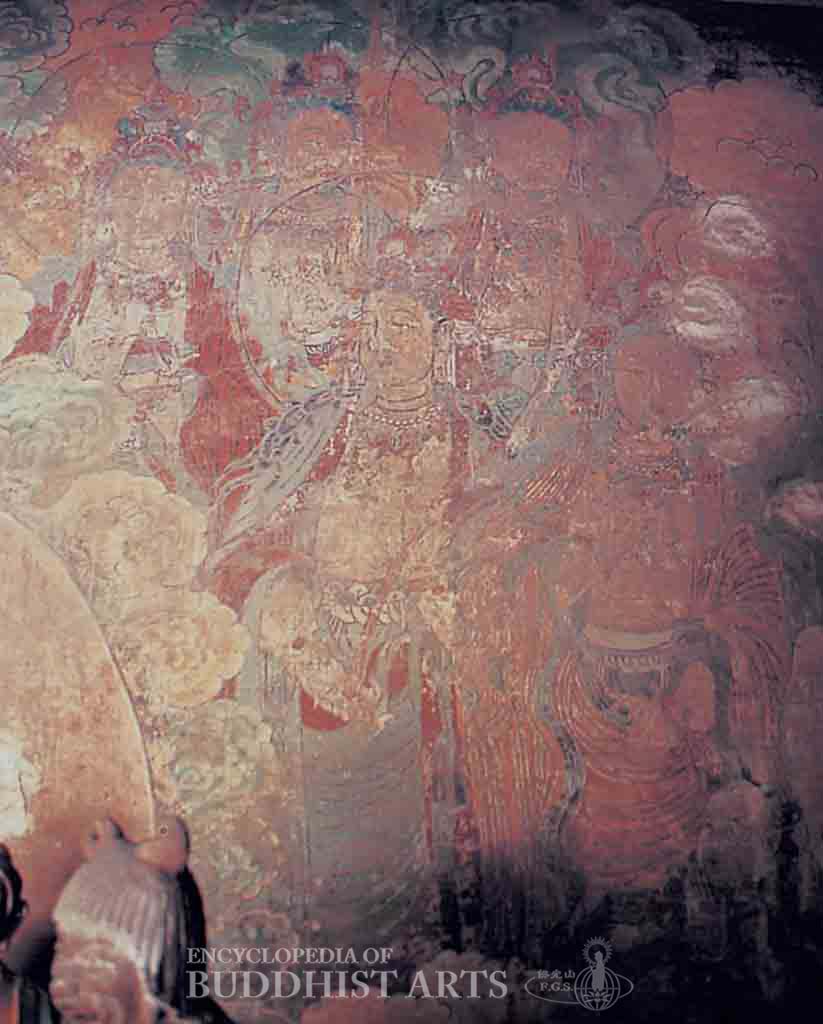
Guangsheng Upper Temple Murals: Amitabha Hall - Bodhisattvas (back of screen wall)
Guangsheng Upper Temple Murals: Amitabha Hall - Water and Land Dharma Service (detail) (east wall)
Guangsheng Upper Temple Murals
CHINA, Shanxi, Linfen; Ming dynasty
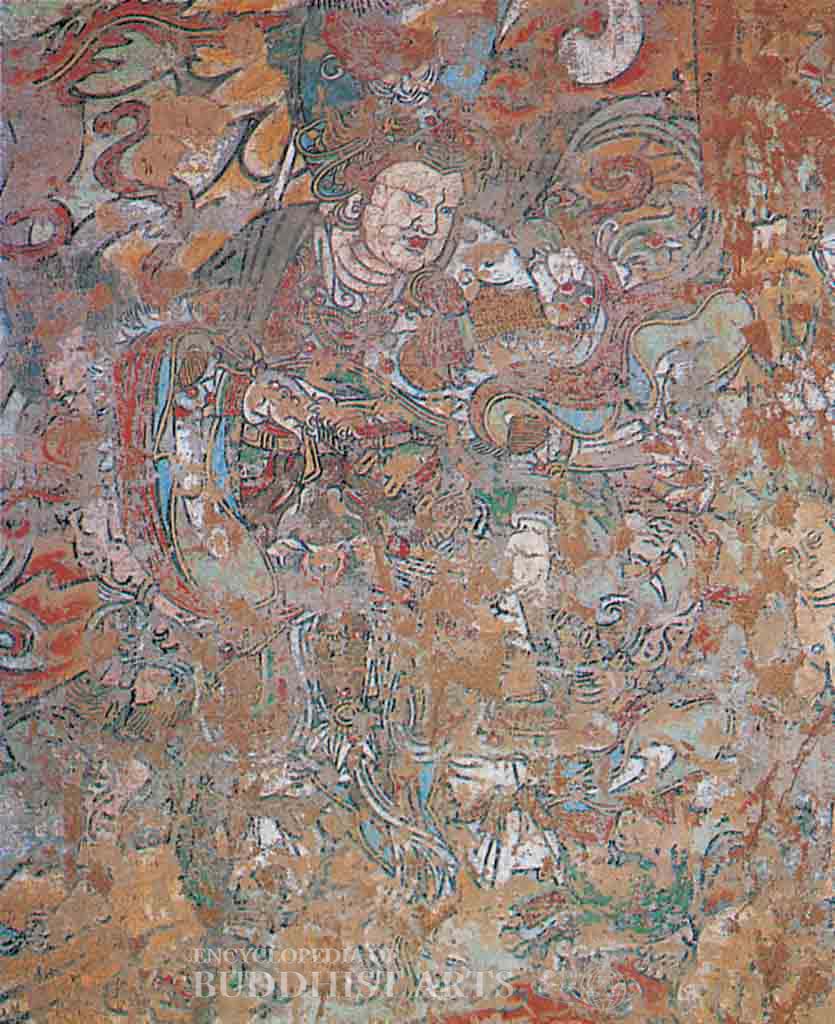
These murals in the Amitabha Hall, Vairocana Hall, and the west side hall of Guangsheng Upper Temple date from the Ming (1368–1644) and Qing (1644–1911) dynasties, and cover 176.44 sq m in total. Most of the murals on the four walls and the screen wall behind the altar of Amitabha Hall were painted in 1591 during the Ming dynasty. At the end of the Qing dynasty, the north, south, and west walls were reconstructed, and the murals on the east wall were concealed under mud. They were discovered during a renovation in 1978, and even though they are damaged, most of the figures are still visible. The Water and Land Dharma Service is painted on the east wall of the hall. The back of the screen wall has five images of Bodhisattvas with transparent nimbuses on each end. The upper section of the screen wall features an image of Dharmakaya flanked by Nirmanakaya and Sambhogakaya Buddhas.
The Buddha altar in the Vairocana Hall is decorated with images of three Buddhas and four Bodhisattvas. On all four walls, 53 seated Buddhas are painted within niches. The central bay and the two adjacent bays on the north wall feature images of Sakyamuni Buddha flanked by the Twelve Perfect Enlightenment Bodhisattvas. According to inscriptions, these murals were painted in 1513 by Yang Huai, his son Yang Jinda, and their disciples; the 53 seated Buddhas on the four walls were restored between 1658 and 1659. The Twelve Perfect Enlightenment Bodhisattvas have round faces and wear crowns and necklaces. Ribbons are wrapped around their waists. The Bodhisattvas stand bare-footed on lotus thrones. Some of them join their palms, while others hold jewels or incense burners. Clouds are painted in the background.
For more details, go to the Encyclopedia of Buddhist Arts: Painting A-H, page 292.
Cite this article:
author = Hsingyun and Youheng and Youlu and Wilson, Graham and Manho and Mankuang and Huntington, Susan,
booktitle = {Encyclopedia of Buddhist Arts: Painting A-H},
pages = 292,
title = {{Guangsheng Upper Temple Murals}},
volume = 14,
year = {2016}}