
Chengde Pule Temple
Chengde Pule Temple: Dawning Light Hall
Chengde Pule Temple: Dawning Light Hall
Chengde Pule Temple
CHINA, Hebei, Chengde
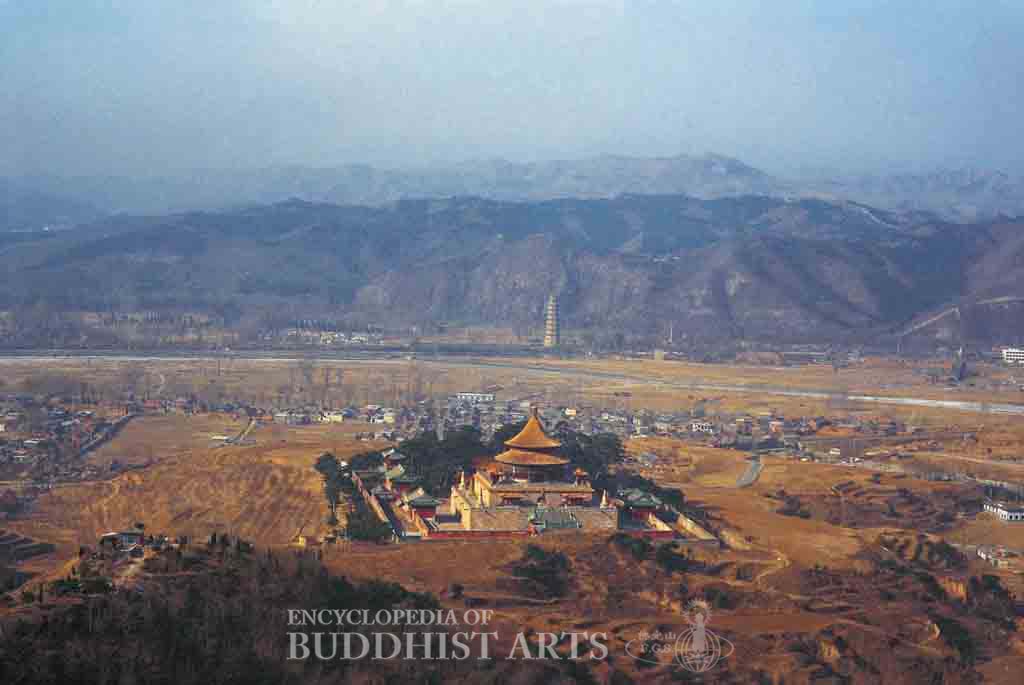
Pule means Universal Happiness and the temple is located to the northeast of Chengde Mountain Resort. It was built in 1766 during the Qing dynasty. After the Dzungars were defeated, their leaders and those of other tribes went on annual missions to the Chengde Mountain Resort to pay tribute to Emperor Qianlong (reigned 1736–1795). The temple was built to signify the union of the country and the happiness shared by all living beings. It was listed as a National Cultural Heritage Site in 1961.
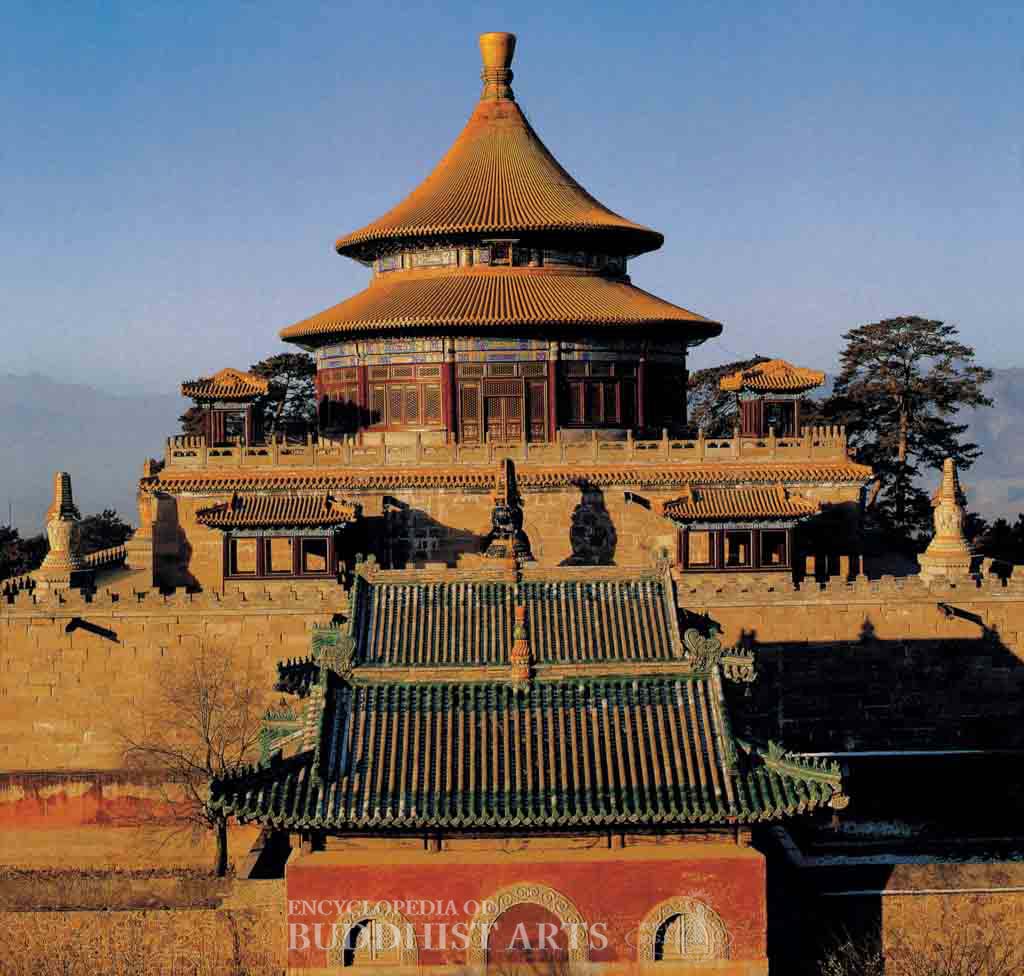
The temple occupies 2.4 ha and is divided into front and rear sections. The buildings in the front section are in a traditional Chinese layout and include the main temple gate, Heavenly King Hall, and the Zongyin Hall. In front of the Heavenly King Hall, on either side, there are the bell and drum towers. In the rear section of the temple, there is the Dawning Light Hall, which stands on a two-tier square platform. It is surrounded by a wall with a gate in each side. The lower tier is built in stone and there is a Tibetan stupa at the four cardinal points and four corners. Their designs are the same but they alternate in white and blue. The upper tier is also constructed of stone, with the Dawning Light Hall at the center. The whole structure is a representation of a mandala.
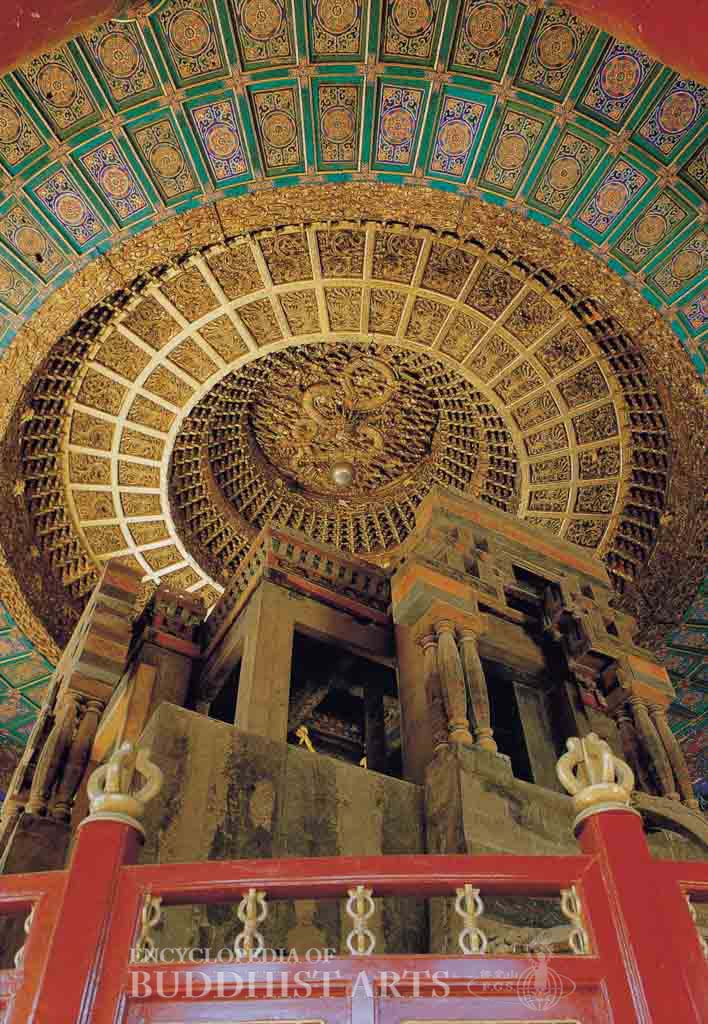
The Dawning Light Hall is the most prominent building of the temple. It is 24 m high and is an imitation of the Temple of Heaven in Beijing. The structure is round and it has a double-eave conical roof, which is covered with yellow glazed tiles. There are 12 columns supporting the lower eaves and 12 interior columns supporting the upper eaves, forming two concentric circles. At the center of the hall there is a high Sumeru platform, on which there is a three-dimensional wooden mandala. A copper statue of Cakrasamvara is enshrined inside the mandala. On the ceiling a medallion is framed by closely arranged bracket sets and latticework. At the center of the medallion there is a delicately carved dragon covered completely in gold leaf.
For more details, go to the Encyclopedia of Buddhist Arts: Architecture A-F, page 130.
Cite this article:
author = Hsingyun and Youheng and Johnson, Peter and Mankuang and Lancaster, Lewis,
booktitle = {Encyclopedia of Buddhist Arts: Architecture A-F},
pages = 130,
title = {{Chengde Pule Temple}},
volume = 1,
year = {2016}}