
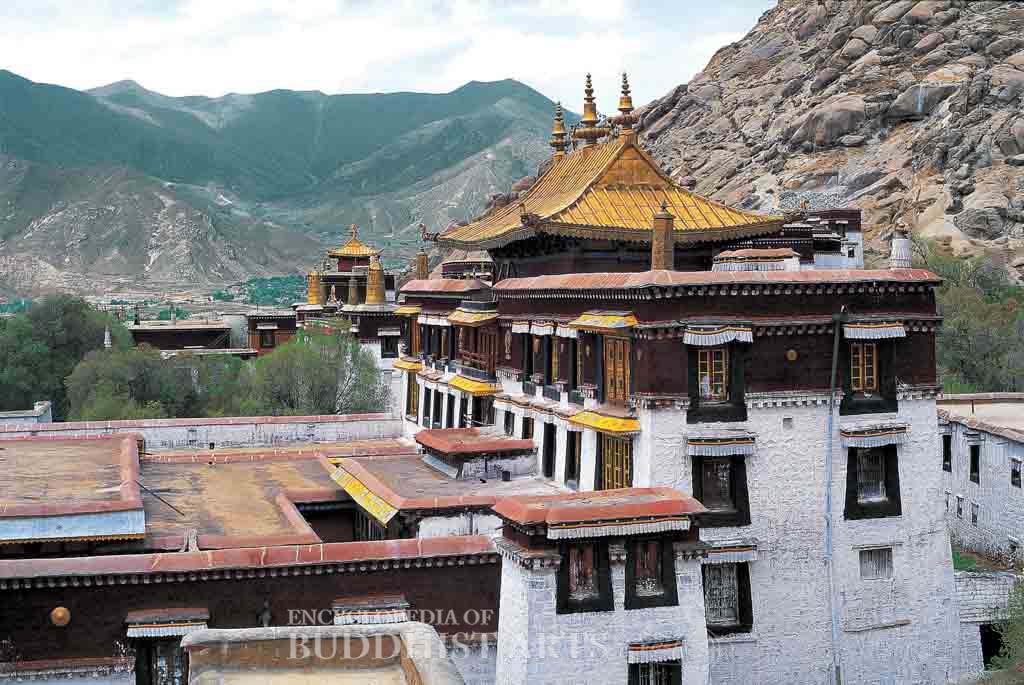
Sera Monastery: Central Hall
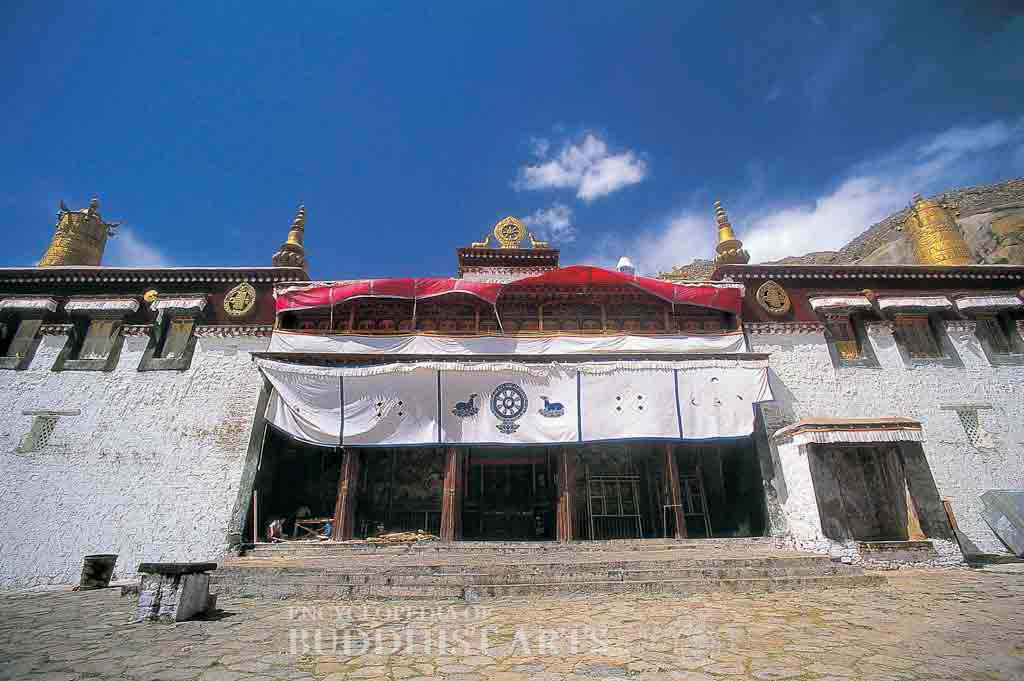
Sera Monastery: Central Hall - Highest Shrine
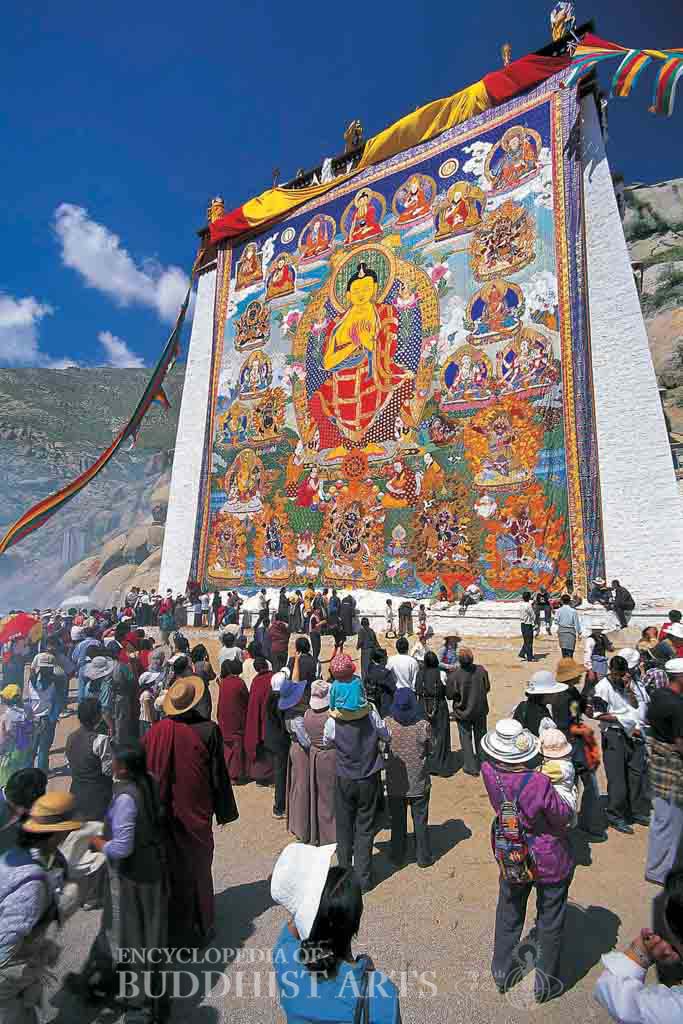
Sera Monastery: Hanging of the Thangka
Sera Monastery
CHINA, Tibet, Lhasa
The monastery is officially known as Sera Tekchenling Monastery, which literally means Sera Mahayana Monastery. Sera means Wild Roses, and it is said that the site was originally surrounded by wild roses in blossom. It is located at the foot of Pubuchok Mountain. Drepung Monastery, Ganden Monastery, and Sera Monastery are the Three Major Monasteries of the Gelug school of Tibetan Buddhism in Lhasa. Sera Monastery was built in 1419 by Jamchen Choje of Sakya Yeshe, who was a disciple of Tsongkhapa, the founder of the Gelug school. During its history, the monastery had undergone a number of renovations and expansions, resulting in its current size. The monastery was listed as a National Cultural Heritage Site in 1982.
The large temple complex consists of the central hall, three Buddhist colleges, and various monastic quarters. The central hall was constructed in 1710 by Lhazang Khan. It consists of the portico, assembly hall, and shrines. At the rear on the first story there are five shrines, of which the middle three are connected to one another. The Maitreya Shrine is in the very center and houses a 6 m high seated Maitreya Buddha flanked by the Eight Great Bodhisattvas. The sutra cabinets in the center contain a copy of the Kangyur printed in vermilion pigment, bestowed by Emperor Yongle (reigned 1402–1424) of the Ming dynasty in 1410. To the west of the Maitreya Shrine there is the Arhat Shrine, where clay statues of the Sixteen Arhats are enshrined. Most of the murals in the main buildings such as the central hall and the colleges are well-preserved and are of considerable historical and artistic significance.
For more details, go to the Encyclopedia of Buddhist Arts: Architecture M-S, page 961.
Cite this article:
author = Hsingyun and Youheng and Johnson, Peter and Mankuang and Lancaster, Lewis,
booktitle = {Encyclopedia of Buddhist Arts: Architecture M-S},
pages = 961,
title = {{Sera Monastery}},
volume = 3,
year = {2016}}